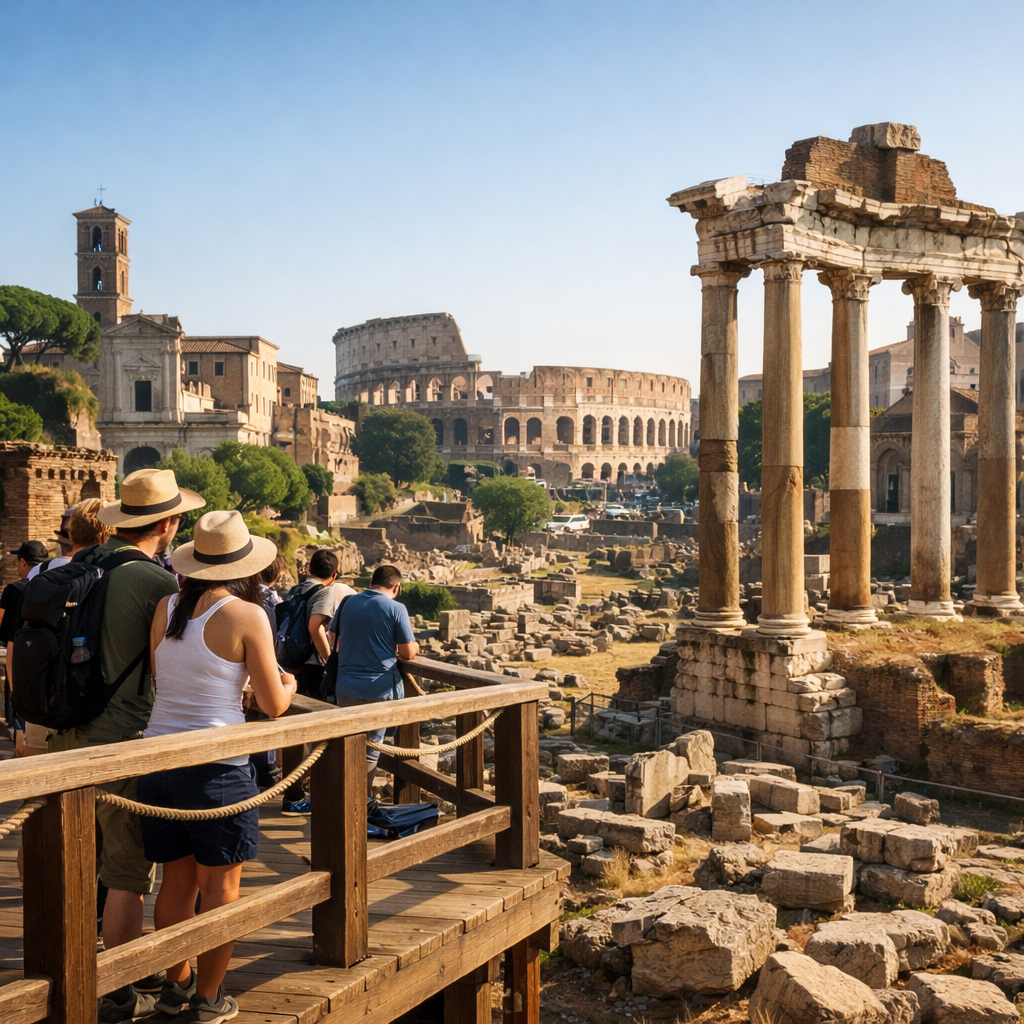
Where to Get Closest Access to Rome’s Most Iconic Ruins
How to see Rome’s ruins up close
If your goal is the closest possible contact with ancient Rome, think in three tiers: what you can see from the street edge in minutes, what you can walk through without crowds, and what opens only with specialist, book-ahead access. For fast, value-optimized planning, pair walkable ruins in the historic center with timed-entry tickets and a targeted “underground Rome” slot. Travel Beyond Boundaries builds this mix into compact days, aligning timed entries with quieter windows. Book official Colosseum–Forum–Palatine tickets online via CoopCulture through the official vendor; onsite sales aren’t offered, standard bundles are roughly 18€ and often combine sites (nonrefundable), as summarized in this Pavlus Travel overview of Rome’s ancient sites. For premium access, look at small-group, skip-the-line tours with arena floor or hypogeum add-ons.
- What “close access” means at a glance:
| Tier | What it feels like | Examples |
|---|---|---|
| Street-view | Step to a railing or piazza edge and look directly onto ruins with no ticket | Largo di Torre Argentina; Arch of Constantine; exterior of the Pantheon |
| Walk-through | Enter a site and move among streets, arches, halls | Roman Forum and Palatine Hill; Baths of Caracalla; Theater of Marcellus arcades |
| Guided-only | Small-group entry to restricted or fragile areas | Domus Aurea; Colosseum hypogeum; select catacombs |
“Hypogeum refers to the Colosseum’s underground chambers where animals, scenery, and gladiators were staged before arena appearances. Access is restricted and typically available only on guided tours with limited group sizes, offering a behind-the-scenes view of ancient Roman spectacle engineering.”
Central Rome sites with street-level access
Short on time? These ancient Rome ruins deliver instant, sidewalk-level proximity:
- Pantheon (exterior): The portico, massive granite columns, and bustling piazza frame one of antiquity’s great temples. It’s ideal for early-morning or golden-hour photos before interior queues build.
- Largo di Torre Argentina: From the square’s railings, look directly down onto temple podiums, stairways, and layered sanctuaries—zero ticketing, near-zero walking.
- Arch of Constantine: Viewable from street level beside the Colosseum; it’s the largest surviving triumphal arch, about 68 ft high and 86 ft wide.
Suggested walking loop (45–70 minutes without interiors): Via dei Fori Imperiali viewpoints > Colosseum/Arch of Constantine > Largo Argentina > Pantheon piazza. Aim for sunrise or late evening for softer light and thinner crowds.
Safety-forward micro-tips:
- Use marked crossings around Via dei Fori Imperiali; traffic is fast and visibility changes near monuments.
- Watch for uneven paving and worn basalt slabs.
- Keep phones and wallets front-facing in crowded corridors and at major photo spots.
Colosseum, Roman Forum and Palatine Hill close access
Nothing beats stepping onto the arena floor or descending beneath it. Construction of the Colosseum began under Vespasian in 72 AD and it was inaugurated by Titus in 80 AD; estimates for capacity hover around 50,000, with some higher, and the amphitheater’s underground machinery once staged animals and gladiators for the arena above, as outlined in Zicasso’s best ruins in Italy guide.
Your step-by-step ticketing flow:
- Buy online via the official CoopCulture channel (no onsite sales).
- Choose a timed-entry slot for the Colosseum.
- Consider add-ons: arena floor access and, when released, underground (hypogeum) slots.
- Note that bundled tickets typically include the Roman Forum and Palatine Hill.
- Expect standard bundles around 18€ and nonrefundable; plan your day accordingly.
Best times and formats:
- First entry of the day or curated after-hours guided tours minimize crowds and can reach limited-access areas when offered.
- Pack: refillable water bottle, sun protection, and stable footwear—Forum and Palatine paths are uneven and often hot.
Travel Beyond Boundaries prioritizes first-entry or curated after-hours when available and sequences Forum/Palatine routes to cut backtracking.
Pantheon interior and temple precinct context
The Pantheon is Rome’s most complete ancient temple—outside and in—offering unmatched “up-close” engineering. Dating to about 125 AD, its oculus crowns the world’s largest unreinforced concrete dome, enabled by volcanic pozzolana techniques perfected by Roman builders, highlighted in the Art & Object roundup of Italian ruins.
“Roman concrete (opus caementicium) is an ancient building material mixing lime with volcanic ash, notably pozzolana. The blend produced durable, water-resistant structures with remarkable spans, enabling feats like the Pantheon’s dome and long-lasting harbors that have survived millennia.”
A short visit plan:
- Exterior: study the portico proportions, column monoliths, and inscription.
- Interior: watch the light track under the oculus and examine the coffered dome’s diminishing geometry.
- Context: pair with a look at earlier temple forms at Largo Argentina to see how sanctuaries evolved.
Largo di Torre Argentina and street-view temples
For minimal walking with maximum payoff, stand at the site’s railings to see temple podiums, staircases, and stratified foundations—clear, close views without entering a site. It’s central, photogenic, and famously home to a cat sanctuary, making it a low-effort, high-reward stop.
Five-minute micro-itinerary:
- Photograph from multiple angles along the railings.
- Read the interpretive signage to differentiate the sanctuaries.
- Walk 8–10 minutes to the Pantheon to compare architectural eras.
Responsible visit note: remain behind railings and respect the resident cats; do not feed or touch wildlife.
Baths, markets and civic ruins you can walk through
Walking inside large complexes connects you physically to Rome’s daily life.
Grouped by experience:
- Markets and theaters: Theater of Marcellus (one of Rome’s oldest and largest theaters) rewards a slow circuit around its exterior arcades.
- Arches and fora: Contrast the open-air Arch of Constantine with Forum viewpoints from Via dei Fori Imperiali.
- Baths and civic spaces: Stroll vast bath ruins like the Baths of Caracalla or explore basilicas and hall foundations with partial public access.
Tip: A Travel Beyond Boundaries guided walk adds historical layers and helps you navigate uneven surfaces safely.
Underground and fragile sites that require booking
Some of Rome’s most revealing spaces are out of sight—and strictly controlled.
- Domus Aurea: Nero’s palace opens via prebooked, archaeologist-led tours; the site has experienced closures for drainage works, and interiors can sit near 10°C—bring a warm layer, per BBC Travel on Rome’s legacy of the empire.
- Catacombs: Many close on Mondays. Tours book out; expect cool temperatures and low light—layers and closed shoes are best.
“Subterranean Rome includes catacombs, crypts, and buried Roman streets or houses beneath modern levels. Access is typically guided to protect fragile remains, regulate humidity and visitor flow, and deliver expert interpretation in confined, low-light, and cool environments,” as summarized in Through Eternity’s guide to underground Rome.
Travel Beyond Boundaries monitors openings and closures and books archaeologist-led slots as they release.
Short trips from Rome for immersive, crowd-light ruins
Day trips unlock quieter, walk-through ruins with streets, homes, and forums largely to yourself.
- Ostia Antica: About 16 miles from central Rome, once the capital’s major port with earliest remains from the 4th century BCE and a population possibly near 100,000 by the 2nd–3rd centuries CE. Walk past the forum, amphitheater, bath mosaics, frescoes, and a necropolis; the site now sits roughly 2 miles inland due to silting, noted by Art & Object.
- Hadrian’s Villa (Tivoli): Built 117–138 AD, this imperial estate sprawls with pools, peristyles, and engineered vistas (see Zicasso).
- Cerveteri and Alba Fucens: Reachable by train, car, or bus for Etruscan necropolises and hilltop Roman ruins with serene settings (Art & Object).
Quick transit table:
| Site | Distance/time from Rome | Best for | Public transport notes |
|---|---|---|---|
| Ostia Antica | ~30–40 min from Piramide (Metro B) + train; 5–10 min walk | Fewer crowds, walkable streets, mosaics | Metro B to Piramide/Porta S. Paolo, train to Ostia Antica |
| Hadrian’s Villa (Tivoli) | ~60–90 min | Photography, grand architecture | Metro B to Ponte Mammolo + bus to Tivoli; or train to Tivoli + local bus/taxi |
| Cerveteri (Banditaccia) | ~60–90 min | Necropolis tombs, quiet lanes | Train to Ladispoli–Cerveteri + bus/taxi to necropolis |
| Alba Fucens | ~90–120 min by car (longer by bus) | Hilltop forum, amphitheater | Regional bus toward Avezzano + taxi; easiest by car |
Travel Beyond Boundaries combines these into low-crowd day trips with straightforward transit or private car, matched to your pace.
Safety-forward and accessibility planning
Italy is expanding tactile and audio experiences at monuments—expect more braille signage, tactile models, and QR audio guides for blind visitors, according to reporting on expanded tactile and audio access. Use an “access at a glance” checklist:
- Look for curb-cuts and adapted routes at major sites; lifts/elevators exist in select areas.
- Ask about tactile or audio programs and alternative sensory tours.
- Expect limitations at historic complexes; plan backups and rest points.
Rome welcomed roughly 35 million visitors last year, and crowding is shaping daily life and site management—time slots and restricted areas are increasingly common, notes the Euronews overtourism report. Book ahead and aim for off-peak hours. Travel Beyond Boundaries designs routes with adapted paths, rest points, and backups without sacrificing access.
Timing, tickets and crowd-avoidance strategies
- Booking imperatives: Secure Colosseum/Forum/Palatine online via CoopCulture; standard bundles are about 18€, nonrefundable. Consider early or after-hours tours with limited-access areas.
- Sample low-crowd day: Sunrise around the Arch of Constantine; first-slot Colosseum entry (arena or hypogeum if available); late-morning Palatine gardens; afternoon Forum exit routes; evening Pantheon piazza.
- Seasonal tactics: Travel in shoulder months; pick weekday mornings; reserve underground slots during midday heat. Pack layers for cool subterranean temperatures (around 10°C inside Domus Aurea).
Travel Beyond Boundaries threads these tactics into day plans so you spend time on sites, not in lines.
Travel Beyond Boundaries approach to curated Rome experiences
We tailor Rome for maximum closeness and minimal stress: curated small-group and custom trips, private entries where they matter, and archaeologist-led underground tours when available—balanced with transparent pricing and efficient routing. For first-timer picks and timed-entry guidance, see our 12 must-see Rome tours for first-time visitors. Explore broader itineraries and savings-forward tips in our Destinations hub.
Our POV: value without pretense—clear steps, honest costs, and responsible, accessible travel that respects residents and preserves fragile heritage.
Frequently asked questions
What is the easiest metro and bus access for the Colosseum and Forum?
Take Metro Line B to Colosseo; buses 75, 81, and 87 also stop nearby. Travel Beyond Boundaries maps the fastest door-to-door route into your itinerary.
Do I need timed tickets for the Colosseum, Forum and Palatine Hill?
Yes—buy timed tickets online in advance; onsite sales aren’t offered. Travel Beyond Boundaries schedules early or late slots to reduce crowds.
How can I visit underground areas like the Colosseum hypogeum or Domus Aurea?
Book guided tours that specifically include these underground sections; slots are limited and cool. Travel Beyond Boundaries secures releases as they open and reminds you to bring a layer.
Which ruins are best for fewer crowds and closer contact?
Ostia Antica leads for walkable streets and mosaics, with Hadrian’s Villa and Cerveteri offering spacious, immersive ruins. Travel Beyond Boundaries strings these into easy day trips by train or car.
What accessibility options exist at major ruins and how should I plan?
Major sites provide adapted routes, select lifts, and growing tactile/audio resources. Travel Beyond Boundaries builds accessible paths, timed entries, and backups tailored to your needs.