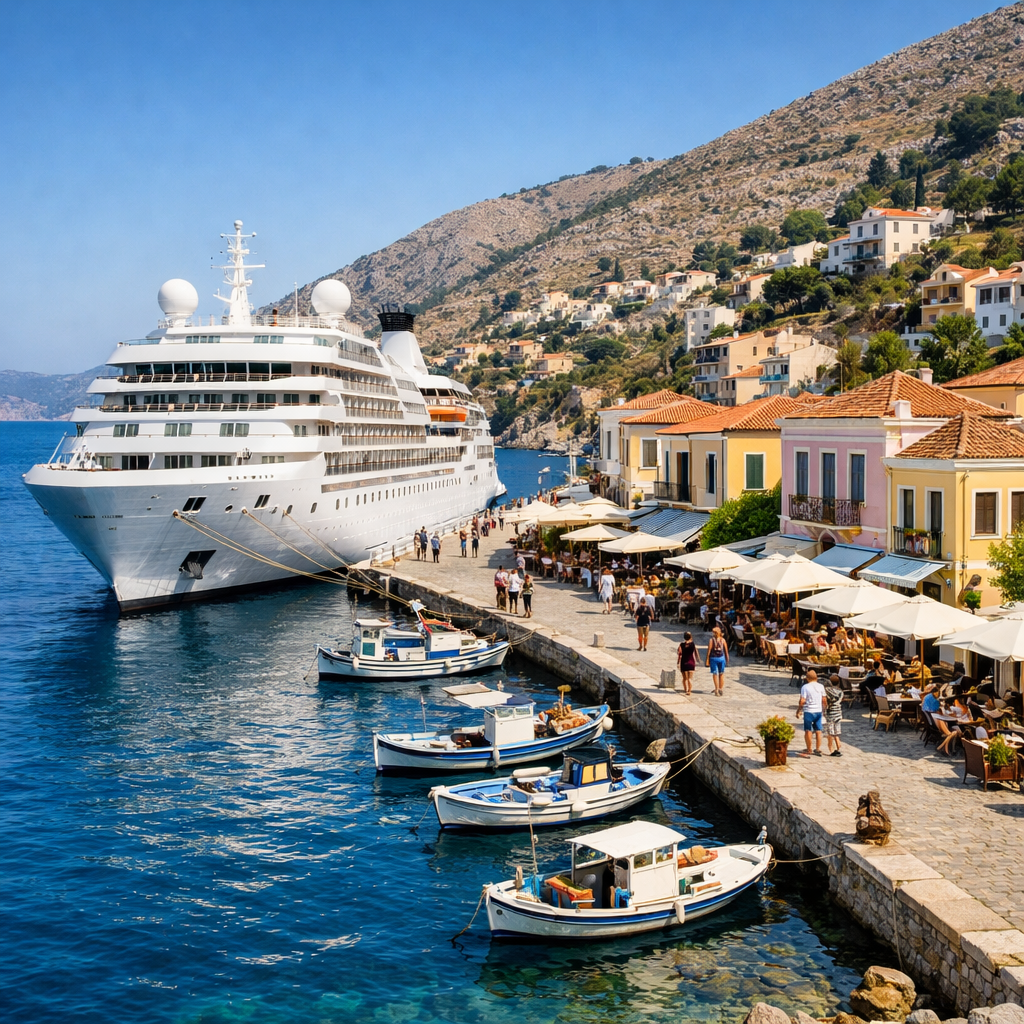
Where to find Mediterranean cruises with boutique ports of call
Boutique-port Mediterranean cruises trade big-city terminals for quiet harbors, yacht marinas, and storybook coves. If that’s the experience you want, start by narrowing to regions dense with small harbors (Adriatic, Aegean/Greek Islands, or select Western Med pockets), then filter to small-ship or yacht-style fleets that can actually get you there. The telltales are ship capacity under about 600 guests, tender ports on the map, and itineraries with late stays or overnights. From Kotor’s fjord-like bay to Monemvasia’s medieval rock and the Amalfi Coast’s tiny coves, the right filters reveal a very different Mediterranean—one built for slower streets, shorter transfers, and deeper cultural time. Travel Beyond Boundaries focuses on these small-ship filters to surface routes many travelers miss.
Define your boutique port goals
“Boutique ports are small harbors, yacht marinas, or historic coves that large ships can’t routinely access, offering quieter streets, shorter transfers, and richer cultural time versus big-city terminals.”
Decide what boutique means for your trip:
- Choose a primary theme: yacht‑harbor leisure (Balearic coves, Amalfi inlets), archaeological immersion (Itea for Delphi), or culinary villages (Sicilian hill towns).
- Name one or two must‑visit ports to anchor your search. Examples: Kotor’s bay, Taormina’s clifftop, Monemvasia’s walled town.
- When comparing small-ship cruises and yacht-style cruising, expect more tender ports and hidden-gem harbors; plan to embrace flexible timings and self-guided exploring.
Travel Beyond Boundaries can turn these choices into a focused shortlist and day-by-day plan.
Choose your Mediterranean region
Pick a sub‑region to focus your search and cut noise—Western Mediterranean, Aegean/Greek Islands (Eastern Med), or the Adriatic. Region choice determines port flavor and distances, and most small-ship itineraries stay within or thoughtfully bridge these zones. Embarkation hubs for air/rail planning include Barcelona, Nice, Monte Carlo, Civitavecchia (Rome), and occasionally Lisbon; they’re frequent turnarounds for boutique‑leaning itineraries. Travel Beyond Boundaries can surface current, small‑ship examples across operators; for independent research, see Mundy Cruising’s guide to the best small‑ship Mediterranean cruises (helpful for examples and operator lineups).
| Region | Signature boutique flavors | Typical notes |
|---|---|---|
| Adriatic | Kotor’s fjord scenery, Dalmatian islands (Hvar, Vis), Venetian lanes (Rovinj) | Short hops, dramatic sail‑ins; many tender ports |
| Aegean/Greek Islands | Small isles (Skiathos, Lesbos), medieval harbors (Monemvasia), sacred sites (Patmos) | Late sunsets, meltemi winds; tendering common |
| Western Med | Amalfi coves (Amalfi, Positano via tender), Balearic yacht marinas, Corsica/Sardinia inlets | Mix of marquee cities and pocket harbors; more seasonal crowd swings |
Filter for small-ship and yacht vessels
“Small-ship cruise typically means vessels carrying roughly 100–600 guests. Their shallower drafts and tender operations allow access to yacht marinas and coves that mega‑ships can’t enter, supporting late stays, overnights, and less crowded landings suited to deeper local exploration.”
Search with keywords like small‑ship, yacht collection, explorer class, boutique ship, and expedition. Capacity matters: U.S. News notes that top luxury lines like Seabourn sail ships carrying no more than about 600 guests—an immediate signal for less crowded operations and small‑harbor access U.S. News’ ranking of Mediterranean cruise lines. For yacht-style ranges, Ponant fields six 184‑guest Explorers, four 264‑guest yachts, and the 32‑guest Le Ponant; Ritz‑Carlton’s Yacht Collection brought Evrima (2022) and Ilma (2024) online—useful benchmarks for capacity and style Mundy Cruising’s guide to the best small-ship Mediterranean cruises. Travel Beyond Boundaries filters by capacity, draft, and tender operations to ensure true small‑harbor access.
Read itineraries for boutique signals
Scan itinerary pages for confirmation before you fall in love:
- Late departures and overnights are green lights for deeper access. Seabourn highlights boutique ports and destination immersion, including curated evenings such as its signature “Evening at Ephesus” Seabourn’s Mediterranean program.
- Look for tender or Zodiac symbols and “small‑harbor access” language. Azamara’s Mediterranean destination pages emphasize late nights and longer stays that unlock quieter hours ashore Azamara’s Mediterranean destination pages.
- Quick checklist: night‑in‑port icon; tender symbol; smaller‑island calls (e.g., Skiathos, Lesbos); clusters of village‑scale docks rather than only marquee capitals.
Travel Beyond Boundaries verifies these signals before recommending a sailing.
Verify port logistics and access
Tendering uses small boats to shuttle passengers when the ship can’t dock. It adds transfer time and can be weather‑dependent, so set earlier meeting points, leave buffer before last tender, and start early for independent plans. Travel Beyond Boundaries supplies concise port briefings with walking times, transfer options, and last‑tender reminders; a practical tool alongside this is Rick Steves’ Mediterranean Cruise Ports guidebook for one‑day plans, self‑guided walks, and transit tips—ideal for short calls. Always confirm last tender times, berth‑to‑town distance, elevation (many hill towns), and taxi/ride‑app availability. Note local quirks: Monemvasia’s medieval town sits on a sea‑rise linked to the mainland by a causeway—walking times matter on short stops.
Compare value, inclusions and trade-offs
Luxury small‑ship lines may price higher but include more: premium dining, drinks, gratuities, and occasional exclusive shore events (e.g., an orchestra night at Ephesus). World of Cruising reports that some lines bundle meals, drinks, gratuities, flights, and transfers, and that baseline fares can vary widely (e.g., select no‑fly Med journeys from around £1,000pp), underscoring how inclusions change the real cost World of Cruising’s Mediterranean round-up. Travel Beyond Boundaries benchmarks inclusions so you’re looking at true trip cost, not just base fares. Compare:
- Boutique access density: count small‑harbor calls per sailing.
- Overnights/late stays vs. short calls.
- What’s included (drinks, Wi‑Fi, excursions, special events) vs. fare.
Time your sailing for lighter crowds
Aim for spring and autumn shoulder seasons for milder weather, fewer crowds, and better berth availability in small harbors—conditions that make tender operations smoother and village streets more relaxed. Luxury lines publish broad seasonal programs across multiple years; that depth creates more options to time boutique‑rich routes sustainably. Travel Beyond Boundaries targets shoulder‑season patterns and local events to balance access and atmosphere.
Build a smarter route with combinable voyages
For more boutique coverage with minimal friction:
- Choose back‑to‑back segments that chain small‑harbor calls (e.g., a Western Med week plus an Adriatic loop).
- Use major hubs (Barcelona, Nice, Monte Carlo, Civitavecchia) as swap points to avoid long repositioning.
- Three‑step flow: anchor your port wish‑list → find two itineraries with minimal duplication → confirm turnaround timing and luggage logistics with the line.
Travel Beyond Boundaries stitches compatible segments and confirms baggage handling where permitted by the line.
Plan shore time like a pro
- Pre‑load one‑day plans and self‑guided walks from a dedicated port guidebook with maps, transit, and key phrases to streamline disembarkation.
- Book marquee experiences for late departures/overnights (such as after‑hours site visits where offered), and start early on tender ports to beat queues.
- Micro‑packing list: compact daypack, quick‑dry layers, slip‑resistant shoes for cobbles, offline maps, small bills/coins for local transit.
Travel Beyond Boundaries can pre‑book after‑hours access where offered and tailor self‑guided routes to your pace.
Sample boutique ports to target
- Eastern Med/Aegean: Monemvasia (walled medieval town via causeway), Patmos (sacred sites), Skiathos and Lesbos (SeaDream‑style yacht calls noted by small‑ship specialists).
- Adriatic: Kotor (cathedral spires framed by fjord‑like mountains), Korčula and Vis (stone lanes and vineyards), Rovinj (Venetian old town).
- Western Med: Amalfi and Positano by tender, Taormina (gateway for Etna), Balearic yacht marinas, Valletta’s grand harbor.
- Mainstream mix-and-match context: some large‑ship rosters include “smaller” ports (Kotor, Chania/Souda, Split, Genoa, Salerno, Bari, Bar, La Goulette/Tunis)—check ship size and tendering to preserve a boutique feel Princess’ Mediterranean and Greek Isles roster and Carnival’s Europe schedule.
Booking workflow and decision checklist
- Define your region and theme (Western vs. Aegean/Adriatic) and shortlist three priority ports.
- Filter for ships under ~600 guests; examples range from Ponant’s 32–264‑guest yachts to ~600‑guest luxury vessels backed by strong reviews.
- Prioritize itineraries with overnights/late stays and brand‑named immersive events.
- Confirm logistics via reliable port guides (transfers, tendering, DIY routes, last tender times).
- Compare total value—fare vs. inclusions (drinks, Wi‑Fi, excursions, signature evenings) and the density of boutique harbors per sailing.
Travel Beyond Boundaries helps travelers move through this checklist quickly with vetted options and clear trade‑offs.
Frequently asked questions
How do I search online for small-ship or yacht-style Mediterranean cruises?
Use filters and terms like small‑ship, yacht collection, explorer class, boutique ship, and expedition. Travel Beyond Boundaries then verifies sub‑600‑guest capacity and the tender/overnight signals that indicate true small‑harbor access.
Do mainstream cruise lines ever include boutique ports?
Yes—some mix marquee cities with smaller calls like Kotor or Chania. For consistent access to yacht marinas and tucked‑away harbors, prioritize small‑ship and yacht‑style fleets; Travel Beyond Boundaries steers you to schedules built for shallow‑draft, tendered landings.
What time of year is best for smaller ports with fewer crowds?
Spring and autumn shoulder seasons bring milder weather, fewer crowds, and better small‑harbor availability—ideal for relaxed, independent exploring. Travel Beyond Boundaries targets these windows and local events when building your route.
How can I tell from an itinerary if ports are truly boutique?
Look for sub‑600‑guest ships, tender icons, late‑night or overnight calls, and small‑island names (e.g., Skiathos). Travel Beyond Boundaries flags itineraries that clearly advertise small‑harbor access and destination immersion.
Do boutique ports require tendering, and what does that mean for planning?
Often, yes; tendering adds transfer time and can be weather‑dependent, so start early ashore and leave buffer before the last tender. Travel Beyond Boundaries provides conservative timing plans and meet‑up points for tender ports.