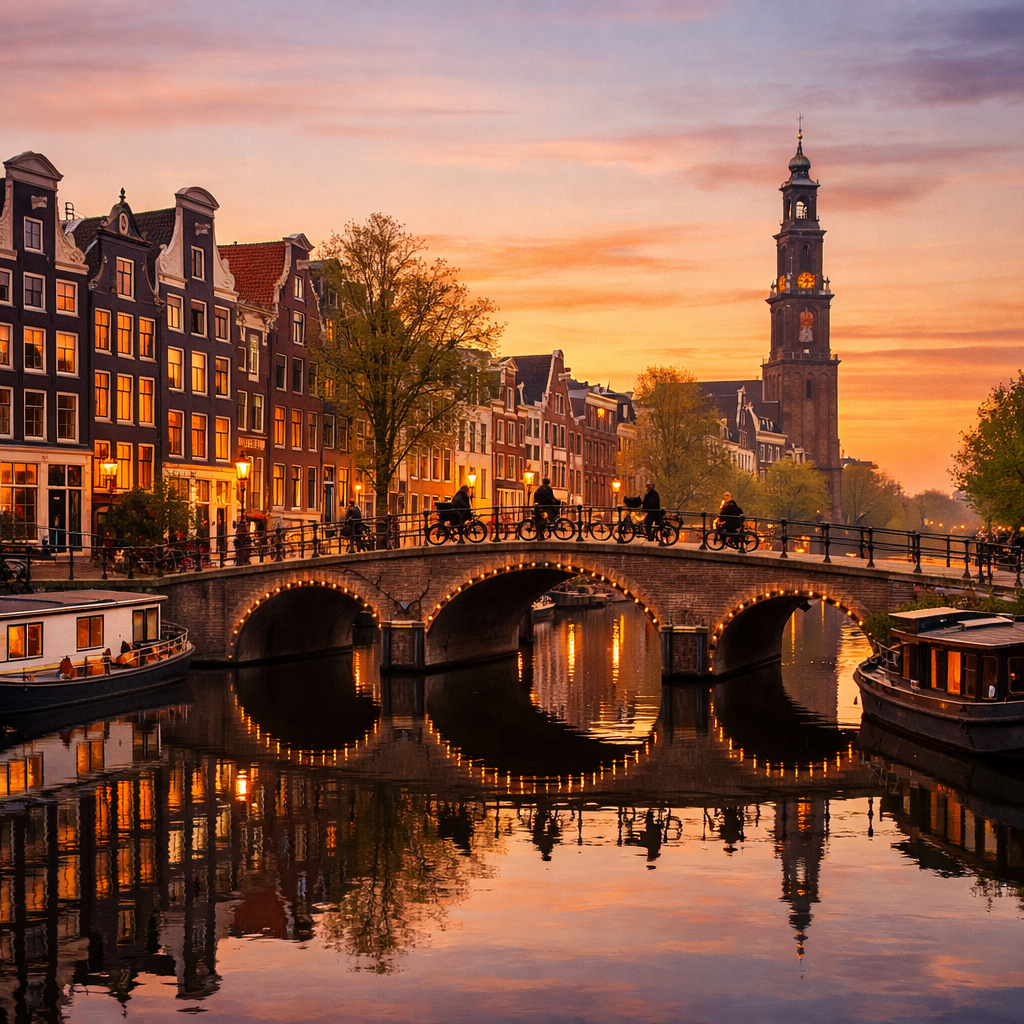
UNESCO Canal Ring and Beyond: Amsterdam’s Essential Cultural Landmarks
Amsterdam’s soul is etched in water and brick. Start with the UNESCO-listed canal ring—the Grachtengordel—then layer in world-class museums, living neighborhoods, and resonant memorials. This guide answers the big questions: which cultural landmarks matter most, how to experience the canal ensemble at its best, and which museums and districts pair well with a canal-focused itinerary. Expect practical, premium-yet-pragmatic advice: boat-and-walk routes, timed entry tips, smart photo stops, and family-friendly upgrades that turn inspiration into an effortless plan—all distilled by Travel Beyond Boundaries.
Why the Canal Ring Matters
“The canal ring is a planned 17th-century expansion of concentric canals and bridges whose value lies in the ensemble—canal houses, bridges, quays, gardens, and public spaces—more than in isolated monuments.” That’s the essence recognized by the UNESCO World Heritage listing, which inscribed the site in 2010 for its coordinated urban design and hydraulic engineering achievements (UNESCO World Heritage listing). Citywide, Amsterdam weaves over 100 km of canals around roughly 90 islands and some 1,500 bridges (Canals of Amsterdam overview). Within the UNESCO core, the protected area spans more than 198 hectares with about 14 km of canals and around 80 bridges, prized for its intact, human-scale fabric (UNESCO World Heritage listing). A defining example of Dutch Golden Age planned urban expansion, the system influenced city-making well into the 19th century (World Heritage guide to the canal ring).
Keywords you’ll see throughout: Grachtengordel (canal belt), Dutch Golden Age, hydraulic engineering, planned urban expansion, canal houses, UNESCO World Heritage Amsterdam.
How to Experience the Canals
Combine perspectives. A boat shows the ring’s geometry, bridge arches, and waterside façades; a slow quay walk reveals textures, reflections, and everyday rhythms—the intangible qualities that define the site’s character. Travel Beyond Boundaries pairs a 60–75 minute cruise with an unhurried walk for the most complete impression (Canals of Amsterdam travel guide).
What a canal cruise covers (about 45 words): Most tours loop Herengracht and Keizersgracht with views of the Skinny Bridge, Golden Bend mansions, and multi-arch bridge alignments. You’ll pass classic canal houses, houseboats, and gabled warehouses, with audio notes on history and engineering. Options include covered boats, pedal boats, SUP, or private charters.
| Time available | Best experience |
|---|---|
| 60 minutes | Classic canal cruise focusing on Herengracht/Keizersgracht highlights. |
| 2–3 hours | Cruise plus a Jordaan walk via Prinsengracht for cafés, hofjes, and Westerkerk views. |
| Half day | Add Museumplein (Rijksmuseum or Van Gogh) after your cruise-and-walk loop. |
Herengracht
Herengracht is the most prestigious of the canal-belt trio. Its Golden Bend concentrates opulent 17th‑century merchant mansions—prime for façade photography and evening light that warms sandstone and brick (Picture-perfect canal landmarks). As one of the three main canals, Herengracht hosted elite merchant housing central to Amsterdam’s rise.
Photography tips:
- Aim for golden hour on the Golden Bend to catch façades glowing over calm water.
- Compose bridge-to-bridge symmetry for layered arches and canal-house rhythm.
- After a rain, use puddle reflections to double gables and lantern lights.
Keizersgracht
Keizersgracht, the broadest of the principal canals, embodies the concentric half-circle plan with radial links that served both transport and drainage. It’s ideal for a calmer stroll with photogenic bridges and classic houseboats.
Try a 20–30 minute mini‑loop: Cross one bridge, walk a block along the quay, then return via the next bridge to frame multi-arch perspectives and moored boats. Notice how bridge profiles, quay edges, and railing details shift from span to span—key elements of the UNESCO urban fabric.
Prinsengracht
More residential and lived-in, Prinsengracht carries you past Westerkerk and the Anne Frank House. Go in the morning for soft light or at dusk to catch neighborhood rhythms: cyclists gliding home, windows aglow, water gently ruffled. The canals originated as drainage and land‑reclamation works in the 17th century, shaping today’s street grid and civic life you feel at walking pace.
A short reflection walk: Start near Westerkerk, pause at a quiet bridge for a mirrored view, detour to a corner café, and finish with a final photo where trees arc over the canal.
Iconic Bridges and Views
Bridges are not just connectors; they’re integral to the single cultural landscape inscribed by UNESCO. The core area includes roughly 80 bridges, part of a citywide network of about 1,500 (Canals of Amsterdam overview; UNESCO World Heritage listing).
Three-bridge shot list:
- Herengracht: the classic multi‑arch lineup along the Golden Bend.
- Keizersgracht: romantic crossings with sweeping balustrades and boat traffic.
- Prinsengracht: quieter spans where locals linger and the water sits glassy.
Safety first: Watch for bikes on narrow bridge approaches and step aside to avoid blocking commuter flows.
Jordaan
Jordaan unfurls narrow streets, hidden hofjes, galleries, and canal‑side cafés—the canal ring’s human scale distilled. Plan a 60–90 minute loop: start on Prinsengracht, cut across Westerstraat to discover a hofje courtyard, then drift back to the canals for a sunset bench and soft light on brick and water. It’s the neighborhood rhythm—the intangible heritage—that makes the ensemble sing.
Museumplein
After the canals, Museumplein anchors Amsterdam’s art narrative. Prioritize the Rijksmuseum for Golden Age context and the Van Gogh Museum for emotional focus.
- Short on time: 2 hours for highlights across one museum (or tightly curated sprints through both).
- Deeper dive: 4–5 hours for one museum in depth plus a relaxed lunch on the green.
Rijksmuseum
To understand the canal ring’s rise, pair it with Dutch Golden Age art at the Rijksmuseum. The period’s mercantile might—Amsterdam as a “warehouse of the world”—funded the very canal houses you admire (World Heritage Site Amsterdam Management Plan 2023).
Top 5 works to anchor a 75‑minute highlights route:
- Rembrandt, The Night Watch
- Vermeer, The Milkmaid
- Vermeer, The Little Street
- Jan Steen, The Merry Family
- Jan Asselijn, The Threatened Swan
Van Gogh Museum
A focused, resonant counterpoint to the day’s history. Prebook timed entry and spend 60–90 minutes, allowing one gallery—Self-Portraits or Arles works—for slower looking. Cap the visit with a late‑day canal walk to watch color and light evolve on the water.
Anne Frank House
Demand is intense—book weeks ahead for timed entry. The museum sits on Prinsengracht beside Westerkerk; move through with quiet respect, then allow time outside to absorb how a living residential canal neighborhood holds layered 20th‑century history alongside 17th‑century façades.
Westerkerk
Westerkerk’s Renaissance spire is a canal‑belt landmark. Best viewpoints are from nearby Prinsengracht bridges where the tower aligns above trees and water. Budget 15 minutes for exteriors (and brief interiors when open). Consider a simple audio note to mark the moment: bells, bikes, water, wind.
Royal Palace and Dam Square
Slip Dam Square into a canal day without losing flow. Spend 30–45 minutes on the palace exteriors (or a brisk interior tour) as a civic counterpoint to residential canal houses. Walking flow: from Herengracht, cut via Nieuwezijds Voorburgwal to the square, then loop back toward Herengracht’s Golden Bend.
Oude Kerk and Hidden Churches
Step from the medieval footprint of the Oude Kerk into narrow lanes that once hid clandestine churches during periods of religious restriction. A short walk here surfaces the city’s pattern of adaptation—historic structures retooled to meet changing needs—echoing the canal ensemble’s human scale and reuse.
Jewish Cultural Quarter
Block 2–3 hours to understand how trade, culture, resilience, and memory thread through Amsterdam’s prosperity. Pair the visit with a reflective canal walk: the water’s calm and the cadence of the streets help integrate complex narratives with the built landscape.
Vondelpark
Amsterdam’s green lung pairs well with dense heritage days. Options:
- 30 minutes: a morning run or brisk loop under plane trees.
- 60–90 minutes: a picnic between museum visits. Golden hour delivers sparkling ponds and sky reflections—a tranquil echo of the canal ring’s water‑light interplay.
Begijnhof
Enter softly: low voices, no flash, and brief pauses. Spend 10–20 minutes absorbing the quiet courtyard, chapel, and tidy façades. It’s a pocket of contemplation that spotlights the intangible values of human scale, neighborliness, and time-slowed space.
Maritime Heritage and NEMO
Connect canals to seafaring innovation at NEMO Science Museum. Budget 60–90 minutes for hands‑on galleries and the rooftop terrace, then stroll the waterfront to rejoin the canal belt’s trade-and-engineering story.
Hydraulic engineering, in brief (about 45 words): It’s the design and management of water systems—canals, locks, quays, and drainage—that enable land reclamation, flood control, and navigation. In Amsterdam, coordinated hydraulic works, land development, and architecture produced the canal ring’s enduring form and function (World Heritage guide to the canal ring).
Contemporary Culture and Design
Heritage and modern life flow together around the canal belt: browse design shops in the Nine Streets and galleries in Spiegelkwartier, then note how adaptive reuse and sensitive engineering keep historic structures alive. Ongoing canal and quay-wall innovations show how preservation and progress can reinforce one another (Renovating Amsterdam’s canals).
Markets and Everyday Life
Spend a morning at a neighborhood market, then drift along nearby quays. To slow down, use a sensory checklist:
- Smells: fresh stroopwafels, roasting coffee, damp brick after rain.
- Textures: iron railings, worn stone thresholds, tree bark by the quays.
- Reflections: gables rippling on water, lantern lights doubling at dusk. Always give bikes right of way and step aside on narrow paths.
Seasonal Events and Light on Water
Summer brings Pride Amsterdam’s Canal Parade—decorated boats threading the historic center—fantastic for photography but plan early arrivals and crowd strategy (Urban Heritage Atlas: Amsterdam). Winter’s light festivals dazzle from boats; spring adds blossoms near canal houses; and dusk bridge illuminations deliver repeatable “wow” shots in any season.
Responsible Visiting Tips
Choose quality over quantity: travel off‑peak, keep voices low on residential quays, and support interpretive tours that explain history. Amsterdam balances tourism pressure, climate change, and aging infrastructure with the needs of nearly one million residents—stewardship is part of visiting well (World Heritage guide to the canal ring).
Quay walls, defined (about 45 words): These are vertical canal‑edge structures that retain soil and support streets, trees, utilities, and building foundations. In Amsterdam many quay walls face stress from age, water pressure, and heavier traffic. Repairs must safeguard authenticity while meeting modern safety standards (Renovating Amsterdam’s canals).
World Heritage status carries prestige and responsibility, nudging a shift toward education and quality tourism that sustains community and place. Travel Beyond Boundaries itineraries favor off‑peak slots and small‑group experiences to align with local stewardship.
Travel Beyond Boundaries Itineraries and Reviews
Turn inspiration into action with our curated plans, hands‑on reviews, and deal intel.
- 1‑day “UNESCO Core”: Morning canal cruise, Herengracht Golden Bend photos, Prinsengracht walk, Anne Frank House (prebook). Family tip: choose a covered boat with audio in your language; premium: private evening boat with skipper.
- 2‑day “Art & Green”: Day 1—Rijksmuseum highlights plus Jordaan dinner. Day 2—Van Gogh Museum and a Vondelpark picnic. Family tip: stagger museum time with playground breaks; premium: small‑group architecture walk.
- 3‑day “Beyond the Ring”: Add Jordaan courtyards, Jewish Cultural Quarter, and a NEMO rooftop sunset. Family tip: mix markets and short ferry rides; premium: hotel with canal‑view rooms.
Explore our Amsterdam planning hub and reviews at Travel Beyond Boundaries: Amsterdam, and browse vetted activities and small‑group tours here: Travel Beyond Boundaries: Tours.
Frequently asked questions
Why is Amsterdam’s Canal Ring a UNESCO World Heritage Site
It was inscribed in 2010 for its 17th‑century planned urban expansion, coordinated hydraulic engineering, and exceptional canal‑house ensemble that influenced urban design globally. Travel Beyond Boundaries highlights these themes throughout our routes.
What is the best way to explore the canals
Combine a boat tour for context with a slow walk along Herengracht, Keizersgracht, and Prinsengracht to enjoy bridge views, reflections, and narrow façades. This boat‑and‑walk pairing anchors Travel Beyond Boundaries itineraries.
When is the best time to visit these landmarks
Weekdays in shoulder seasons are calmer; aim for dusk on clear days when bridges and canal houses glow for standout photos. We often time key stops around golden hour.
Are the canals clean and safe for swimming
They’re primarily transport and drainage waterways; water quality varies and swimming is discouraged. Enjoy them from boats or quays for the safest experience.
How much time do I need to see the essential landmarks
In one day, do a canal cruise plus a Jordaan walk and one museum; in two to three days, add Rijksmuseum, Van Gogh, Anne Frank House, and Vondelpark at an easy pace. This mirrors Travel Beyond Boundaries’ core itineraries.