Trusted Ways to Access Amsterdam’s Icons: Passes, Partners, Perks Explained
Amsterdam’s icons—world-class museums, shimmering canals, and story-soaked streets—are easy to access if you pick the right pass or partner. Who offers access to Amsterdam’s top sites and attractions? In short: the I amsterdam City Card (broadest museum coverage plus public transport), Go City Amsterdam (multi-attraction bundles across 45+ experiences), lighter bundles like the Amsterdam Digital Pass, and niche or resident schemes for longer stays. This guide compares what’s included, what’s not, and how timed-entry reservations work—so you can match cost, convenience, and responsible-travel choices to your itinerary. Travel Beyond Boundaries pulls these options into clear, time-smart plans.
What counts as an Amsterdam icon
Amsterdam icons are the headline museums, canal experiences, and cultural landmarks most visitors plan around—think the Rijksmuseum, Moco Museum, classic canal cruises, historic neighborhoods, and day trips to windmill villages. Major multi-attraction passes commonly include the Rijksmuseum, Moco Museum, canal cruises, and windmill excursions among their top draws, as outlined in Go City’s network overview of 45+ experiences (museums, tours, and day trips) on its official guide to Amsterdam passes. See the full scope on the Go City Amsterdam passes page from the provider’s site for specifics and booking rules.
Some headline sites—especially the Van Gogh Museum and the Anne Frank House—often sit outside city-pass partnerships and require separate, timed tickets bought directly from the venue. The I amsterdam City Card FAQ confirms these key exclusions alongside activation and usage rules.
Icons by category:
- Major museums: Rijksmuseum, Van Gogh Museum (often excluded from passes), Stedelijk, Moco Museum
- Canal experiences: one-hour classic cruises, evening cruises, specialty routes
- Contemporary culture and experiences: Heineken Experience, THIS IS HOLLAND, modern art spaces
- Day trips and regional heritage: windmills at Zaanse Schans, Marken and Volendam, Haarlem museums
How access works in Amsterdam
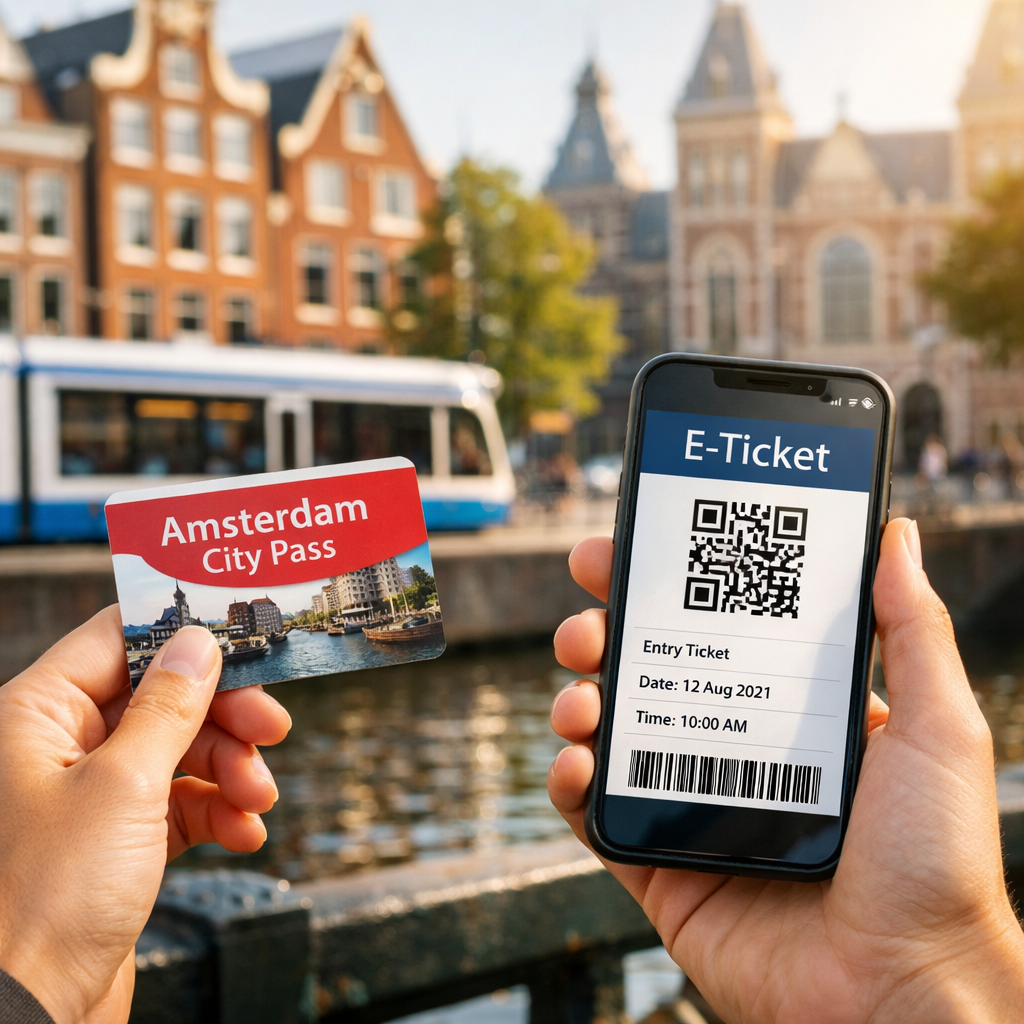
Multi-attraction passes bundle admission to several sites at a discount. You activate in an app, scan a QR code at venues, and often make timed-entry reservations for popular spots. Savings grow as you add more paid experiences—but most passes allow one visit per included location.
Digitization has streamlined the journey (apps, contactless entry), yet you’ll still need to follow activation and reservation steps exactly to avoid being turned away at busy venues, a point underscored in the city’s visitor-economy guidance focused on better-managed flows and digital tools. The I amsterdam City Card FAQ also stresses proper app activation and one-time entry per location. With Go City, select experiences such as the Heineken Experience and THIS IS HOLLAND typically require advance booking; the official Go City app flags which partners need reservations and links you to book. Travel Beyond Boundaries itineraries highlight reservation-dependent stops and the order to book them.
At a glance (common options):
- I amsterdam City Card: broad museum access, unlimited GVB public transport, one canal cruise, and local perks; excludes Van Gogh Museum and Anne Frank House.
- Go City Amsterdam: All-Inclusive or Explorer formats across 45+ attractions and tours; reservations required for select experiences.
- Amsterdam Digital Pass: a sampler pairing one museum with a canal cruise plus extras; simple and time-efficient.
- Cineville (niche): unlimited cinema membership; ideal for longer cultural stays, not a tourist-attraction pass.
I amsterdam City Card
What you get: free entry to 70+ museums and locations, unlimited GVB public transport within Amsterdam, one canal cruise, and typically a free 24-hour bike rental—delivered via a digital card you activate in the app when you’re ready to start. The program’s official FAQ clarifies activation, one-time entry at each location, and where to buy (online or at the I amsterdam Store at Amsterdam Central Station).
What’s not included: the Van Gogh Museum and the Anne Frank House are excluded and must be booked separately through their official channels.
How to use it:
- Buy online or at the I amsterdam Store.
- Activate in the app on the day you want to start.
- Scan for entry; each partner venue is one-time admission.
- Use GVB trams/metro/buses freely during your validity window.
Who it’s for:
- Museum-focused travelers who want integrated public transport and a canal cruise within city limits.
Go City Amsterdam Passes
Formats:
- All-Inclusive: visit as many included attractions as you like on 1, 2, 3, or 5 consecutive days.
- Explorer: choose a set number of experiences to redeem at a relaxed pace. The official Go City Amsterdam guide details both formats, the 45+ attraction network, and how to make required reservations in the app.
Reservations:
- Some experiences (e.g., Heineken Experience, THIS IS HOLLAND) require advance booking. The app highlights these and links to partner calendars.
Value in practice:
- Passes can pay off quickly when stacking several mid-to-high-priced activities. For example, Madame Tussauds Amsterdam lists an individual ticket at €26.50; combine that with a Rijksmuseum visit, a canal cruise, and a windmill tour over a 2–3 day plan and you can surpass pass cost while keeping flexibility.
Top inclusions often featured:
- Rijksmuseum
- Moco Museum
- Canal cruises
- Windmill day trips and regional tours
Amsterdam Digital and niche passes
Amsterdam Digital Pass:
- A light bundle that typically includes one marquee museum, a canal cruise, and an audio guide or transport add-on. It’s designed for first-timers who prefer simplicity over breadth, as summarized in this independent roundup of Amsterdam pass options.
Cineville:
- A cinema membership offering unlimited entry across 70+ cinemas—priced around €19/month for under-30s and €24/month for 30+—best for long stays and film lovers rather than sightseeing days, per the same roundup.
Mini comparison:
- Scope: Digital Pass = 1–2 highlights + cruise; Go City/I amsterdam = multi-attraction networks.
- Who it’s for: Digital Pass = short stays and minimal planning; Multi-attraction = sight-packed itineraries.
- Reservations: Digital Pass = limited but check cruise times; Multi-attraction = common timed-entry across popular venues.
Local partner schemes and resident options
Stadspas:
- A free benefit for Amsterdam or Weesp residents on limited incomes that can provide discounts or free entry to museums, pools, theatres, and select services. It’s not a tourist pass and requires eligibility verification and application via municipal channels, as noted in local guides to city passes and benefits.
When to consider:
- Long-term stays transitioning to residency
- Local families planning regular cultural outings
- Cultural regulars who’ll use recurring discounts and free days
What’s included versus what’s not
I amsterdam City Card:
- Transport: unlimited GVB within Amsterdam.
- Canal cruise: one included.
- Headline museums: extensive list across 70+ sites; one-time entry per location.
- Key exclusions: Van Gogh Museum and Anne Frank House require separate tickets. Source for policy and inclusions: the official I amsterdam City Card FAQ.
Go City Amsterdam:
- Coverage: 45+ attractions and tours across museums, experiences, and regional trips.
- Reservations: required for some partners; confirm in the Go City app before purchase and again before you go.
- Entry rules: scan your pass; most partners allow single entry per venue.
Tip: Always confirm current partner lists, blackout dates, and reservation instructions in the official app before buying, as lineups and policies can change.
Reservation rules and timed entry
Timed entry means you book a specific arrival window that helps venues manage crowds; missing your slot can mean denied entry or rebooking per partner rules. With Go City, several headline experiences require reservations and the app indicates which ones and how to book. With the I amsterdam City Card, you must activate your digital pass in-app and follow partner instructions—while separately prebooking excluded icons like the Van Gogh Museum and the Anne Frank House through their own sites.
Simple booking flow:
- Choose your dates and shortlist must-sees.
- Open your pass app; note which venues require reservations.
- Secure timed-entry slots for popular sites first.
- Build buffer time between activities and keep QR codes saved offline. Travel Beyond Boundaries route maps build in buffer time and offline backups to keep your day on track.
Transport access and crowd strategy
The I amsterdam City Card includes unlimited GVB transport within city limits, making trams and metro the fastest, least stressful way to connect museums and neighborhoods during busy hours. Amsterdam’s transport and public spaces feel the strain of tourism, with overcrowding on popular corridors and more than 19 million visitors reported in a recent year, according to an overview of Amsterdam tourism challenges and solutions. Crowd-savvy habits matter. Travel Beyond Boundaries plans cluster sights by neighborhood and lean on tram/metro links to cut transfers.
Smart moves:
- Book earliest time slots for major museums.
- Avoid weekend afternoons for venues without reservations.
- Use trams/metro to bypass bike-path congestion and longer walks.
- Cluster sights by neighborhood to cut travel time.
Value calculator and when a pass pays off
Estimate savings before you buy. List what you’ll do, note gate prices, and compare with pass costs.
Example calculator (illustrative):
- Rijksmuseum: high-demand museum (typical major-museum pricing)
- Madame Tussauds Amsterdam: €26.50 example ticket
- Canal cruise: standard 1-hour rate
- Windmill day trip: regional tour pricing If you plan two or more paid experiences per day, an All-Inclusive format often wins; if you prefer 3–6 total highlights over several days, an Explorer or Digital Pass can fit better. Go City’s own guidance explains how value stacks across €40–€50 attractions, while the I amsterdam City Card’s one-time-entry and activation rules are key to planning around re-visits and timing. Travel Beyond Boundaries planning checklists help you price the mix and sequence days before you buy.
Pro tip:
- Factor reservation friction and one-time entry rules into your math; a missed time slot can erase planned savings.
Responsible visiting and regional links
Amsterdam’s long-term tourism vision emphasizes working with regional partners, spreading visits beyond hotspots, and setting guardrails against overdependence on tourism—priorities detailed in the city’s Vision on Tourism 2035. Local policy and research also encourage digitization, respectful visitor behavior, and better-balanced flows that discourage nuisance travel patterns. Actively contribute: explore regional museums and windmill villages, travel off-peak, respect residential quiet hours, and plan routes that avoid piling into the same corridors at the same times. Travel Beyond Boundaries guides surface quieter alternatives that still deliver depth.
How to choose your best route to the icons
Decision flow:
- Pace: Planning 2–3+ paid sights per day? Choose Go City All-Inclusive. Fewer highlights with flexibility? Go City Explorer or an Amsterdam Digital Pass.
- Coverage: Need unlimited GVB and broad museum access? Pick the I amsterdam City Card.
- Must-sees: If the Van Gogh Museum or Anne Frank House are non-negotiable, buy those timed tickets separately and layer a pass around them.
Who offers access to Amsterdam’s top sites and attractions?
- I amsterdam City Card: 70+ museums/locations, unlimited GVB, one canal cruise; best for museum lovers and city-only trips.
- Go City Amsterdam: 45+ attractions and tours in All-Inclusive or Explorer formats; great for variety and day-trip potential.
- Amsterdam Digital Pass and Cineville: specialist options for light sightseeing or longer cultural stays.
Planning next? Explore our destination itineraries and culture dives for route ideas and museum picks:
- Travel Beyond Boundaries: Destinations
- Travel Beyond Boundaries: Culture
Booking tips and common pitfalls
Before purchase:
- Confirm inclusions/exclusions and one-time entry rules in the official pass info.
- Check which venues require reservations in the pass app.
After purchase:
- Activate digital cards correctly in-app on your start day.
- Book timed entries for popular sites first.
- Verify each partner’s cancellation/change window.
On the day:
- Save QR codes offline.
- Arrive early for timed entries.
- Build 30–45 minutes between bookings to absorb delays.
Frequently asked questions
Do I need to prebook time slots if I have a pass
Yes. Many popular attractions require reservations even with a pass; check your pass app and book early for peak times. Travel Beyond Boundaries itineraries flag must-book slots and ideal windows.
Why are some headline museums not included in certain passes
Some institutions manage capacity and ticketing directly, so they’re excluded from multi-attraction partnerships and must be booked separately. Travel Beyond Boundaries plans note these exceptions and when to book direct.
How do digital activation and app QR codes work at the entrance
Activate your pass in the official app on your start day and present the QR code at entry; staff scan it to validate one-time admission. Travel Beyond Boundaries checklists cover activation timing and what to show at the door.
Can I use pass perks for canal cruises without a reservation
Often no—canal cruises typically require a timed slot. Travel Beyond Boundaries includes the booking link and best time-of-day picks in your plan.
What is the best way to combine transport passes with attraction access
Choose a pass that includes GVB if you’ll cover ground, then stack earlier time slots and use trams/metro to move efficiently. Travel Beyond Boundaries routes cluster sights by tram/metro lines to cut transfers.