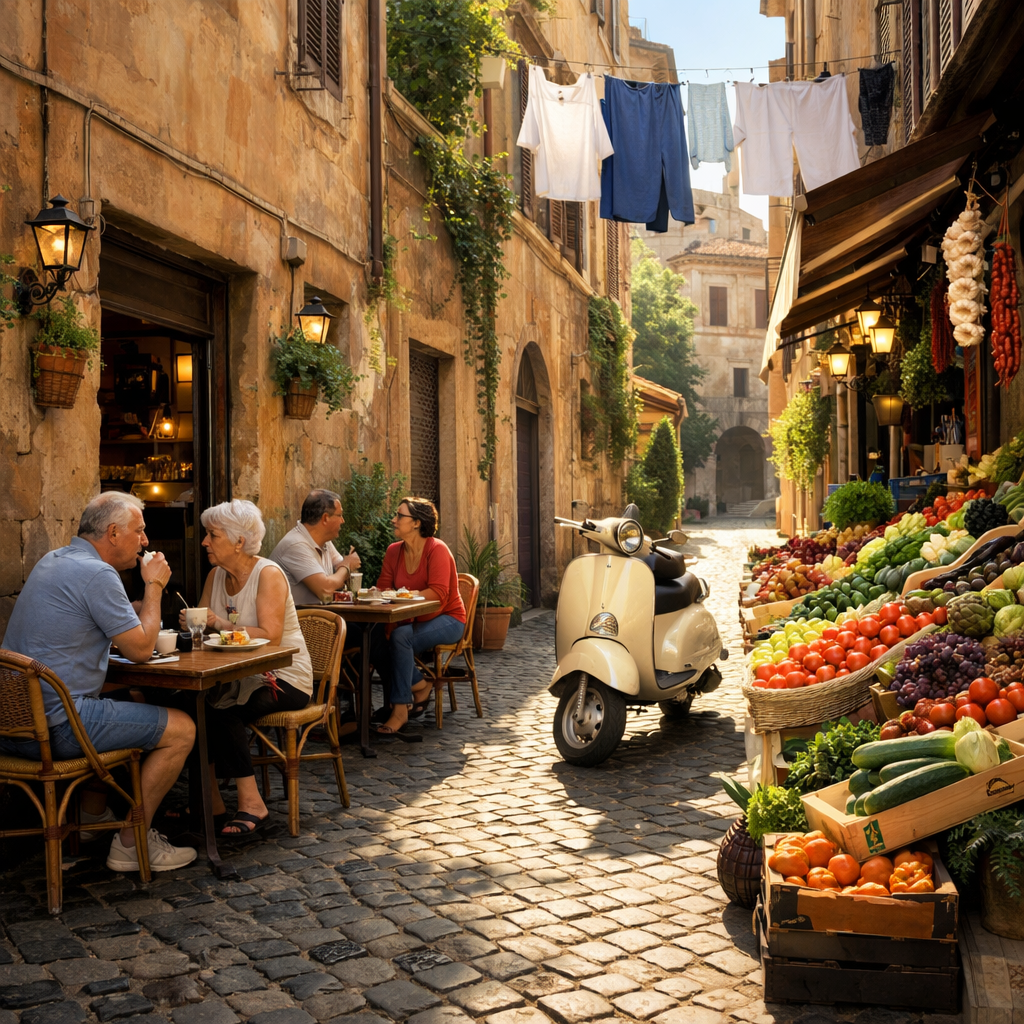
Tired of Tourist Traps? Reliable Ways to See Real Rome
If you’re done with elbowing through selfie sticks, Rome rewards travelers who plan with intent: split time between authentic neighborhoods and the historic core, book limited-capacity entries, and use truly small-group guides for context. This guide distills reliable, logistics-first tactics we’ve tested to minimize queues and maximize meaning—neighborhood walks, timed slots at the Vatican and Borghese, quiet gardens, food markets, and dawn/dusk circuits that reclaim iconic spaces. You’ll find where to go, when to go, and how to go—so you see the real Rome without the friction.
1) Travel Beyond Boundaries
At Travel Beyond Boundaries, we curate premium-yet-practical Rome experiences—logistics-first itineraries, hands-on reviews, and selective, truly small-group formats—so you can explore with confidence. Our Destinations, Experiences, Reviews, and Tips & Guides are built around curated itineraries, premium small-group tours, and on-the-ground Rome travel tips across authentic Rome neighborhoods. Start planning via our Destinations hub and browse our Tips & Guides for step-by-step playbooks.
2) Neighborhood walking in Trastevere, Testaccio, and Prati
To see a more authentic Rome, balance the postcard center with time in Trastevere, Testaccio, and Prati. Aim for roughly a 50/50 split between the historic core and these lived-in districts. Neighborhood walking is a slow exploration strategy focused on streets, markets, and local eateries. It trades checklists and lines for context, spontaneous finds, and daily rhythms—often the quickest path to the “real” city.
Trastevere (vibe: golden-hour magic, cobbled lanes, artisan energy; best: early morning or late afternoon)
- 2–3 hours: Piazza di Santa Maria > Basilica di Santa Maria in Trastevere (mosaics) > Biscottificio Innocenti (warm cookies) > Via della Scala artisan stretch > sunset pause on Ponte Sisto > relaxed trattoria like Da Teo.
- Why it works: postcard looks with neighborhood soul; a classic Trastevere itinerary without the midday crush.
Testaccio (vibe: working-class roots, serious food culture; best: mid-morning into lunch)
- 2–3 hours: Mercato di Testaccio (supplì, salumi tastings) > Monte Testaccio (ancient pottery mound) > Non-Catholic Cemetery (quiet contemplation) > Panificio Passi (fresh bread) > Flavio al Velavevodetto (carbonara or amatriciana).
- Why it works: Rome’s pantry—Testaccio food traditions run deep; fewer tourists, more substance.
Prati (vibe: elegant grid, local restaurants; best: morning to beat Vatican spillover)
- 2–3 hours: Sciascia Caffè 1919 (espresso) > Mercato Trionfale (produce, cheese) > Pizzarium Bonci (by-the-slice benchmark) > quiet church stop (San Gioacchino in Prati) > L’Arcangelo (gnocchi alla romana) or a Prati local restaurant for lunch.
- Why it works: polished but lived-in; great eating without the center’s squeeze. Keywords: Trastevere itinerary, Testaccio food, Prati local restaurants, off-the-beaten-path Rome.
3) Early-entry museum and basilica access
The Vatican Museums span 24 museums and are busy year-round, with intense crowding and effectively no true low season. In 2024, the opening time shifted to 8:00 (from 9:00) and “early-entry” Sistine Chapel access now begins at opening; arrive 20–30 minutes before doors or book the first guided slot for the lowest density (see the Vatican opening time update). Price anchors help you decide: standard entry €17; reserved timed entry €21; audio guide about €7; guided Vatican tours commonly €30–50 (see the Rome budget guide).
Plan your morning with this quick comparison:
| Option | Approx. cost | Pros | Cons |
|---|---|---|---|
| Standard entry at 8:00 | €17 | Cheapest; lowest density if you’re truly first-in | Requires arriving early and moving efficiently |
| Reserved timed entry | €21 | Predictable entry window; shorter ticketing queues | Still busy inside; no guide context |
| First-slot guided tour | €30–50 | Guide context; optimized routing; often fastest into marquee rooms | Earlier start; limited slots; higher cost |
Pro tip: Pair the Vatican first thing with a quiet St. Peter’s Basilica visit immediately after or at day’s end, when lines are shortest.
4) Scavi and Vatican grottoes tours
The Vatican Necropolis (Scavi) is the ancient burial ground beneath St. Peter’s, including traditionally recognized early Christian tombs. Access is strictly controlled in small guided groups to protect archaeology and ensure safety. These rare-access tours (Scavi and the Vatican grottoes) cost about €13–€15 and often sell out months ahead, so plan early (price context in the Rome budget guide).
How to book in four steps:
- Choose dates 2–3 months out.
- Request Scavi or grottoes slots via official Vatican channels, indicating flexibility.
- Bring photo ID matching your reservation.
- Dress modestly (shoulders/knees covered).
Capacity is limited and context is exceptional—this is one of Rome’s highest historical payoffs. Keywords: Vatican Scavi tour, Vatican grottoes tickets, St. Peter’s underground.
5) Borghese Gallery timed slots
The Borghese Gallery strictly limits each entry to roughly 360 people per slot and routinely sells out weeks ahead. Book early and aim for the first session of the day for the best sightlines. A focused 90-minute highlights route: Bernini’s Apollo and Daphne and The Rape of Proserpina; Caravaggio’s Boy with a Basket of Fruit and David with the Head of Goliath; Canova’s Paolina Borghese. Consider an audio guide or compact guided tour for deeper context.
Pre-visit checklist:
- Reservation confirmed (screenshot and email).
- Arrive 20 minutes early; bag-size limits apply.
- Afterward, decompress with a stroll through Villa Borghese gardens.
6) Small-group or private local guides
Define “small group” as under 12 guests—anything larger compromises sightlines, pacing, and Q&A. Many tours marketed as “small group” still run 20–25 people; ask pointed questions before you book (see how to choose the best Rome tours).
Verification checklist:
- Maximum group size in writing.
- Guide credentials and headset use.
- Route specifics, including quieter stops away from chokepoints.
Travel Beyond Boundaries prioritizes operators that cap groups under 12 and publish clear routes that avoid chokepoints.
Best use cases: deep-dive Ancient Rome, neighborhood food walks, and themed art history. Keywords: private Rome guide, truly small-group tours, skip-the-line strategy.
7) Public transit and Roma Pass strategy
Rome is best navigated on foot inside historic neighborhoods; use metro/buses for longer hops. The metro’s two main lines reach much of the city, and the 72-hour Roma Pass costs €38 with unlimited public transport—great value for 3-day stays (see this Rome travel guide).
Pros and cons:
- Pros: good value; wide reach; ideal for linking spread-out sights.
- Cons: walking is still essential; some hotels sit far from hubs.
Strategy: Activate the pass on days you’re crisscrossing town; otherwise, buy singles and meander locally. Keywords: Roma Pass 72 hours, Rome metro tips, public transport in Rome.
8) Market and food tours in Testaccio and Campo de’ Fiori
Markets offer instant cultural immersion—and a fast track past tourist-trap dining. Start in Testaccio, where tradition runs deep and visitor numbers are lower; food tours here often weave in dish histories, local wines, and the trattorie you’ll return to for days (browse unusual things to do in Rome for neighborhood inspiration).
A simple 2-hour tasting route:
- Testaccio Market bites (supplì, salumi, pecorino).
- Neighborhood bakery stop.
- Trattoria lunch for quintessential Roman pastas (gricia, amatriciana).
Campo de’ Fiori tip: go morning for produce stalls; avoid the midday crush when the square skews touristy. Keywords: Rome food tour, Testaccio market, Campo de’ Fiori food, authentic trattoria Rome.
9) Multi-day small-group day trips
When regional highlights (Pompeii, Amalfi, Capri) feel daunting, multi-day small-group tours trade planning time for predictability: streamlined transport, held tickets, and curated pacing—at a higher per-person cost (see Rome itineraries and costs).
What to confirm:
- Max group size; vehicle type; included entries.
- Balance of guided time vs. free time.
- Light packing and exact hotel pickup windows.
Travel Beyond Boundaries favors small caps and balanced pacing when we recommend regional extensions.
Keywords: Pompeii day trip from Rome small group, Amalfi/Capri excursion, Italy regional tours.
10) Dawn and dusk city walks
Timing transforms Rome’s icons. Visit Trevi Fountain at sunrise or late evening to skip peak crowds, and remember the Colosseum draws about 6 million visitors yearly—timing matters (see this Rome top attractions overview).
Two 60–90 minute circuits:
- Dawn: Piazza Navona > Pantheon (exterior) > Trevi > Spanish Steps.
- Dusk: Colosseum at blue hour > Forum overlooks (Via dei Fori Imperiali) > Capitoline Hill > Tiber reflections near Ponte Sisto.
Keywords: Rome sunrise walk, Rome at night, avoiding crowds in Rome.
11) Appian Way and lesser-known ancient sites
Step onto the Via Appia Antica for cobbled serenity and vivid context. Rent a bike at the park entrance, then roll: Church of Domine Quo Vadis > Catacombs of San Sebastiano or Domitilla (about 30-minute tours, roughly €10 adults/€7 children) > Tomb of Cecilia Metella > countryside stretch toward the aqueducts. For an alternative to the Colosseum story arc, visit Teatro Marcello—an elegant, 20,000-seat amphitheatre completed in 12 BC. Keywords: Via Appia Antica, Rome catacombs tour, lesser-known ruins Rome.
12) Quiet viewpoints and gardens
Reset your senses between headline sights:
- Villa Borghese terraces (Pincio) right after the museum.
- Aventine’s Orange Garden for hushed skyline views.
- Janiculum Hill, paired with a Trastevere ramble.
- Summer opera at the Baths of Caracalla for atmospheric culture amid ruins (highlighted in this best things to do in Rome feature).
- Detour to Quartiere Coppedè for flamboyant Art Nouveau whimsy.
Keywords: Rome viewpoints, hidden gardens Rome, Quartiere Coppedè.
13) Under-the-radar palazzos and museums
Under-the-radar museums are focused collections or historic residences with limited capacity and calmer galleries—quality over quantity. Trade mega-museum fatigue for these 60–90 minute gems:
- Palazzo Doria Pamphilj (old-master trove, gilded halls); linger afterward on Piazza del Collegio Romano with a coffee.
- Palazzo Altemps (Roman sculpture in a serene palace; a branch of the National Roman Museum); decompress on nearby Piazza Navona’s quiet backstreets.
- Centrale Montemartini (ancient statuary amid vintage turbines); pair with a riverside stroll on the Ostiense side.
Cross-link back to the Borghese if you still want a blockbuster with strict capacity.
Booking and timing strategy
A weekly flow to beat lines and decision fatigue:
- Lock limited entries first: Scavi months ahead; Borghese weeks ahead.
- Choose one early-entry morning—Vatican at 8:00—with reserved tickets (€21) or a guided slot (€30–50).
- Schedule 1–2 neighborhood days (Trastevere/Testaccio/Prati).
- Group distant sights on your Roma Pass days (€38/72h).
- Add dawn/dusk walks for icons like Trevi to dodge peak crowds.
Note: reputable operators sometimes hold ticket blocks that help with last-minute access to popular sites. Travel Beyond Boundaries itineraries follow this sequence and are updated as entry policies shift.
Safety and scam avoidance
- Book via official sites; avoid street sellers touting “skip-the-line” deals.
- Keep valuables zipped and front-facing on transit and in crowds.
- Ignore unsolicited bracelets, “gifts,” or photo ops.
- Verify tour maximum group size in writing.
- Use metro/buses for long hops; walk locally where it’s densest.
- Airport logistics: FCO is ~40–50 minutes from the center; the high-speed train to Termini runs about every 30 minutes.
Budget and value tips
Spend where it changes the experience: early/timed entries, truly small-group or private guides, and select transfers. Save with the Roma Pass (€38/72h, unlimited transport) and self-guided neighborhood days. Key anchors: Vatican Museums €17 standard/€21 reserved; audio guide ~€7; guided Vatican tours €30–50; Scavi/grottoes €13–15.
A quick 3-day calculator:
- Option A (Roma Pass + guided first slot): €38 (72h transport) + €30–50 (guided Vatican) + any additional entries = €68–88+.
- Option B (Piecemeal singles): Transit pay-as-you-go (variable) + Vatican standard €17 + audio €7 = €24 + transport.
Choose A if your sights are spread out; choose B if you’re staying hyper-local and walking most of the time.
Frequently asked questions
How do I spot and avoid tourist trap restaurants in Rome?
Skip places with hawkers, huge laminated photo menus, and generic dishes on main piazzas; look for short seasonal menus, a chalkboard of specials, and rooms filled with locals just off the busiest streets. Travel Beyond Boundaries neighborhood guides flag reliable trattorie and markets.
Is early entry really worth it for the Vatican or Colosseum?
Yes—first-in access reduces crowd pressure at peak sights, especially the Vatican, and lets you enjoy marquee rooms before they bottleneck. We design itineraries that build key early entries into your schedule.
When should I book Scavi and Borghese tickets?
Reserve Scavi months ahead due to very limited capacity, and book Borghese weeks in advance since timed slots sell out quickly. Our planning checklists call out these booking windows.
What does “small group” actually mean and how do I verify it?
Aim for under 12 guests; confirm the operator’s maximum size in writing, ask about headsets, and avoid tours that label “small group” but allow 20–25 people. We prioritize operators that cap groups under 12.
Should I get Roma Pass or just walk and use single tickets?
If your plan spans distant sights over 72 hours, Roma Pass is strong value; if you’re staying central, walking plus single rides may be cheaper. Our itineraries indicate when to activate a pass versus buy singles.