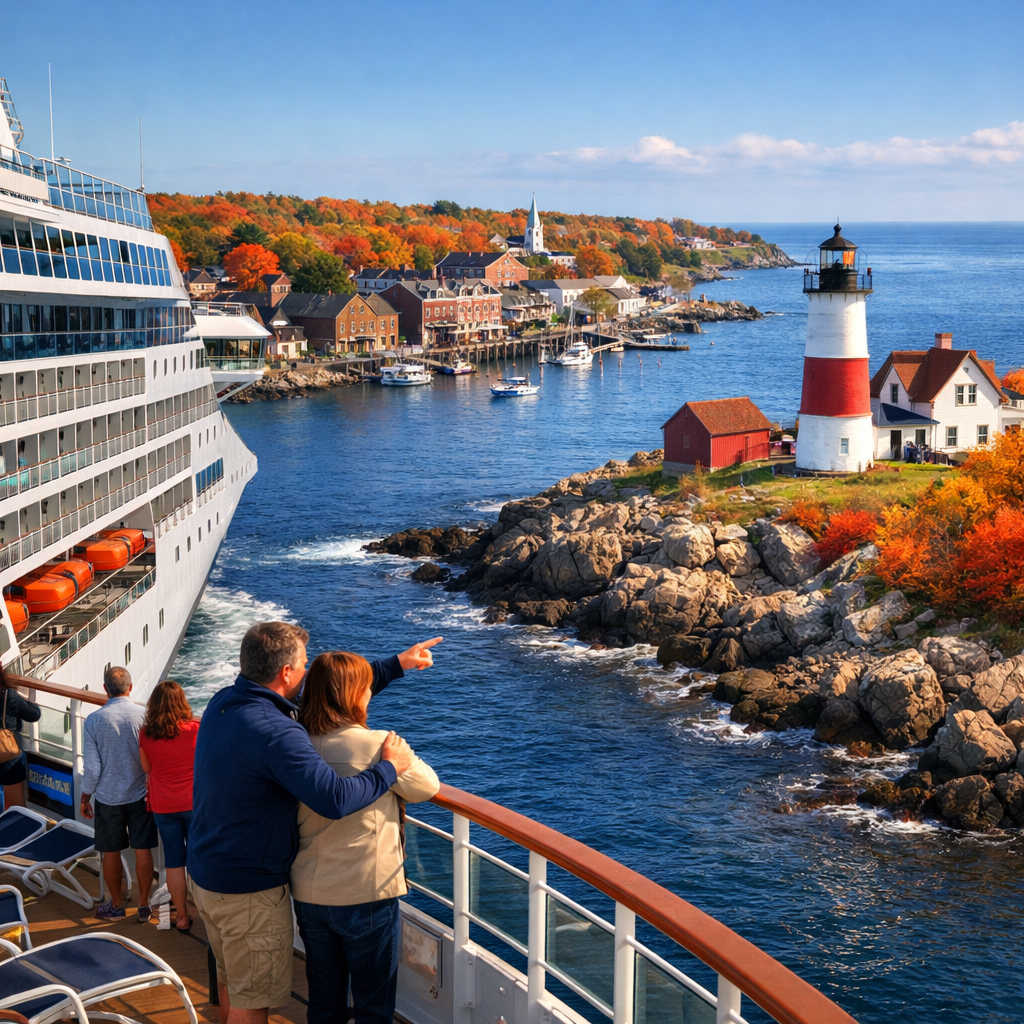
How to Choose the Right Canada & New England Cruise Package
Choosing the right Canada & New England cruise package starts with three levers: when you go, where you call, and what kind of ship fits your style. The region runs May to October, with color-chasing fall foliage cruises peaking in late September to mid-October. Routes cluster around round-trips from Boston or New York and one‑ways into the St. Lawrence for Quebec City or Montreal. From big‑ship family fun to small‑ship cultural immersion, matching your priorities to itinerary, season, and ship will keep your days focused on what matters most—scenery, history, food, or family time—while minimizing logistics. Use the framework below to narrow the field quickly and confidently. Travel Beyond Boundaries uses this same framework to match travelers to the right sailing without the guesswork.
Start with your travel priorities
Begin by listing 3–5 non‑negotiables and rank them. Tie each to concrete outcomes so you can filter fast: specific ports, an overnight in Quebec City, budget per cabin, ship size/style, kids’ programming, or must‑have amenities like an indoor pool. If you prefer, Travel Beyond Boundaries can translate these into a short list of matching sailings and ships.
- Couples “scenic‑culture” stack: late‑September foliage, overnight in Quebec City, small/premium ship with lectures, balcony cabin, two sea days for downtime.
- Families “active‑value” stack: round‑trip Boston, Bar Harbor for Acadia, big‑ship amenities and kids’ clubs, freestyle dining, drive‑to flights to BOS/JFK/EWR.
- Culture seekers “deep‑dive” stack: one‑way into the St. Lawrence River, guided history walks in Halifax and Charlottetown, curated small‑group tours, quiet lounges.
Port‑intensive itinerary: Many Canada/New England cruises call on a port almost every day and are often port‑intensive, with shorter sea stretches and abundant sightseeing time—great for active explorers and families, with less ship‑only downtime (see CruiseDirect’s overview of Canada & New England routes).
https://www.cruisedirect.com/blog/posts/what-are-best-canadanew-england-cruises
Pick the best season for your goals
The season runs May–October, with the busiest sailings August–October and prime leaf‑peeping from late September to mid‑October, per destination roundups from Cruise Critic and The Points Guy.
- CruiseCritic season guide: https://www.cruisecritic.com/find-a-cruise/destination-canada
- Peak foliage timing: https://thepointsguy.com/cruise/best-cruises-canada-new-england/
Expect brisk, changeable fall weather: daytime highs around 50–60°F, nights in the high 30s–40s, and roughly 8–12 precipitation days per month—pack layers and waterproofs (The Points Guy’s packing guide).
https://thepointsguy.com/cruise/canada-new-england-cruise-packing-list/
| Season | Pros | Cons |
|---|---|---|
| Summer (Jun–Aug) | Warmer temps, calmer seas, family‑friendly schedules | Higher fares, school‑holiday crowds |
| Early Fall (early Sep) | Milder weather, thinning crowds, first color hints | Color not yet at peak; temps start to dip |
| Peak Foliage (late Sep–mid Oct) | Vivid colors, crisp air, atmospheric ports | Cool/wet spells; cabins sell out—book early (high demand) |
Travel Beyond Boundaries helps you target the right week for your goals and budget.
Map must-see ports and route structure
Verify your must‑see ports before you fall for a ship. Bar Harbor is the gateway to Acadia National Park, Saint John accesses the Bay of Fundy’s record tides, Peggy’s Cove is commonly reached via Sydney, and Quebec City rewards an overnight with Old‑World ambiance and food. If deeper exploration matters, shortlist itineraries that schedule overnights in Quebec City or Montreal; many one‑way routes build them in for cultural depth (Mundy Cruising’s route advice).
https://www.mundycruising.co.uk/cruise-news/cruise-advice/canada-new-england-cruises
Tendering: When a ship cannot dock, guests transfer via small boats between ship and shore. It adds time and can be difficult for some with mobility concerns. Key New England ports—Bar Harbor, Martha’s Vineyard, Newport, and Rockland—often require tendering (see The Points Guy’s Canada & New England tips).
https://thepointsguy.com/cruise/canada-new-england-cruise-tips/
Travel Beyond Boundaries prioritizes overnights when cultural depth is the goal and explains tender logistics up front so you can plan with confidence.
Round-trip convenience from Boston or New York
Round‑trip itineraries typically run 7–9 nights, hit 5–7 ports, and sail frequently from New York and Boston—easy for drive‑to cruisers and simple flight plans to JFK/EWR/BOS. They fit school calendars, simplify logistics for multigenerational groups, and often keep overall costs predictable.
One-way depth to Quebec City or Montreal
One‑way routes between New York/Boston and Montreal/Quebec City usually span 12–14 nights and add St. Lawrence River ports—often with overnight stays for rich culture and history. Plan for open‑jaw flights and slightly higher trip complexity in exchange for deeper, slower exploration (Mundy Cruising).
https://www.mundycruising.co.uk/cruise-news/cruise-advice/canada-new-england-cruises
Tender versus dock access at key ports
- Common tender ports: Bar Harbor, Martha’s Vineyard, Newport, Rockland. Tendering can be time‑consuming and challenging for mobility aids.
- Strategies: Request early tender tickets for limited‑capacity tours, add buffer time to independent plans, or select itineraries with a higher share of docked calls if accessibility is a priority.
Match ship style and size to your travel style
Align ship identity to your vibe and budget so your “floating hotel” enhances the journey. Travel Beyond Boundaries recommends ships based on your priorities, not the other way around.
- Family/budget seekers: big‑ship features, flexible dining, wallet‑friendly fares.
- Mid‑range enrichment: strong shore programs plus onboard historians/naturalists.
- Premium/small‑ship immersion: smaller vessels, inclusive fares, lectures, overnights.
- Adult‑forward quiet: subdued nightlife, spa/wellness, destination‑focused days.
| Segment | Example Lines | Onboard Style | Typical Inclusions | Best For |
|---|---|---|---|---|
| Family/Budget | Carnival, Norwegian, Royal Caribbean | Casual, entertainment‑rich, flexible dining | Base fare; add‑on drinks/specialty dining | Multigenerational value and flexibility |
| Mid‑Range Enrichment | Holland America, Princess | Classic comfort, destination talks, solid tours | Occasional credits; curated excursions | Culture/nature lovers seeking balance |
| Small Ship Premium/Luxury | Viking, Oceania, Seabourn, Regent, Silversea | Quiet, lecture‑led, higher service ratios | More inclusions (Wi‑Fi, drinks, tours vary) | Seasoned travelers wanting depth and ease |
| Expedition‑style/Exploration | Ponant, Explora Journeys | Smaller ships, expert‑led shore focus | Select excursions; boutique wellness/dining | Itinerary depth and slower, place‑led travel |
Family-friendly and budget-focused ships
For value, Carnival often prices lowest, Norwegian’s freestyle cruising model means no fixed dining times and a relaxed vibe, and Royal Caribbean layers in big‑ship entertainment and family activities—well‑suited to port‑intensive itineraries where destination days outnumber sea‑day lounging (as summarized by CruiseDirect).
Mid-range comfort with enrichment
Holland America and Princess frequently field historians, naturalists, and destination experts—ideal for travelers who want learning with comfort. Holland America’s Canada & New England program features broad port coverage, more overnights, curated excursions, and added‑value perks (credits/specialty dining) that scale by voyage length (Holland America’s planner).
https://www.hollandamerica.com/content/dam/hal/marketing-assets/PDFs/2026-hal-canada-new-england-planner.pdf
Small ship and premium experiences
Luxury and premium lines such as Seabourn, Regent, and Oceania bring smaller ships and more inclusive pricing on this route; Viking emphasizes lectures and an adult‑forward atmosphere. Silversea layers in Highlight, Signature, Private, Custom, and select Overland multi‑day tours for deeper cultural access (Silversea’s planning guide).
https://www.silversea.com/blog/destinations/canada-new-england/how-to-choose-your-cruise-canada-new-england
Onboard amenities to verify
Before you book, confirm the features that matter in variable weather and for your group: an indoor or enclosed pool, kids’ clubs, quiet lounges, and lecture theaters. Also check what’s included and your line’s app experience to streamline check‑in and shore booking (Inspiration Travel’s tips).
https://www.inspirationtravel.com/blog/best-canada-new-england-cruise-tips
Travel Beyond Boundaries verifies these features in advance and clarifies what’s included so expectations match reality.
Confirm practicalities and accessibility needs
Match the ratio of port to sea days to your energy levels, and evaluate mobility considerations such as stairs, tender launches, cobblestones, and gangway gradients. Ask about elevator access, accessible shore tours, and early‑morning arrival patterns so you can pace days comfortably. Travel Beyond Boundaries coordinates accessible touring and realistic pacing for mixed‑ability groups.
Quick checklist:
- Dock vs. tender mix and total number of port calls
- Frequency of early arrivals and long touring days
- Gangway gradients and elevator availability
- Accessibility notes on shore tours and independent options
Documentation and entry requirements
U.S. citizens should travel with a valid passport to enter Canada and re‑enter the U.S.; while some closed‑loop U.S. round‑trips may accept alternative WHTI documents, requirements vary by line and itinerary—passports remain the most reliable option (Princess pre‑cruise FAQs).
https://www.princess.com/faq/pre-cruise
Travel Beyond Boundaries double‑checks entry and document rules for your exact sailing.
Closed‑loop cruise: A round‑trip voyage that begins and ends at the same U.S. port. Some lines accept WHTI‑compliant alternatives (e.g., passport card, trusted traveler cards) for U.S. citizens on closed‑loop routes, but policies differ. A passport minimizes boarding and re‑entry complications (Princess FAQs).
https://www.princess.com/faq/pre-cruise
Sea-day balance and mobility considerations
Expect port‑intensive pacing—many itineraries call almost daily—fantastic for sightseeing, less ideal if you crave long, lazy sea days (as noted in CruiseDirect’s route overview). Choose voyages with an occasional sea day for rest, and prioritize docked ports if you use mobility aids.
Sustainability, wildlife ethics and community impact
Choose smaller‑group, community‑led tours and wildlife viewing that keeps respectful distances, avoids feeding or chasing, and follows local guidelines. Favor lines with destination experts and curated excursions.
Our commitment in practice:
- Book locally owned and indigenous‑led guides when available
- Leave‑no‑trace coastal walks and lighthouse heritage routes
- Market‑to‑table tastings that support regional producers
- Carbon‑smart transfers and shared shuttles where sensible
Book with intention and prepare smart
Peak foliage weeks sell out fast—lock dates and preferred cabin types early and reserve high‑demand shore tours as soon as booking opens. Before sailing, confirm inclusions (beverage packages, dining, excursion credits) and download your line’s app for check‑in, time changes, and excursion management. Travel Beyond Boundaries can coordinate pre‑booking and app check‑ins to save time.
Secure peak foliage dates early
Target late September to mid‑October and book as early as possible—these weeks fill quickly across ships and cabin categories. Set fare alerts and consider shoulder‑week flexibility to secure your preferred stateroom.
Lock in priority shore experiences
Pre‑book marquee tours with limited capacity: Acadia hiking (Bar Harbor), Bay of Fundy tide viewing (Saint John), and Peggy’s Cove (via Sydney). Factor tender timing into independent plans. When comparing value, note which voyages include shore‑excursion credits or specialty dining by length (as detailed in Holland America’s planner).
Pack for variable coastal weather
Pack smart layers: a waterproof rain jacket, compact umbrella, insulating mid‑layer, hat and gloves for chilly evenings, and non‑slip walking shoes. With fall daytime highs of 50–60°F, nights in the high 30s–40s, and 8–12 wet days per month, add a packable down layer and warm sleepwear for balcony time (The Points Guy’s packing guide).
How Travel Beyond Boundaries supports your cruise selection
We match your priorities to the right season, route, and ship—then curate responsible, small‑group shore days and handle the logistics end‑to‑end.
A recent case:
- Traveler profile: parents with teens, grandmother using a rollator
- Priorities: Acadia hiking, Quebec City culture, one rest day, minimal tendering
- Recommendation: 12‑night one‑way Boston→Quebec City on a mid‑size ship with an indoor pool, one Quebec City overnight, and two lecture days onboard
- Shore days: private accessible van for Fundy tides, small‑group Acadia walk, market‑to‑table tastings in Quebec City
- Outcome: balanced pacing, meaningful learning, and community benefits via vetted local partners
Tailor-made itineraries and small-group departures
We stitch open‑jaw flights, pre/post stays in Boston, Quebec City, or Montreal, and seamless transfers. Shore days cap at intimate group sizes, with private guides to navigate tender timing and maximize port‑intensive schedules.
Vetted local partners and responsible shore experiences
Our partners are screened for conservation standards, fair wages, and cultural integrity. Expect coastal ecology walks, lighthouse heritage routes, indigenous‑led storytelling where offered, and photo outings with leave‑no‑trace practices.
Safety, risk management and seamless logistics
We audit suppliers, advise on insurance, and build mobility‑aware port plans with tender alternatives where possible. You’ll have real‑time app support, document checks (passport/WHTI), timed embarkation, and shore buffers to avoid missed departures.
Frequently asked questions
When is the best time to cruise Canada and New England?
Late September to mid‑October for peak foliage; May–October overall. Travel Beyond Boundaries helps time sailings to match foliage by region and your schedule.
Which departure ports are most convenient for a round-trip cruise?
Boston and New York are the most common and convenient round‑trip gateways, with easy access via BOS, JFK, and EWR and plenty of 7–9 night options. We plan flights and transfers around your embarkation window.
How long should I plan for if I want to include Quebec City or the St. Lawrence?
Plan 12–14 nights on a one‑way itinerary between New York/Boston and Montreal/Quebec City for St. Lawrence depth and potential overnights. We shortlist options that align with your must‑see ports.
Do I need a passport for a Canada and New England cruise?
Yes, a valid passport is strongly recommended and often required; closed‑loop exceptions exist for some U.S. round‑trips, but a passport avoids complications. We verify document rules for your specific line and itinerary.
Are Canada and New England cruises good for families and multigenerational travel?
Yes. Port‑intensive routes suit curious families, and lines with flexible dining and big‑ship amenities make logistics easy; we tailor shore days to all ages and mobility levels.