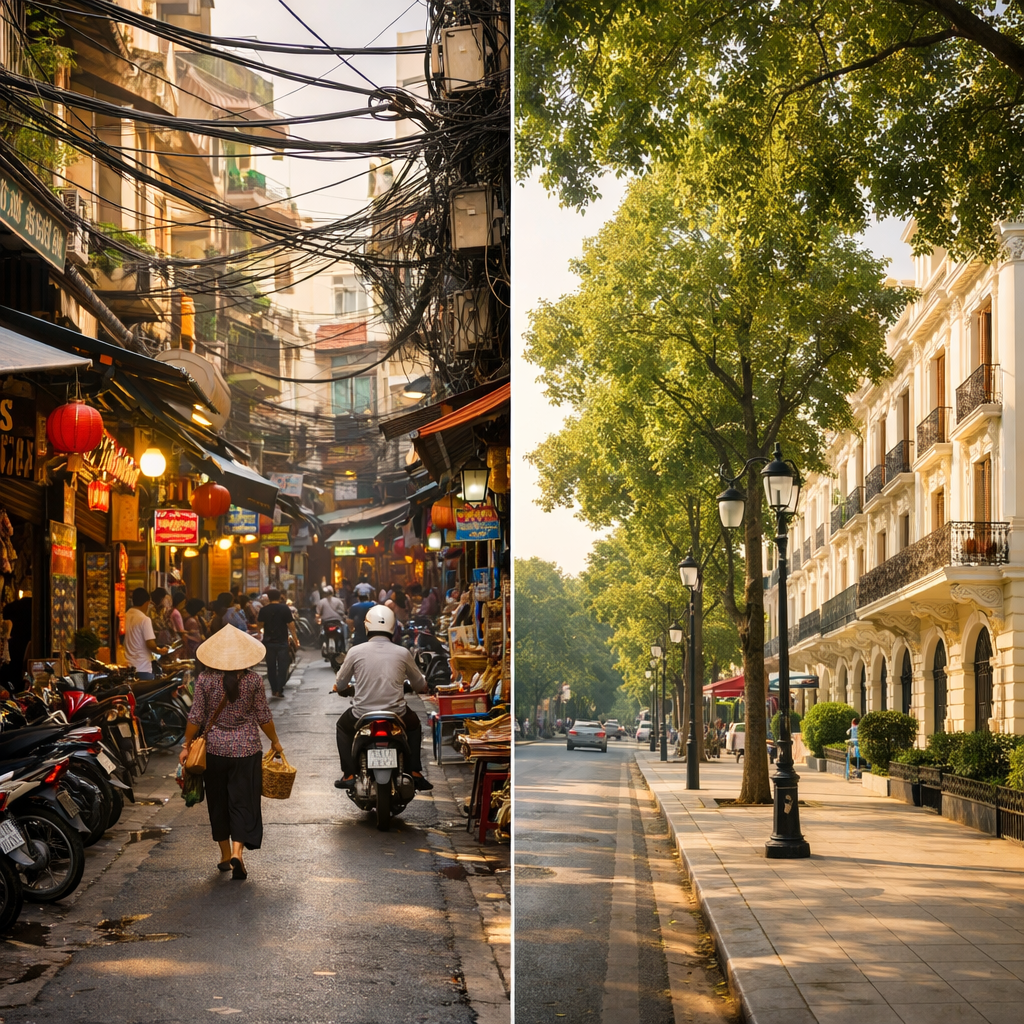
Hanoi Hotel Neighborhoods Compared: Old Quarter vs French Quarter
First-time in Hanoi and torn between the Old Quarter and the French Quarter? Here’s the decisive answer: choose the Old Quarter for walk-to-everything sightseeing, street food, and lively markets; pick the French Quarter for quieter nights, elegant boulevards, and upscale hotels. Both sit around Hoàn Kiếm Lake, so you’re central either way, but the feel and price bands differ. Community trip reports consistently describe the Old Quarter as compact and highly walkable to major sights [1], while the French Quarter is calmer, with wider streets and a higher concentration of upper-end properties that are priced higher on average [2]. Families and light sleepers can still enjoy Old Quarter access by booking higher floors or rear-facing rooms; if tranquility is the top priority, the French Quarter wins. Read on for a fast decision flow, at-a-glance contrasts, and booking strategies tailored to your travel style. This guide uses Travel Beyond Boundaries’ neighborhood-first framework to help you decide with confidence.
How to choose your Hanoi base
Use this 30-second flow:
- Prioritize immersive street life and markets? Choose the Old Quarter. Its lanes put you a short walk from Hoàn Kiếm Lake, Ngọc Sơn Temple, the Thang Long Water Puppet Theatre, and Đồng Xuân Market—ideal for first visits and spontaneous exploring [1].
- Prefer quiet streets, refined dining, and upscale hotels? Choose the French Quarter. Expect wider, tree-lined boulevards, calmer evenings, and higher prices overall [2].
- Mixed priorities? Stay near the lake’s edge to straddle both: easy daytime access to Old Quarter sights and quieter nights toward the French Quarter.
For context, traveler reports highlight the Old Quarter’s on-foot convenience to marquee sights [1], while frequent comparisons describe the French Quarter’s calmer, upscale ambiance and rate premium [2].
At a glance: key differences
| Aspect | Old Quarter | French Quarter |
|---|---|---|
| Vibe | Dense, buzzing, historic lanes with nonstop street life | Elegant, sedate, colonial-era boulevards |
| Walkability | Ultra-compact; most must-sees within a short stroll [1] | Relaxed promenading; a bit farther to markets/nightlife [2] |
| Dining | Street food, local eateries, night market snacks | Sit-down restaurants, cafes, and refined dining |
| Hotel profile | Hostels to solid midrange; many boutique options | Concentration of upscale/luxury brands |
| Price | Strong value; lower averages due to competition [1] | Higher nightly rates on average [2] |
| Nightlife | Lively, especially around “Beer Street” (Tạ Hiện) | Quieter evenings; low-key bars and lounges |
| Best for | First-timers, food lovers, market explorers, nightlife | Light sleepers, luxury seekers, relaxed pacing |
Quick take: choose the Old Quarter for street food, markets, and nightlife; the French Quarter for tranquil, upscale stays [1][2].
Old Quarter overview
The Old Quarter is Hanoi’s sensory core: narrow guild streets, lantern-strung alleys, and scooters threading past sidewalk kitchens. From most Old Quarter hotels, you can walk to Hoàn Kiếm Lake, Ngọc Sơn Temple, the Thang Long Water Puppet Theatre, Đồng Xuân Market, and the weekend night market—prime territory for Hanoi street food sampling and spontaneous detours [1].
Old Quarter — Hanoi’s compact historic core north of Hoàn Kiếm Lake, known for narrow lanes, traditional “36 streets” guild heritage, frenetic markets, and round-the-clock street life. Expect dense traffic, layered shop-houses, and a high concentration of eateries and budget-to-midrange hotels within easy walking distance of major sights.
Old Quarter pros and cons
- Pros:
- Walk-to-everything access: the lake, temples, puppet theatre, and key markets are minutes away [1].
- Abundant, affordable street food and local eateries.
- Broad hotel range from hostels to reliable midrange; strong value.
- Cons:
- Crowded, noisy streets and nightlife spillover—especially near Tạ Hiện “Beer Street.”
- Less polished streetscape and architecture than the French Quarter’s boulevards [2].
Noise-mitigation tips: book higher floors or rear-facing rooms, ask about double-glazed windows, and avoid addresses directly on bar or market corridors.
French Quarter overview
The French Quarter offers a quieter counterpoint: handsome colonial-era buildings, shaded sidewalks, and a measured pace. Hotels trend upscale and rooms are typically larger and better soundproofed; evenings feel calm, with cafes and restaurants suited to unhurried meals and easy strolls [2].
French Quarter — an area southeast of Hoàn Kiếm Lake marked by colonial architecture, embassies, cultural venues, and refined dining. Streets are wider and calmer than the Old Quarter, favoring upscale hotels and a relaxed urban rhythm while remaining central to Hanoi’s core attractions.
French Quarter pros and cons
- Pros:
- Quieter streets, formal ambiance, and relaxed evening strolls [2].
- Strong cluster of upper-end hotels, polished service, and refined dining.
- Cons:
- Higher prices and fewer true budget choices, as noted by travelers [2].
- Often a short taxi or ride-hail to the busiest market and nightlife corridors [1][2].
Walkability and access to sights
Old Quarter: compact and pedestrian-friendly. Many headline sights are a 10–20 minute walk from typical hotels [1].
- On foot in 10–20 minutes: Hoàn Kiếm Lake, Ngọc Sơn Temple, Thang Long Water Puppet Theatre, Đồng Xuân Market, Tạ Hiện “Beer Street,” St. Joseph’s Cathedral.
- Consider ride-hail/taxi: Temple of Literature, Ho Chi Minh Mausoleum, West Lake, Vietnam Museum of Ethnology.
French Quarter: wider, calmer boulevards and a relaxed pace; still central, though often a longer walk to markets and nightlife hubs [2].
- On foot in 10–20 minutes: Opera House, Trang Tien ice cream/cafe strip, boutique galleries, lake perimeter walks, Book Street.
- Consider ride-hail/taxi: Đồng Xuân Market, Tạ Hiện nightlife, Train Street, Long Biên Bridge.
Dining and nightlife
- Old Quarter: best base for Hanoi street food—pho, bun cha, banh mi—plus the weekend night market and bia hơi corners. Expect energetic nights, especially near Tạ Hiện; families and early sleepers should pick quieter side streets or higher floors [1].
- French Quarter: more sit-down restaurants and cafes with international menus and colonial flair; evenings are quieter with wine bars and hotel lounges over rowdy pubs [2].
Quick picker:
- Budget street eats: Old Quarter market lanes and curbside grills.
- Midrange bistros: around the lake and into the French Quarter.
- Upscale dining: hotel restaurants and fine-dining rooms in the French Quarter.
Hotel types and price expectations
Old Quarter: the widest spread—from hostels and guesthouses to well-reviewed 3–4-star properties—with strong value thanks to dense competition; prices typically undercut comparable French Quarter stays [1].
French Quarter: properties skew upscale and luxury, with larger rooms, polished amenities, and correspondingly higher rates on average [2].
Boutique hotel: a smaller, design-forward property, generally under 100 rooms, that emphasizes personalized service and local character. In Hanoi these often occupy restored shop-houses or colonial buildings, blending contemporary comforts with heritage details and neighborhood-driven experiences tailored beyond chain standards.
Windowless room: an interior hotel room without exterior windows. It’s usually 20–40% cheaper than comparable rooms and can mute street noise, but some travelers find it enclosed. Consider one if savings matter most and you’ll spend little time in-room beyond sleeping.
Transport and getting around
Both areas are central. The Old Quarter favors fast, on-foot sightseeing loops; the French Quarter may add brief ride-hail hops for markets and nightlife, while delivering easier crossings and calmer traffic [1][2].
Step-by-step cross-neighborhood flow:
- Start with a lake loop (pedestrianized on weekends).
- Walk Old Quarter lanes for temples and snacks.
- When heading to markets or nightlife corridors, hail a taxi/ride-hail.
- In peak heat or with luggage, default to ride-hailing apps door-to-door.
- Time your crossings: wider French Quarter roads are generally calmer; Old Quarter lanes require patience and eye contact.
Who should stay where
- Old Quarter: first-time visitors, food lovers, market explorers, nightlife seekers.
- French Quarter: relaxation-first travelers, luxury seekers, light sleepers, business or diplomatic trips.
- Families: Old Quarter for walkable days near the lake—request quiet, rear-facing rooms; French Quarter for larger upscale rooms and quieter nights.
Bottom line: Old Quarter for immersion and convenience; French Quarter for tranquility and comfort [1][2].
Sample itineraries by neighborhood
Old Quarter 1-day (all walkable from most hotels [1]):
- Morning: Hoàn Kiếm Lake loop and Ngọc Sơn Temple; Vietnamese coffee and a street-breakfast stop.
- Midday: Đồng Xuân Market graze for snacks and souvenirs.
- Afternoon: Thang Long Water Puppet Theatre matinee.
- Evening: Night market ramble and casual bia hơi around Tạ Hiện.
French Quarter 1-day:
- Morning: Boulevard stroll past colonial facades; cafe brunch.
- Midday: Opera House area galleries or a nearby museum; unhurried upscale lunch.
- Afternoon: Lake perimeter walk; short taxi to the Old Quarter market corridor for a browse.
- Evening: Refined dinner and a quiet nightcap in a hotel lounge or wine bar.
Booking strategies and timing
Travel Beyond Boundaries applies the checklist below when shortlisting rooms and can align choices to your noise, space, and budget priorities.
Old Quarter tips:
- Request higher floors or rear-facing rooms; confirm double-glazing where possible.
- If you’re budget-led and noise-sensitive, consider windowless rooms for significant savings (often 20–40% cheaper).
French Quarter tips:
- Book earlier for peak seasons; upscale inventory is limited and priced higher on average [2].
- Compare categories with lake or quiet-courtyard outlooks to balance tranquility and proximity.
Room-selection checklist:
| Factor | What to confirm | Why it matters |
|---|---|---|
| Orientation | Rear-facing or high floor | Reduces street noise, better sleep |
| Windows | Double-glazed or interior (windowless) | Sound control vs. price savings |
| Breakfast | Included vs. street eats nearby | Budget and morning timing |
| Cancellation | Flexible terms | Weather/plan changes |
| Proximity | Distance to lake/market streets | Daily walkability and night noise |
Travel Beyond Boundaries planning resources
For deeper hotel-location thinking beyond Hanoi, see our hotel location comparisons that apply the same neighborhood-first framework across cities, and our family-friendly room roundups for travelers prioritizing quiet rooms, extra space, or kid-friendly amenities. Travel Beyond Boundaries also curates premium-yet-pragmatic itineraries, small-group expeditions, private-night experiences, yacht cruises, and independent reviews to help you book with confidence.
- Hotel location comparisons and neighborhood frameworks: https://travelbeyondboundaries.com/tags/hotel-location-comparison
- Family-friendly room roundups and tips: https://travelbeyondboundaries.com/tags/family-friendly-rooms
Frequently asked questions
Is the Old Quarter or French Quarter better for a first visit?
Old Quarter is best for walkable access to major sights, markets, and street food; choose the French Quarter if you prefer quieter streets and upscale hotels. Travel Beyond Boundaries generally steers first-timers to the Old Quarter unless quiet is the top priority.
Are hotels in the Old Quarter noisy at night and how can I minimize it?
The Old Quarter is lively and can be noisy. Travel Beyond Boundaries recommends higher floors or rear-facing rooms, double-glazed windows, and avoiding rooms directly over bar or market streets.
Do I need to be right on Hoàn Kiếm Lake to walk to major sights?
No. Staying in the Old Quarter puts you within a short walk of the lake and key attractions like Ngọc Sơn Temple and the Water Puppet Theatre, while the French Quarter remains a central, easy base.
Are windowless rooms common in Hanoi and are they a good value?
Yes. Windowless rooms are common in dense urban hotels and can be 20–40% cheaper; Travel Beyond Boundaries often books them for value-focused stays.
Is it easy to use ride-hailing between the Old Quarter and French Quarter?
Yes. Short ride-hail or taxi trips make it simple to move between the markets and quieter boulevards, and Travel Beyond Boundaries itineraries pair quick hops with walkable loops to save time.
[1]: community trip reports highlighting Old Quarter walkability and access — https://www.facebook.com/groups/VietnamTravel308/posts/2098598644247267/
[2]: neighborhood comparisons noting the French Quarter’s calmer vibe and higher prices — https://www.facebook.com/groups/332906624145754/posts/2157201631716235/