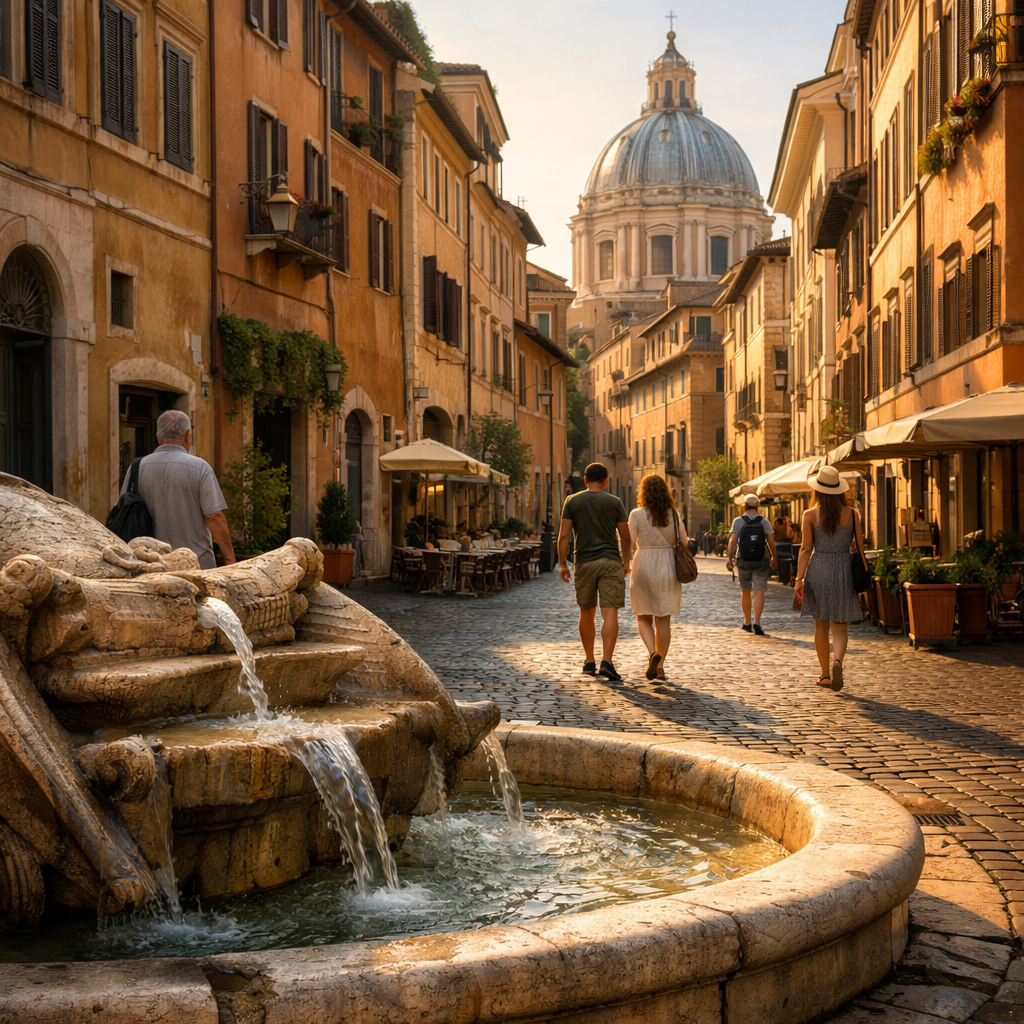
Free in Rome: Must-See Churches, Fountains, and Historic Streets
Rome’s headline sights don’t have to cost a cent. Many of the city’s greatest hits—St. Peter’s Basilica, the Pantheon, Trevi Fountain, Piazza Navona, Spanish Steps, and grand piazzas—are free to enter or admire, and they cluster within a compact, walkable core. Expect some paid add-ons (like dome climbs and museums), and note that city-run museums are free the first Sunday and the Vatican Museums the last Sunday of the month, albeit with big queues. Use this Travel Beyond Boundaries guide to build a smart, free things to do in Rome historic center walking route that prioritizes timing, etiquette, and effortless navigation, with clarity on what’s free versus worth a small splurge. For quick policy context, see Romewise’s guide to free things in Rome and Italo Treno’s free-admission roundup.
“Historic center (centro storico): The compact core of Rome where ancient, medieval, and Baroque landmarks cluster within easy walking distance. It includes major squares, churches, lanes, and streets near the Pantheon, Trevi, and Piazza Navona—ideal for a free, self-guided, first-timer, photogenic, map-friendly introductory sightseeing loop.”
Travel Beyond Boundaries
Our promise: expert-curated, value-conscious Rome planning that balances flexibility with rich context, so you see more with less stress. Use this page as a Destinations hub; when you’re ready, branch into our Experiences for walking tours and our Tips & Guides for culture, etiquette, and smart packing. We prioritize early starts and route sequencing that save time without rushing.
Plan a 6–8 km free-day loop through Rome’s historic center with timing cues to dodge 80–90% of crowds at hotspots by going at dawn.
How to see Rome’s icons for free
Many of Rome’s star attractions are free and close enough to string into a single Rome walking route. Start at Trevi, swing to the Pantheon, linger in Piazza Navona, cross the Tiber toward St. Peter’s, enjoy Castel Sant’Angelo viewpoints, then return via Campo de’ Fiori or Trastevere. Trevi and major squares are open 24/7, but dawn and winter offer the calmest moments. Free vs paid clarity:
- Free: churches (naves), piazzas, fountains, street atmospheres.
- Paid extras: dome climbs, certain chapels/museums, guided audio.
- Monthly freebies: municipal museums on first Sundays; Vatican Museums on last Sundays—arrive very early to manage lines.
Travel Beyond Boundaries itineraries often follow this flow to minimize backtracking and wait times.
St. Peter’s Basilica
The main entrance to St. Peter’s Basilica is free; lines can be long, but most visitors deem the nave, Michelangelo’s Pietà, and the vast spatial drama worth the wait. The dome climb and guided tours are paid; dress modestly (shoulders and knees covered), and expect security screening.
- Time it right: Arrive before opening for queues that are often 30–60 minutes shorter. Use blue hour for Piazza San Pietro photography, then enter at the door’s first sweep.
Pantheon
The Pantheon remains one of the world’s most astonishing free attractions because it functions as the church of Santa Maria ad Martyres. Inside, look for the tomb of Raphael and the perfectly proportioned dome crowned by the oculus.
“In the Pantheon, the oculus is the 9-meter-wide circular opening at the dome’s apex that admits daylight and rain, animating the interior like a moving sundial, its beam tracking across the floor each day. It relieves weight, showcases Roman engineering in concrete, and creates a vivid, free, ever-changing light show.”
Arrive at opening for smoother entry, pair the stop with an espresso nearby, and respect services and occasional midday closures. For context and other zero-cost highlights, see the Pantheon’s own guide to free sites.
Trevi Fountain
Trevi is free and open around the clock—an exuberant Baroque stage set and one of Rome’s most photographed places. Visit at dawn (or in winter) to avoid dense crowds and enjoy unhurried views. If you try the coin tradition: with your right hand over your left shoulder—one coin to return, two to fall in love, three to get married. Don’t sit on prohibited ledges, and watch for pickpockets at peak hours.
Piazza Navona
Baroque Rome at its most theatrical: Bernini’s Fountain of the Four Rivers anchors a square built atop a Roman stadium from nearly 2,000 years ago. Street artists, performers, and café buzz add year-round atmosphere; early morning light or an after-dinner stroll are especially photogenic, as echoed by crowd-sourced patterns on this top-rated Rome attractions list.
Comparison at a glance:
| Square | Vibe | Best time | Nearby add-ons |
|---|---|---|---|
| Piazza Navona | Baroque art, fountains, lively buskers | Early morning; blue hour | Pantheon, Church of Sant’Agnese |
| Campo de’ Fiori | Produce market by day; social hub by night | 08:00–12:00; 20:00–22:00 | Jewish Ghetto lanes; Ponte Sisto |
| Piazza del Popolo | Grand gateway, broad perspectives | Golden hour; sunset | Pincio Terrace; Via del Corso |
Spanish Steps
Glamour meets crowds: expect a popular, touristy scene, but the staircase’s rooftop views and proximity to the fashion district on Via Condotti make it a classic free stop. Arrive before 09:00 for clear photos, don’t picnic or sit where prohibited, and link it with Piazza del Popolo and Villa Borghese for a northern-center loop. Climb once, then descend via shady park paths.
Roman Forum viewpoints
You don’t need a ticket to feel ancient Rome’s skyline. While close-ups require entry, powerful free vantage points include:
- Via dei Fori Imperiali railings for sweeping axis views
- Capitoline Hill’s Campidoglio edges down to the Forum
- The open terraces around the Victor Emmanuel II monument
Best photos: golden hour; avoid midday glare. For more budget-savvy ideas around the Forum and beyond, see the New York Times budget Rome picks and our Rome Tips & Guides.
Villa Borghese Gardens
This sprawling park is free to enter—perfect for a restorative stroll, shady lakeside loop, or a skyline moment from the Pincio Terrace over Piazza del Popolo. Museums inside (like the lauded Galleria Borghese) are ticketed; consider optional, small exhibitions such as the Carlo Bilotti Museum if you want a compact art stop.
Piazza del Popolo
A grand neoclassical stage with twin churches, an obelisk, and easy access to the Pincio overlook. Pair it with the Spanish Steps and Villa Borghese in a single morning loop; it’s free, spacious, and great for a gelato pause.
Quick route cues:
| From | To | Walk time | Best light | Crowd level |
|---|---|---|---|---|
| Piazza del Popolo | Pincio Terrace | 8–10 min uphill | Sunset | Moderate |
| Piazza del Popolo | Spanish Steps | 12–15 min | Early morning | Builds mid-morning |
| Pincio Terrace | Villa Borghese lake | 10–12 min | Late afternoon | Light |
Basilica di San Clemente
A textbook “layers of Rome” stop: the church exterior and main level are simple to access, while lower archaeological levels typically require a small fee or timed entry. It’s a useful add-on after the Colosseum and Forum viewpoints. Many free churches in Rome close from roughly 12:00–16:00; dress modestly and check service schedules.
Trastevere
Cobbled lanes, ivy-draped façades, and lively piazzas make Trastevere a top free neighborhood wander, best at twilight. Try a simple loop: sunset on Ponte Sisto, people-watching in Piazza Trilussa, and a respectful peek into the nave of Basilica di Santa Maria in Trastevere during non-service times. Keep valuables secure and stick to lit streets late.
Campo de’ Fiori
By day, it’s a photogenic market square; by night, a social stage—always free to roam. Best hours are 08:00–12:00 for produce and flower stalls, 20:00–22:00 for atmosphere. Pair with Piazza Navona via an easy 7–10 minute walk. Ask vendors before photographing them, and avoid blocking stalls.
Appian Way
The Appia Antica offers a half-day, free escape with ancient tombs, ruins, and countryside vibes. Take a bus or rideshare to Appia Antica Regional Park, then walk toward long aqueduct views. Sundays are quieter for traffic. Bring water, snacks, sun protection, and sturdy shoes for cobblestones.
Smart planning tips for a free-day walking loop
Start before sunrise to enjoy Trevi and the Pantheon with minimal company, then fan out through neighboring piazzas. Most churches pause visiting during services and often close midday (about 12:00–16:00), so schedule interiors early or late.
Sample 1-day loop (adjust to pace):
| Time | Stop | Notes |
|---|---|---|
| 06:30 | Trevi Fountain | Dawn photos; near-empty steps and ledges |
| 07:30 | Pantheon | Early entry; quiet oculus moment |
| 08:15 | Espresso stop | Stand at the bar for quick, budget-friendly coffee |
| 09:00 | Piazza Navona | Foundations of a Roman stadium; Bernini’s fountain |
| 10:00 | St. Peter’s Basilica | Dress code; aim for opening to trim lines |
| 12:30 | Lunch | Shade and reset; plan around church closures |
| 14:30 | Castel Sant’Angelo bridge | Free viewpoints along the river |
| 15:30 | Villa Borghese Gardens | Pincio Terrace overlook |
| 17:30 | Piazza del Popolo | Golden-hour photos |
| Sunset–Evening | Trastevere via Campo de’ Fiori | Twilight walk; street life and church façades |
Safety and etiquette for free sites
- Guard against pickpockets in packed zones (Trevi, Spanish Steps, buses). Use a cross-body bag and keep phones zipped away.
- Don’t climb or sit on fountain ledges; follow posted rules. In churches, cover shoulders and knees, remove hats, and keep voices low.
- Hydration tip: Rome’s public nasoni fountains pour safe, potable water—carry a refillable bottle.
When free becomes paid and how to time it
Many churches are free; a few charge for special chapels or archaeological areas, and many pause visitors between noon and 16:00. City-wide policies matter: municipal museums are free on the first Sunday, and the Vatican Museums on the last Sunday—arrive very early to manage queues. If time is tight, pre-book paid add-ons.
| Site | Free areas | Paid extras | Best booking window |
|---|---|---|---|
| St. Peter’s Basilica | Nave, piazza | Dome climb; guided tours | 1–2 weeks (peak seasons) |
| Pantheon | Church nave, tombs | Occasional audio/guided options | Same week |
| Castel Sant’Angelo | Bridge views, riverbanks | Museum interior, ramparts | Same week |
| Galleria Borghese | Gardens/parkland | Timed museum entry | 10–30 days |
| Vatican Museums | Last-Sunday free entry | Standard tickets; Sistine Chapel included | 1–3 weeks (non-free days) |
| Roman Forum/Colosseum | Exterior views | Combined site tickets | 1–2 weeks |
Frequently asked questions
Which historic sites in Rome are always free to visit?
St. Peter’s Basilica (nave), the Pantheon during regular church hours, Trevi Fountain, Piazza Navona, the Spanish Steps, Piazza del Popolo, Villa Borghese Gardens, and strolls like Trastevere and the Appian Way are free year-round. Travel Beyond Boundaries maps these into easy walking loops.
What time should I visit to avoid crowds at major fountains and squares?
Go at sunrise for the quietest photos at Trevi and the Spanish Steps, or after 21:00 in shoulder seasons. Travel Beyond Boundaries flags dawn and late evening as the easiest windows, with winter generally calmer.
Are there dress codes or closures to know for churches?
Yes—cover shoulders and knees, remove hats, and keep voices low. Many churches pause tourist visits midday; Travel Beyond Boundaries notes these closures so you can plan interiors early or late.
Can I see the Roman Forum and Colosseum without a ticket?
You can’t enter without a ticket, but you can admire free Forum views from Via dei Fori Imperiali and Capitoline Hill, and see the Colosseum’s exterior nearby. Travel Beyond Boundaries routes include these viewpoints on free days.
Is the water from Rome’s street fountains safe to drink?
Yes, the city’s public drinking fountains (nasoni) provide safe, potable water. Travel Beyond Boundaries suggests carrying a reusable bottle to refill as you go.