Best Free and Cheap Cultural Experiences in Paris 2026 Guide
Paris can feel exquisitely premium without the price tag. This Travel Beyond Boundaries guide curates the best free and cheap cultural experiences in Paris 2026—most €0–€15—so you can craft art‑ and history‑rich days with minimal queues and maximum atmosphere. We’ll lean on free museum days, neighborhood gems, skyline moments, and seasonal festivals to build a polished Paris budget itinerary. For more inspiration, browse our Destinations guides and our Budget Travel collection.
First‑Sunday museum openings and Nuit Blanche are two pillars of affordable Paris culture covered below, alongside smart timing, self‑guided walks, and low‑cost upgrades. Expect practical logistics and small‑footprint choices that feel premium from morning gardens to golden‑hour riverbanks.
Travel Beyond Boundaries
We design curated, premium‑leaning, small‑footprint travel: destination guides, deeply vetted experiences, and practical tips for culture‑first travelers. Expect selective free anchors, thoughtful pacing, and occasional small‑group or private add‑ons that elevate your day without inflating cost. Questions or custom help? Email hello@travelbeyondboundaries.com or connect on Instagram @travelbeyondboundaries.
Musée Carnavalet
A refined anchor for Parisian history, the Musée Carnavalet is a major free museum chronicling the city’s story inside two renovated Marais mansions—rich with signage, period rooms, and décor that reward lingering, not rushing (see the Embrace Some Place guide for context). Crowds are typically manageable even in peak months; you don’t need a first‑Sunday strategy here. Pair it with a 15‑minute stroll to Place des Vosges—free, arcaded, and perfect for a slow lap under the lime trees—then continue into side streets for independent galleries and cafés.
Compact Marais culture walk (60–90 minutes):
- Musée Carnavalet → Rue des Francs‑Bourgeois window‑shopping → Place des Vosges courtyard loop.
First Sunday museum openings
First‑Sunday museum openings are monthly free‑entry windows at many Paris museums and monuments, when visitors can access permanent collections without tickets. Queues and capacity controls are common. Go early, keep expectations focused, and prioritize one or two headline stops with nearby alternates so you can pivot quickly if lines spike.
Many institutions participate, including Musée d’Orsay and Centre Pompidou; verify current lists and hours in advance (the To Europe and Beyond roundup summarizes key options). In our Destinations guides, we group one anchor with nearby alternates to keep pivots walkable. A simple, queue‑dodging plan:
- 8:30–11:00: Tackle one anchor museum right at opening.
- Lunch nearby; then switch to free gardens or historic squares to sidestep midday peak lines.
Montmartre and Sacré Cœur
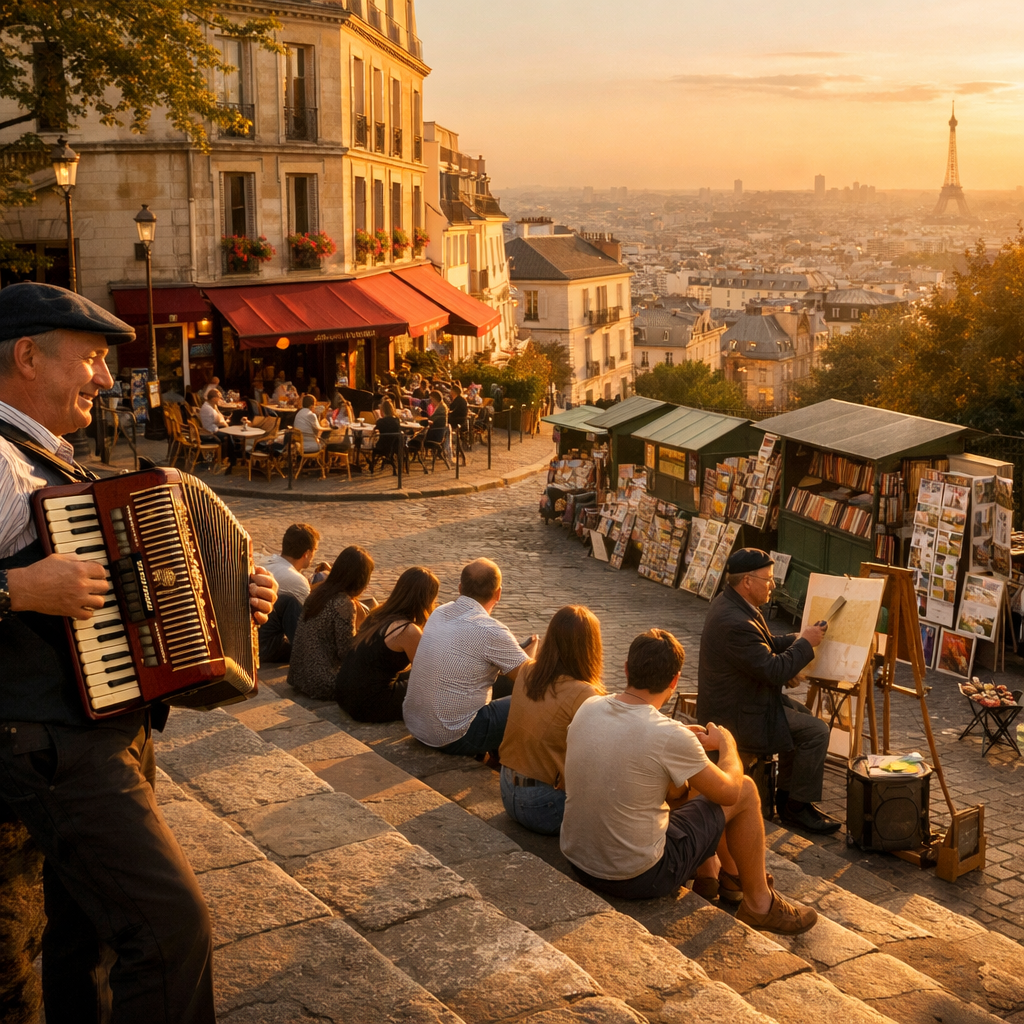
Plan 2–3 unrushed hours for Montmartre: step into the luminous basilica of Sacré‑Cœur (free), savor terrace views across the rooftops, then wander cobblestone lanes. Best windows are 8:00–11:00 for quiet or late‑afternoon into sunset in summer for that cinematic, golden glow (noted in several 2026 roundups). Observing the artists at Place du Tertre is free; if you’re not commissioning a portrait, decline politely and continue browsing side alleys for calmer vignettes.
Luxembourg Gardens and Tuileries
For classic, affordable Paris culture, the Luxembourg Gardens and the Tuileries offer sculpture‑lined promenades, people‑watching, and occasional informal music without spending. Bring a book, claim a green chair, and let the city come to you. For variety, rotate in Parc Monceau’s English‑style follies and statues, or Parc des Buttes‑Chaumont’s dramatic bluffs and the Temple de la Sibylle for unexpected city panoramas (highlighted in both neighborhood and free‑things guides).
Mini‑loop idea:
- Early jog in Luxembourg → sculpture stroll near the Medici Fountain → terrace café on Rue Vaugirard.
Galeries Lafayette rooftop
The Galeries Lafayette rooftop terrace delivers a free Paris viewpoint with a premium feel—Eiffel Tower, Opéra, and zinc rooftops laid out for wide‑angle photos. Seasonal kiosks offer optional drinks; the viewpoint itself costs nothing and neatly replaces pricier observation decks (a favorite tip from the Embrace Some Place guide). Aim for late afternoon on clear days, or blue hour for twinkling city lights.
Musée du Parfum and Musée de la Vie Romantique
The Musée du Parfum (Fragonard) is among the rare Paris museums that remain entirely free, with engaging scent‑making history and an optional boutique finale. Pair it with the Musée de la Vie Romantique—house‑museum salons, a petite garden café, and literary vibes—where temporary exhibits may carry a small fee. Together, they make a 90‑minute sensory‑and‑salon loop that’s gentle on time and budget (documented in the To Europe and Beyond list).
Palais de Tokyo and Musée d’Art Moderne
Opposite each other near the Eiffel Tower, Palais de Tokyo (cutting‑edge contemporary) and the Musée d’Art Moderne (20th‑century icons) offer complementary programs with many low‑cost or free elements, depending on exhibitions (well covered by Time Out’s best‑of listings). The city collection at MAM includes works by Picasso, Matisse, and Modigliani; check which galleries are free versus ticketed. Leave 15 minutes to browse Palais de Tokyo’s cult‑favorite basement bookshop for fashion and contemporary art titles.
Père Lachaise Cemetery
More outdoor museum than graveyard, Père Lachaise spans roughly 110 acres and shelters the graves of Chopin, Oscar Wilde, Jim Morrison, and Édith Piaf, along with extraordinary funerary sculpture. Map a 60–90 minute loop linking these touchpoints plus evocative memorial art. Keep voices low, stay on paths, and avoid touching worn or fragile monuments. It’s contemplative, photogenic, and entirely free (frequently spotlighted in Paris free‑things features).
Parc de la Villette open air cinema and summer festivals
From mid‑summer, Parc de la Villette hosts a beloved free open‑air cinema; you can rent chairs or blankets on site, or bring your own. Citywide, summer often brings additional free shows—comedy, circus, dance, theater—surfacing in seasonal calendars and weekly listings (see Sortir à Paris for 2026 roundups). Arrive 45–60 minutes early with a picnic to secure sightlines, and layer up for breezy nights.
Seine riverbanks and Pont Alexandre III sunset
For an iconic €0 evening, trace the Right Bank quays from the Louvre to Pont des Arts, time golden hour on Pont Alexandre III, then drift toward the Invalides lawn. Sunset here is repeatedly recommended as a top free Paris moment in 2026 guides. Keep valuables secure, stick to lit paths at night, and pause for street music where crowds feel convivial (Paris City Vision’s annual highlights also encourage evening riverbank strolls).
Nuit Blanche, Fête de la Musique, and European Heritage Days
Nuit Blanche is Paris’s annual all‑night arts festival when installations, performances, and many museums transform the city into an open‑air gallery with largely free access. Expect extended transit hours, themed routes, and dense crowds. Focus on one district loop to see more with less backtracking and fatigue.
Nuit Blanche 2026 is slated for June 6, with pop‑ups and late openings across the city; European Heritage Days on Sept 19–20, 2026 unlock special free access to usually closed monuments; and Fête de la Musique fills streets and squares with free concerts—commit to one or two neighborhoods to avoid crisscrossing (all flagged in Paris City Vision’s yearly planner).
How to plan high value days on a small budget
A seven‑day Paris trip built around free anchors often lands near €150–€250 per person in daily costs excluding lodging (€20–€35/day), especially when meals and transport are managed smartly—consistent with 2026 budget roundups. We structure Paris budget itineraries like this:
- Morning: one free museum or garden anchor.
- Afternoon: self‑guided neighborhood walk + a free rooftop or river view.
- Evening: seasonal free event or a Seine‑side stroll.
Scan local event listings March–June for rotating free exhibitions and concerts to slot into open windows (Sortir à Paris keeps updated calendars).
When to go for lighter crowds and better atmosphere
First‑Sunday free museum days reduce spend but inflate queues; arrive before opening, and pivot to neighborhood or smaller museums by midday. For Montmartre, go 8:00–11:00 for calm or late‑day in summer for drama. Quick timing matrix:
- Early mornings: churches, monuments, and blockbusters.
- Late afternoons: gardens, rooftops, and riverbanks.
- Weekdays: lighter than weekends almost everywhere.
Getting around efficiently and affordably
Paris’s metro is fast, inexpensive, and part of the cultural experience—tilework, buskers, and Art Nouveau entrances included (underscored in Paris City Vision’s guidance). Plan by neighborhood, not postcards: map 3–4 sights per district, walk the short links, and use single metro hops for longer transfers. Avoid peak‑hour line changes when possible.
Smart add ons and low cost upgrades
Thoughtful upgrades can stay under €15: small specialist museums, rooftop refreshments, or targeted exhibits. Guided or skip‑the‑line options often start around €19–€32—reserve for one headline museum on a non‑free day to deepen context without burning time (pricing ranges echoed in free‑and‑cheap Paris roundups). At Parc de la Villette, rent a chair or blanket for comfort. For 2026 cultural headliners—major exhibitions or concerts—choose selectively and balance with free anchors to keep the day’s average low (see Paris City Vision’s annual preview).
Frequently asked questions
Which Paris museums are free and when are first Sunday openings in 2026?
Many museums, including Musée d’Orsay and Centre Pompidou, offer free entry on the first Sunday each month. In our Travel Beyond Boundaries itineraries, we recommend arriving at opening, focusing on one anchor, then pivoting to a nearby free garden if queues surge.
What seasonal free events and festivals should I look for in 2026?
Mark Nuit Blanche on June 6 and European Heritage Days on Sept 19–20 for citywide free access and installations. At Travel Beyond Boundaries, we plan days around these to maximize free access and atmosphere.
How can I avoid lines on free museum days?
Arrive 20–30 minutes before opening, choose one anchor, and keep a nearby Plan B like a free garden; visit blockbusters on paid weekdays and favor smaller collections at midday. This mirrors Travel Beyond Boundaries’ pacing to keep time cost low.
Are there free evening or late night cultural programs?
Yes—Nuit Blanche runs citywide all night in June, and the Night of Museums typically offers free evening access in May. We often build evenings around these at Travel Beyond Boundaries to stretch budgets without losing ambiance.
What are the best neighborhoods for self guided cultural walks?
Le Marais (Carnavalet, Place des Vosges), Montmartre (Sacré‑Cœur, artists’ squares), and the Seine riverbanks from the Louvre to Pont Alexandre III combine architecture, public art, and standout photo spots with no entry fees. Travel Beyond Boundaries maps routes that link these with short walks.