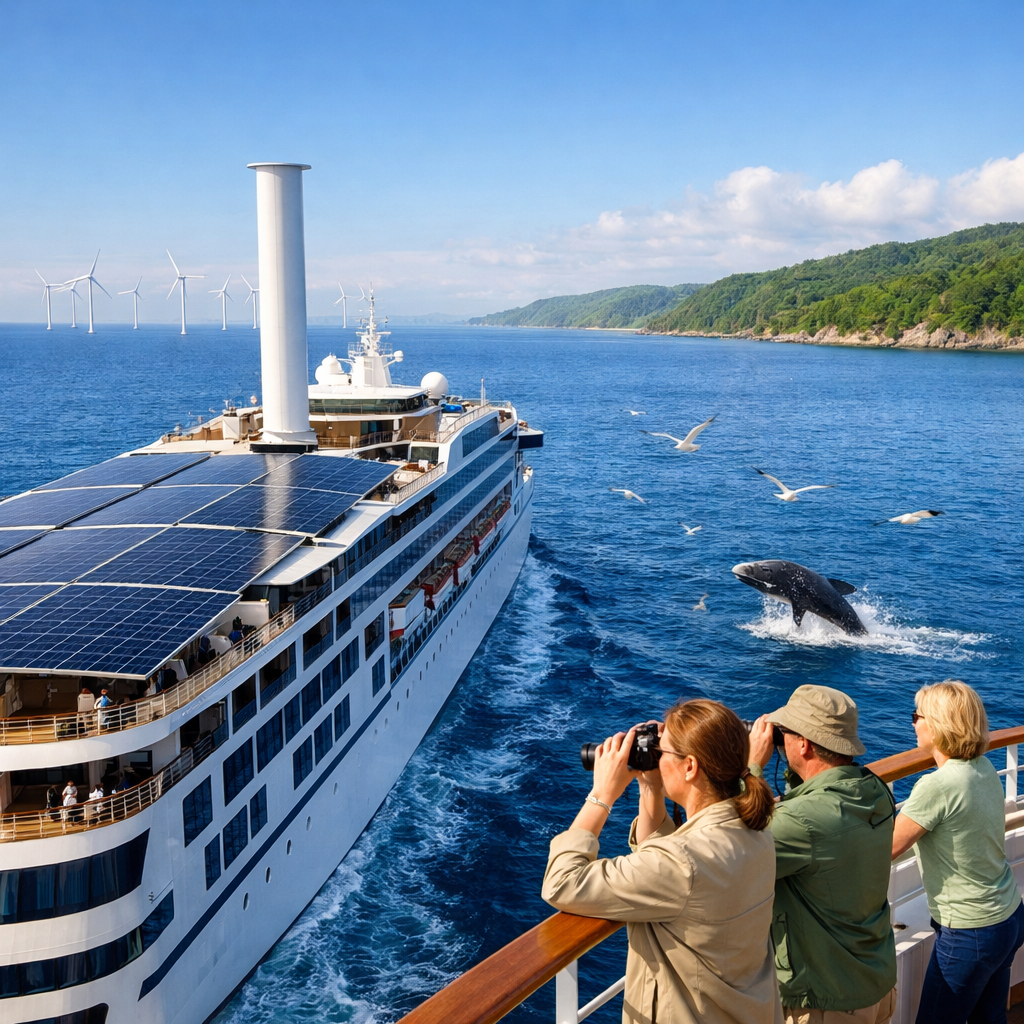
Best Eco-Friendly Cruise Lines to Book in 2026
The best eco-friendly cruise lines in 2026 combine real emissions reductions with elevated onboard experiences. New builds increasingly pair LNG and hybrid propulsion with large-capacity batteries and shore power to curb fuel burn and slash port pollution, especially on small-ship expedition cruises. While no cruise is zero-impact, choosing the right line, ship, and itinerary matters. Independent benchmarks help: the Friends of the Earth Cruise Ship Report Card evaluates 21 lines and 243 ships to track wastewater treatment, air pollution controls, and transparency. Below, we spotlight standout operators and the exact features to verify before you book, plus a practical, step-by-step path to lock in lower-impact voyages without sacrificing comfort.
Strategic Overview
Cruise sustainability is evolving fast in 2026. LNG cruise ships, hybrid cruise ships with battery assist, and shore power are moving from niche to normal, cutting local air pollutants and enabling quieter operations near sensitive coasts, as profiled in this overview of green cruise technologies for 2026 (Jamie Wake Travel). Expect big variance by ship and operator—and remember there’s no such thing as a perfectly green cruise. To compare options, use independent benchmarks: the Friends of the Earth Cruise Ship Report Card covers 21 cruise lines and 243 ships and remains a clear reference point for wastewater and air-pollution performance. If you want help interpreting technical specs and FOE grades, Travel Beyond Boundaries validates these details before we recommend a ship.
Travel Beyond Boundaries
We’re a curated, practical guide for travelers who want small-group, higher-service, and lower-impact journeys. Our mission is simple: blend inspiration with execution—tight shortlists, verified sustainability tech, and concrete logistics that make booking easy. Explore our premium-leaning trip curation in Europe for ideas on pacing and value, then reach out for tailored cruise itineraries and vetted providers at hello@travelbeyondboundaries.com or via Instagram @travelbeyondboundaries. We independently verify ship-level specs and operator claims before we recommend them.
Ponant
Ponant sets a high bar in luxury expedition cruising with polar-conscious ship design and research-forward programming. Le Commandant Charcot, a roughly 245-passenger luxury icebreaker launched in 2021, runs hybrid electric-LNG propulsion supported by advanced batteries—enabling lower-emission, quieter operations in polar zones. Onboard, think French chef-driven dining and science support that justify premium pricing, with accolades from the Condé Nast Traveler Gold List.
Booking guidance: Prioritize polar itineraries with strict landing protocols and limited numbers. Before you place a deposit, request ship-level specs on shore power readiness and advanced wastewater treatment. If offsets or third-party certifications (e.g., Green Marine) are mentioned, note them—but verify the scope and what is independently audited using this guide to environmentally minded ships and certifications (OceanEvent).
Viking
Viking is investing in near-term zero-emission prototypes while maintaining broad ocean and river coverage. The line is developing Viking Libra, expected to be the world’s first hydrogen-powered cruise ship with a late-2026 debut, and a follow-up ship, Viking Astrea, targeted for 2027, as reported in World of Cruising’s sustainability coverage. For social proof, U.S. News’ 2026 rankings named Viking Ocean among top performers, using a transparent weighting—experts (30%), traveler reviews (50%), and health data (20%) via CDC Vessel Sanitation Scores—see the U.S. News cruise rankings methodology.
Booking guidance: For 2026–2027, watch for hydrogen-enabled routes and hybrid features on the newest vessels. Ask for verified technical specs (propulsion type, shore power capability, and wastewater class) before you commit.
Hurtigruten
For coastal Norway and expedition routes, Hurtigruten shows concrete operational gains: certified biofuels on selected sailings, elimination of many single-use plastics, and targeted food-waste cuts are all in play (as documented by World of Cruising). Independent grading backs this up—Hurtigruten earned a final grade of B+ in the 2024 FOE report card.
Booking guidance: Favor hybrid-powered expedition cruises (early pioneers include MS Roald Amundsen) and coastal itineraries with shore charging where available or reduced-speed segments to trim fuel consumption.
Havila Voyages
Havila stands out for big batteries and real zero-emission segments on Norway’s coast. Its ships carry approximately 6.1 MWh of battery capacity, enabling about four hours of zero-emission sailing in fjords, with charging from shoreside hydropower. Pairing LNG with efficient hybrid operation can cut CO2 by around 35% and reduce NOx by up to 90% versus older designs, per Havila’s eco‑friendly ship specs.
Booking guidance: Choose fjord-heavy routes that schedule quiet, zero-emission segments. Confirm shore power access and the planned timing of battery-only transits. Energy-efficient hull forms and heat recovery systems are strong secondary signals of thoughtful design.
Silversea
Silversea’s newest hardware deserves a close look for travelers weighing ultra-luxury against sustainability. Silver Nova uses LNG alongside a sizable battery and a fuel-cell system to boost efficiency and reduce emissions. Expect spacious suites, high crew-to-guest ratios, and refined dining—luxury amenities that command multi-thousand-dollar fares on both ocean and expedition itineraries.
Booking guidance: When comparing Silversea ships, ask for confirmation of shore power capability, advanced wastewater treatment, and energy recovery systems. These ship-level features help justify price differentials on otherwise similar routes.
How to book eco-friendly cruise options
Use this five-step checklist to select ships and itineraries with verifiable sustainability features: You can follow this yourself or ask Travel Beyond Boundaries to run the checks and shortlist ships for you.
- Define destination and season. Expedition cruises (polar, subpolar) versus warm-water itineraries call for different tech and pacing.
- Shortlist lines with proven tech: LNG, hybrid propulsion, large-capacity batteries, and shore power are leading indicators.
- Verify ship-level specs: propulsion/fuel, shore power, advanced wastewater treatment, and battery size/zero-emission hours. Cross-check recent NGO grades at the FOE report card.
- Compare independent rankings and health/safety data. U.S. News’ weighting (experts/travelers/health) is a useful tiebreaker.
- Book flexible fares early and target new builds or smaller-occupancy ships, which often carry the most efficient systems.
Sample comparison table (verify details with the line before booking):
| Line | Ship / Year | Propulsion / Fuel | Shore Power | Wastewater System | NGO Grade (latest) | Typical Itinerary | Price Signal |
|---|---|---|---|---|---|---|---|
| Ponant | Le Commandant Charcot (2021) | Hybrid electric + LNG + batteries | Yes (confirm per port) | Advanced | Line-level; check FOE | Polar expeditions | Ultra-luxury premium |
| Viking | Viking Libra (2026, prototype) | Hydrogen fuel cell + hybrid assist (pilot) | Targeted; confirm ship | Advanced | Line-level; check FOE | Med/Northern Europe (select) | Premium ocean, new-tech |
| Hurtigruten | MS Roald Amundsen (2019) | Hybrid battery assist + marine gas oil | Yes (confirm per port) | Advanced | FOE 2024: B+ (line) | Antarctica/Arctic/Norway | Premium expedition |
| Havila | Havila Capella (2021) | LNG + large batteries | Yes (Norway ports) | Advanced | Not in all FOE cohorts | Coastal Norway/fjords | Mid- to high-premium |
| Silversea | Silver Nova (2023) | LNG + battery + fuel cell | Yes (confirm per port) | Advanced | Line-level; check FOE | Europe/Caribbean/global | Ultra-luxury premium |
What to look for in ship technology and policies
- LNG: Liquefied natural gas is a lower-sulfur, lower-particulate marine fuel that reduces local air pollution compared with heavy fuel oil. When paired with efficient engines and batteries, it significantly cuts port emissions; however, lifecycle methane slip remains a concern when assessing total climate impact.
- Shore power: The ability for ships to plug into grid electricity at berth and switch off main engines. This sharply reduces port-side emissions and noise and protects local air quality, especially in densely populated or fjord communities with frequent cruise calls.
- Advanced wastewater treatment: Modern systems treat sewage and graywater to high standards, often exceeding coastal discharge requirements. On newer luxury ships, these systems integrate with recycling and sludge management to minimize overboard discharge and support circular waste handling.
Verification tools and examples: Consult the FOE report card for line-level transparency and sample grades (e.g., Hurtigruten B+, several mainstream lines scoring poorly). Technology examples include Ponant’s hybrid electric-LNG icebreaker, Silversea’s fuel-cell integration, and Viking’s late-2026 hydrogen prototypes. Or ask Travel Beyond Boundaries to cross-check specs and recent grades against your dates and routes.
Itineraries that reduce impact
Expedition cruises typically deploy hybrid propulsion, reduced-noise operation, strict landing caps, and science support—ideal for sensitive polar or subpolar environments. Warm-weather routes benefit most from LNG power, shore power-ready ports, and slower pacing that burns less fuel. Opt for smaller-ship, port‑intensive itineraries with longer calls instead of sprint-style sailing. Ships to target by geography: Le Commandant Charcot for polar, MS Roald Amundsen as a hybrid pioneer, and Silver Nova for luxury-hybrid ocean cruising. Travel Beyond Boundaries builds port‑intensive pacing and targets shore power where feasible to lower local impacts.
Packing and onboard practices
- Pack reef-safe sunscreen, a refillable water bottle, and layered technical apparel to avoid unnecessary onboard purchases; many lines restrict single-use plastics, and Hurtigruten has led on plastics reductions.
- Choose table service over buffets, minimize laundry cycles, attend citizen-science briefings, and strictly respect landing caps and wildlife distances.
- Ask about food-waste initiatives and local sourcing; align your choices with line policies to create measurable impact. Travel Beyond Boundaries provides concise packing and onboard guidance aligned with operator policies.
When to book and how to get value
Pricing context: eco-forward expedition and ultra-luxury voyages carry premiums. Consumer Reports on cruise pricing found the typical price paid is just over $2,750 per adult, with demand rising into 2026 as mainstream interest grows. Value moves:
- Book 9–15 months out for new-builds and hydrogen/LNG hybrids; shoulder seasons can soften premiums.
- Compare added value: shore power access, advanced wastewater treatment, and battery assist can justify higher fares on similar routes.
- Use transparent rankings and health scores (U.S. News’ experts/travelers/health weighting) as tiebreakers.
- Ask advisors these quick signals: propulsion/fuel type; shore power-ready ports; wastewater class; battery size/zero-emission hours; latest FOE line grade. Travel Beyond Boundaries helps compare these features across ships so you pay for proven improvements, not just marketing.
Frequently asked questions
Which cruise technologies most reduce emissions?
Hybrid propulsion with LNG, large-capacity batteries, and shore power cut fuel burn and port emissions; advanced wastewater treatment further reduces impact. Travel Beyond Boundaries prioritizes ships with these specs.
Are any ocean cruises zero emission yet?
Not yet; hybrids and battery-assisted ships offer limited zero-emission hours, with hydrogen prototypes expected in late 2026. Travel Beyond Boundaries can advise on early routes once they’re available.
How can I verify a ship’s environmental performance before booking?
Check independent report cards by line, confirm shore power and wastewater systems, and request propulsion details. Travel Beyond Boundaries performs this validation and shares ship-level summaries before you book.
Do eco-friendly cruises cost more and how can I save?
They often carry 15–30% premiums; booking early, choosing shoulder seasons, and targeting ships with verifiable tech can deliver better value. Travel Beyond Boundaries compares options and timing to stretch your budget.
What traveler choices make the biggest difference onboard?
Pack reusables, follow landing and wildlife protocols, minimize laundry, and support food-waste reduction by ordering mindfully. Travel Beyond Boundaries provides line-specific guidance you can follow onboard.