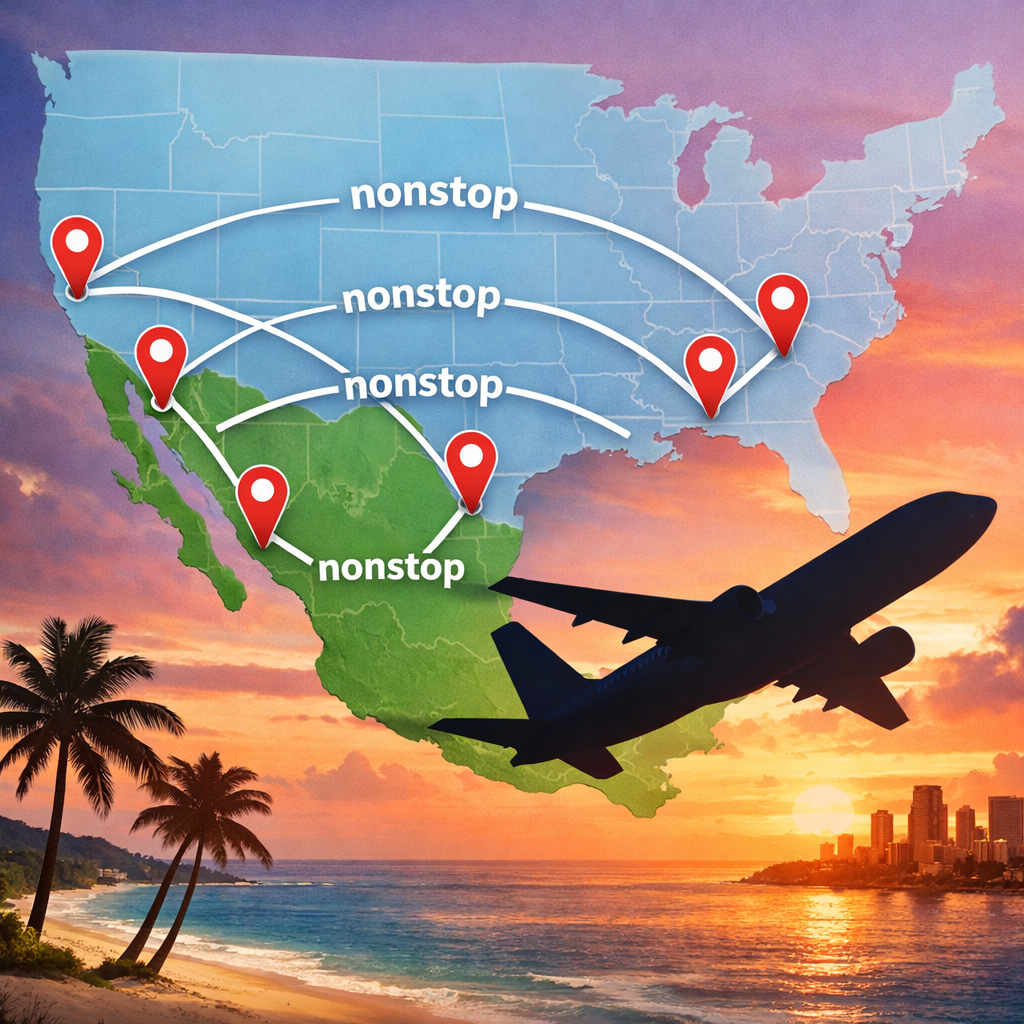
2026 Guide: Top Round-Trip Routes to Mexico With Nonstop Choices
Mexico remains one of the best‑value international getaways from the U.S. in 2026. Across major gateways, average round-trip fares commonly fall in the $250–$420 range depending on route and season, with frequent nonstop choices that cut total travel time and missed‑connection risk, per large-sample airfare trackers like KAYAK and Skyscanner’s 2026 forecast reported by Yahoo. Nonstop options are especially strong to Cancun, Mexico City, Puerto Vallarta, Los Cabos, Guadalajara, and Monterrey—ideal anchors for culture-forward or beach-first itineraries. Below, we distill top nonstop round-trip routes, value windows, and booking tactics so you can lock in Mexico flight deals 2026 with confidence—and see how Travel Beyond Boundaries can turn good airfare into an exceptional, responsible journey.
Strategic Overview
- Pros: Frequent nonstop flights to Mexico from multiple U.S. hubs; coast‑to‑coast access; strong value outside peak holidays; abundant low‑cost carrier (LCC) options, per KAYAK’s Mexico routes dashboard.
- Cons: Peak summer/December premiums; some Pacific Coast routes rose 20–35% year‑over‑year in select markets; and LCC add‑ons can inflate total cost, as summarized in Going’s deal report and marketplace trackers.
Definition: A nonstop flight travels from origin to destination without intermediate stops. For U.S.–Mexico routes, nonstop options typically reduce total travel time, cut misconnect risk, and improve on‑time arrivals versus one‑stop itineraries.
Across tracked routes, typical round-trip fares hover around $250–$420 depending on season and hub, with plentiful nonstops from LAX, IAH, JFK, DFW, and more, per KAYAK and Skyscanner’s 2026 forecast reported by Yahoo.
Travel Beyond Boundaries
Our flight recommendations prioritize reliable nonstop corridors that sync with your on-the-ground plan. We pair those routes with tailored private journeys and expert-led small-group departures, vetted boutique hotels, and meaningful cultural access—think artisan workshops, market days, and conservation-forward experiences. Sustainability sits at the core of each trip: carbon awareness in planning, local sourcing, and give‑back programs that support community partners.
What you gain:
- Fewer transfers and reduced delay risk by using nonstops where they matter most.
- Smarter timing—arrivals and departures aligned to activities and festivals.
- Contingency support during disruptions, plus proactive rebooking when needed.
- Seamless multi-stop builds (e.g., fly into MEX, out of CUN; add short intra‑Mexico hops), leveraging Mexico’s dense airport network for fast regional links.
This guide serves families seeking efficient beach gateways, professionals needing dependable long weekends, and small groups wanting immersive culture with easy logistics. Explore sample itineraries via our destinations hub at Travel Beyond Boundaries.
Cancun
Cancún continues to be the most popular beach gateway—with standout nonstop frequency and competitive pricing. Skyscanner’s 2026 data (via Yahoo) puts average round-trip airfare near $411 this year, with the cheapest month often June; some departures surfaced under $90 round‑trip, and spring 2026 averaged roughly $251, down about 35% versus 2025. Dollar Flight Club’s spring 2026 analysis echoed broad softness on Mexico routes.
Reliability is strong on major corridors like IAH–CUN and JFK–CUN, served by both legacy and low-cost carriers. On U.S.–Mexico routes, narrowbody workhorses dominate; Momondo’s fleet snapshot shows the Airbus A321 accounting for about 17.6% of bookings and the 737 MAX 8 around 15.3%—a useful tie‑breaker if you prefer certain cabins, range, or newer interiors. Travel Beyond Boundaries times CUN arrivals to sync with transfers and day‑one activities, reducing idle time.
When to book Cancun:
- January and mid‑April/May often show lower averages.
- Midweek departures (Tue–Thu) improve odds of <$300 round‑trips on competitive hubs.
Cancun nonstop comparison
| Route | Typical nonstop carriers | Seasonal price range (RT) | Best months to book | Notes |
|---|---|---|---|---|
| JFK–CUN | JetBlue, Delta, American | ~$220–$520 | Jan; mid‑Apr/May | Check LCC bag/seat fees vs legacy basic economy. |
| IAH–CUN | United, Southwest | ~$200–$480 | Jan–May (excl. spring break) | Southwest includes bags; factor seat selection elsewhere. |
| LAX–CUN | American, Delta | ~$260–$560 | Jan; late Apr–May | Red‑eyes can price better midweek. |
| ORD–CUN | United, American | ~$230–$520 | Jan; late Apr | Winter spikes around holidays; watch shoulder drops. |
Mexico City
For culture-first travelers, Mexico City blends excellent nonstop access with shoulder-season bargains. Spring 2026 round-trip fares averaged near $270—roughly 22% lower year over year—and 2026’s overall average is around $402, with cheapest months frequently April, July, and September. Sub‑$100–$174 sale fares have appeared on select corridors during promos, per the 2026 forecast and deal roundups.
Anchor your plan around icons like the National Museum of Anthropology, Palacio de Bellas Artes, and a day trip to Teotihuacán; Lonely Planet’s Mexico itineraries are a good primer for pacing. Operationally, frequent nonstops run on hub corridors such as LAX–MEX and IAH–MEX, with narrowbody aircraft leading seat supply on these short international sectors (A321 and 737 MAX 8 are especially common). Our specialists coordinate timed entries and vetted guides so long museum days and day trips run to plan.
Puerto Vallarta
Puerto Vallarta delivers a Pacific alternative with plentiful nonstops and strong shoulder‑season value. Expect the best pricing in spring (outside Easter periods), with competitive service from West Coast and Texas hubs. Do note that some Pacific Coast markets saw 20–35% YoY fare increases on certain routes; set alerts and be flexible to pounce on dips, as highlighted in Going’s deal reporting.
Common nonstop origin hubs:
- West Coast: LAX, SAN, SFO, SJC, SMF, SEA, PDX, PHX
- Mountain/Texas: DEN, DFW, IAH, AUS
Compare total cost across LCCs and legacies—bags, carry‑ons, and advance seat selection can flip the better value. We often pair PVR with conservation experiences in nearby marine reserves or chef‑led food walks in the old town to sidestep peak resort crowds.
Los Cabos
Los Cabos (SJD) is a high‑capacity, year‑round beach and desert escape with robust nonstop access, particularly from western and southern U.S. hubs. Prices tend to spike around winter holidays; shoulder months often unlock meaningful savings. Use midweek departures and 3–6 week booking windows for stronger odds of value, and watch for price softness outside December. We frequently design Baja circuits that pair SJD with nearby coastal towns to balance resort time and quieter stays.
Quick compare: SJD vs PVR
- Vibe: SJD skews luxe desert‑meets‑sea; PVR blends beaches with a colonial old town.
- Surf: SJD has stronger Baja surf access; PVR better for gentle bay swims.
- Crowds: Both see peaks in winter; PVR’s shoulder seasons can feel more local.
Guadalajara
Guadalajara is a smart pick for blending city culture with regional day trips. KAYAK has flagged round‑trips as low as $129 to Guadalajara, illustrating how deep sales can go when hubs compete. From GDL, it’s easy to link artisan towns and agave country; our private journeys can weave in family‑run workshops, market visits, and tastings.
Tip: Compare flying into GDL and returning from MEX or CUN for optimized open‑jaw pricing when touring central Mexico.
Monterrey
Monterrey (MTY) stands out for frequent nonstops from Texas and California and attention‑grabbing deals. FlightsFinder recently highlighted LAX→Monterrey round‑trips at about $141, reinforcing MTY’s reputation as a high‑value business‑leisure gateway with strong schedules.
Consider MTY for World Cup city access, northern sierra adventures, and boutique city stays. Compare MTY vs GDL across Texas hubs for schedule frequency and fare floors; we can stitch private transfers or short regional flights to round out the route.
How to choose the right nonstop route
- Define your trip goals:
- Culture‑first: MEX or GDL.
- Beach‑first: CUN, PVR, or SJD.
Check nonstop availability from your nearest hub and compare total cost across carriers, including bags and seats. Travel Beyond Boundaries can map options quickly, and KAYAK’s Mexico routes view is a fast way to see choices and timings.
Align with cheapest months: January is frequently lowest; mid‑April/May shoulder weeks often dip; each route has its own shoulder windows per 2026 trend trackers.
Use price alerts and consider “hacker” one‑ways when schedules allow; Skyscanner users regularly surface sub‑$100 segments on competitive corridors during promos.
Micro-definition: Total trip cost is the base fare plus ancillary fees (checked/carry‑on bags, seat selection), ground transfers, and time costs (overnights, long layovers). Comparing total cost prevents “false cheap” picks on LCCs with heavy add‑ons.
When to book and how to save
- Timing rules: For spring departures, sweet spots often appear 3–6 weeks out. January is frequently the cheapest month to visit Mexico, with sale round‑trips starting near the mid‑$100s and low-season averages around the high‑$200s on competitive hubs, per Skyscanner’s 2026 trendlines.
- Fly midweek: Tuesday–Thursday departures typically price lower; be flexible for last‑minute discounts on select routes as load factors evolve.
- Tools and tactics:
- Travel Beyond Boundaries: align flight times with your daily plan and build backup options so disruptions don’t derail the trip.
- Set price alerts for target routes—and watch for sub‑$100 one‑ways in sales.
- When schedules are similar, compare aircraft comfort/efficiency on common models like the A321 and 737 MAX 8 to break ties.
Responsible travel considerations for Mexico
- Travel off‑peak and consider longer stays to reduce congestion and deepen local impact; we prioritize community‑led tours and conservation sites within each itinerary.
- Intercity moves: Many Mexican airports make regional flights fast and affordable; ADO buses are the main intercity operator, though online purchase can require a Mexican card—our team can arrange tickets and seat selection, as noted by independent traveler guides.
- Cultural‑respect checklist: Learn basic greetings, buy directly from artisans, and follow site rules at archaeological zones (for example, no climbing at El Castillo/Chichén Itzá), as summarized by reputable tour and etiquette resources.
Frequently asked questions
Which US hubs most reliably offer nonstop flights to Mexico?
Major corridors such as LAX–MEX, JFK–CUN, and IAH–CUN run frequently across legacy and low‑cost carriers. Travel Beyond Boundaries leverages these routes to cut travel time and reduce risk.
When are round-trip fares to Mexico typically the lowest?
January often leads, with April–May shoulder weeks also dipping; midweek departures and flexible dates surface the best deals. Our planners target these windows when shaping your itinerary.
Are low-cost carriers a good value for nonstop routes?
Yes—if you travel light and book early. Travel Beyond Boundaries compares total cost (including bags and seats) against legacies so there are no surprises.
What documents do I need for a nonstop round trip to Mexico?
U.S. citizens need a valid passport and the standard entry form given on arrival; keep your return or onward ticket available for immigration checks. We brief you on current entry notes before departure.
How does Travel Beyond Boundaries integrate nonstop flights into custom itineraries?
We align nonstop options with your day‑by‑day plan, schedule activities around flight times, and build in buffers and vetted transfers so your trip runs smoothly from takeoff to touchdown.
Sources cited once each: KAYAK’s Mexico routes dashboard; Dollar Flight Club’s spring 2026 report; Going’s deal report; Momondo’s U.S.–Mexico aircraft mix; Skyscanner’s 2026 forecast as reported by Yahoo; Skyscanner’s Mexico fares guide; FlightsFinder’s Mexico deals; Lonely Planet’s itineraries; independent Mexico transit guidance; reputable tour resources for cultural etiquette.