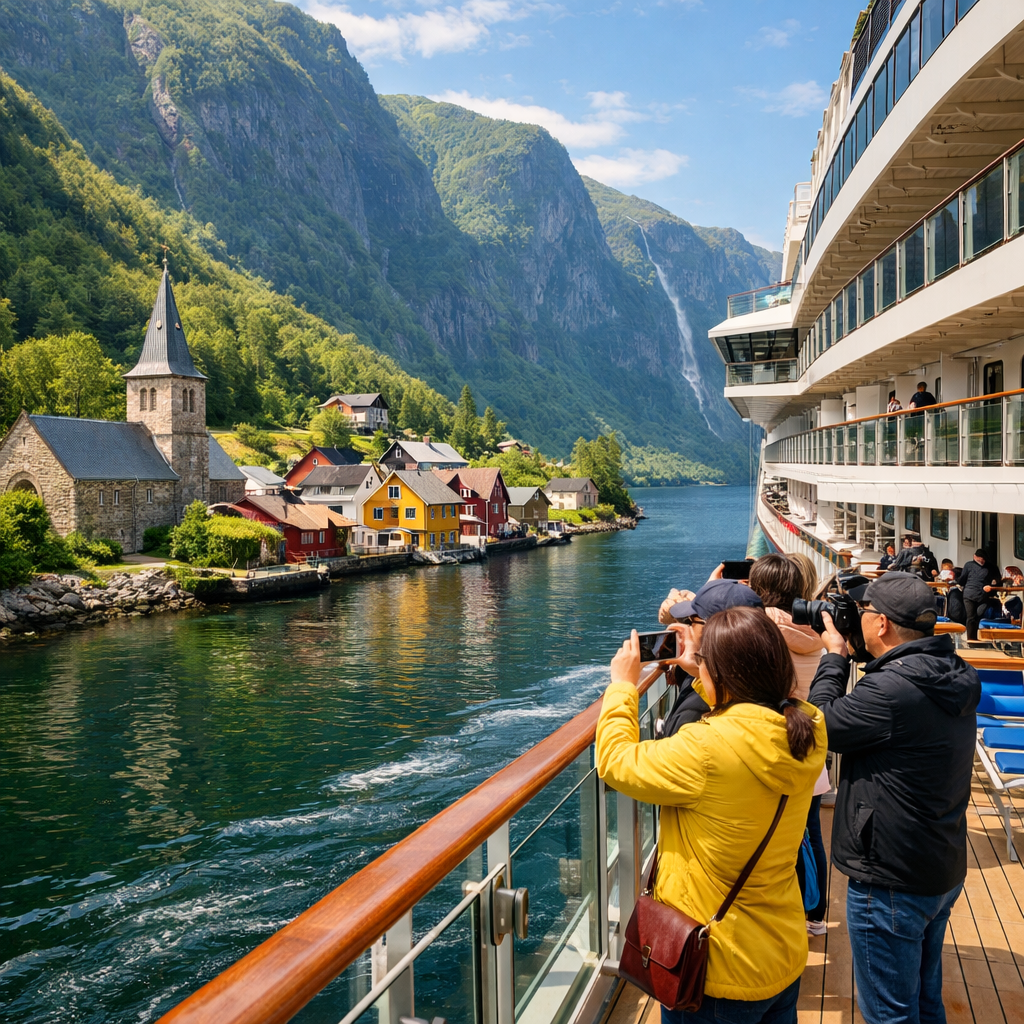
2026 Guide to Northern Europe Cruises Focused on Culture and Heritage
Northern Europe rewards travelers who trade checklist sightseeing for cultural immersion. This guide shows you how to choose a culture-first Northern Europe cruise—what to look for in itineraries and ships, which subregions deliver heritage depth, and when to sail for Midsummer, festivals, eclipses, or the Northern Lights. Demand is surging, with searches for 2026 Northern Europe itineraries up roughly 270% year over year, tightening availability for small-ship and experiential voyages (cruise trends for 2026). At Travel Beyond Boundaries, we focus on safe pacing, small-group shore time, and rail-forward pre/post stays so you can connect with living traditions, UNESCO sites, and local experts—without over-scheduling your days.
What defines a culture-first Northern Europe cruise
A culture-first cruise prioritizes longer port calls and overnights, small-group shore excursions with local experts, and thematic programming that connects shipboard learning with onshore heritage experiences. Travel Beyond Boundaries curates itineraries with these hallmarks and verifies group caps and local partnerships.
Travelers are gravitating toward meaning-rich itineraries as luxury and small-ship lines expand artist residencies, history lectures, and culinary collaborations that carry from ship to shore (biggest cruise trends for 2026). Expect more festival-style programming and enhanced itineraries with additional port days in 2026, reflecting a shift away from sea days toward in-destination time (Top 10 cruise trends for 2026).
Quick checklist to qualify “culture-first”:
- At least one overnight in culture-rich ports and more port days than sea days.
- Small-group tours with clear caps, local partners, and onboard expert talks.
- Cohesive themes—artists-in-residence, culinary workshops, maritime history—continuing ashore with hands-on experiences.
Where to go for heritage-rich itineraries
Heritage-rich itineraries focus on layered history—Viking, Hanseatic, and Celtic—alongside living traditions like music, crafts, and foodways, with museums and UNESCO sites reachable on foot or via efficient local transit.
- British Isles & Ireland: West Ireland’s Gaelic-speaking areas, coastal folk music, and Viking/Norse traces pair well with intimate ports on small-ship cruises. Several 2026 sailings weave cultural calls with sky events, including eclipse-linked routes that touch Ireland and Scotland (Seabourn Northern Europe 2026 voyages).
- Nordics & Arctic Circle: Prioritize overnights in Copenhagen and Stockholm to experience design districts, contemporary food scenes, and evening performances. In northern Norway and Finnish Lapland, learn about Sami heritage, reindeer herding, and joik song traditions, with extended daylight in June powering long, unhurried cultural days.
- Iceland & Faroe Islands: Expedition-style routes fit these remote, seasonal destinations. Engage fishing heritage, sagas, turf-house architecture, and village storytelling; limited departures reward early booking and smaller vessels for flexible port access (new cruise itineraries for 2026).
Scarcity is real: Northern Europe interest is up ~270% year over year for 2026 searches (cruise trends for 2026), and a major line reports nearly a 50% YoY rise in 2026 Northern Europe bookings (Holland America’s 2026 Europe bookings). Travel Beyond Boundaries tracks release calendars and helps place early, refundable holds on sought-after overnights and small-group cultural excursions.
Choosing the right ship and voyage style
Selecting ocean, river, or expedition defines your access, pace, and programming depth. Small and mid-sized ocean ships plus river vessels are adding themed voyages in art, maritime history, and culinary culture, sharpening their cultural edge (biggest cruise trends for 2026). River cruising remains a favorite for immersive culture with unpack-once logistics and walkable cores (experiential travel leads 2026). Expedition cruising grew 22% in 2024, signaling more small-ship, experience-led options in cool-water regions (expedition segment growth). Travel Beyond Boundaries helps match ship class to your heritage focus, accessibility needs, and preferred port mix.
| Attribute | Ocean (mid-size/small) | River | Expedition |
|---|---|---|---|
| Ship size | ~200–1,300 guests | ~120–190 guests | ~50–200 guests |
| Port access | Mix of capitals + boutique secondary ports | Historic towns along rivers, tight docking | Remote hamlets, zodiacs for landings |
| Typical group size ashore | 12–25 on curated tours | 12–20, often included | 8–12, highly guided |
| Cultural programming depth | Strong themed series, guest lecturers | High: daily walks, tastings, workshops | High: local hosts, field lectures |
| Cost (relative) | $$–$$$ | $$–$$$ (often more inclusions) | $$$–$$$$ |
| Seas/seasonality | May–Oct; some spring/fall shoulders | Late spring–early fall | Short windows; weather-dependent |
| Accessibility | Good; elevators, stabilized ships | Very good; flat walks, short transfers | Variable; ladders/zodiacs common |
Mini decision flow:
- Choose river if you value walkable historic cores, museum density, and calm waters.
- Choose small ocean if you want a blend of iconic capitals and secondary ports.
- Choose expedition for remote communities, nature-culture interplay, and intimate groups.
Timing your cruise for festivals and natural phenomena
Seasonal optimization means choosing dates that align with festivals and natural events to amplify authenticity and access—long daylight fuels Midsummer traditions; dark skies enable aurora viewing. Travel Beyond Boundaries aligns sailings with festival calendars and celestial events, then adds rail-forward pre/post stays to round out the experience.
2026 advantages to target:
- The sun’s 11-year cycle cresting in 2024–2026 is boosting Northern Lights frequency and intensity—ideal for aurora-themed Northern Europe cruises (Top 10 cruise trends for 2026).
- Seabourn features special Solar Eclipse and Summer Solstice voyages, including a 14-day West Ireland & Solar Eclipse route (Dover–Reykjavik, Aug 8, 2026) and an Arctic Circle solstice position on June 13, 2026 (Seabourn Northern Europe 2026 voyages).
- Princess scheduled a Total Solar Eclipse sailing from Southampton on Aug 8, 2026 (new cruise itineraries for 2026).
Seasonal calendar:
- Late May–July: White nights, Midsummer festivals, outdoor performances; best for extended evening culture.
- August: Edinburgh Fringe, regional harvest fairs, and eclipse departures; still long days.
- September–October: Cooler, fewer crowds, robust museum seasons; rising aurora chances in the far north.
- November–March (select expedition/ocean): Peak aurora darkness; pair with Sami culture and winter markets.
Shore experiences that deepen cultural connection
Cultural immersion tours are small-group, locally led experiences—workshops, foodways, crafts, oral histories—that prioritize community benefit and time for reflection rather than rushed highlights. Travel Beyond Boundaries vets locally led excursions and, where available, secures after-hours access to keep experiences unhurried.
Lines are expanding handpicked art, maritime history, and wellness programming; culinary-focused river offerings spotlight regional food and wine with market visits and tastings (biggest cruise trends for 2026). When evaluating shore time:
- Seek local partnerships, evening performances, and museum after-hours, with clear group caps and time in neighborhood settings.
- Favor itineraries advertising more port days and overnights to create room for deeper excursions (Top 10 cruise trends for 2026).
- Prioritize overnights for festivals, markets, and coastal village dinners—often the most intimate cultural windows.
Sustainability and community considerations
Sustainable cruising integrates lower-emission operations, efficient routing, and respectful cultural exchange to reduce environmental impact and support local economies. Travel Beyond Boundaries favors operators with verifiable measures and routing that distributes calls to relieve pressure on marquee ports.
Look for verifiable measures: some operators have committed roughly €100 million in technical efficiency upgrades, from shore power to propulsion enhancements, to cut emissions (Top 10 cruise trends for 2026). Industry research links resilience and sustainability innovations in itinerary design and operations, encouraging distributed port calls and smarter schedules (sustainability and resilience research). To mitigate overtourism, responsible lines spread calls to secondary ports, limit group sizes, and source locally—approaches increasingly highlighted in 2026 trend reporting (biggest cruise trends for 2026).
Five-point responsibility checklist:
- Fewer repositioning days; efficient, clustered routing.
- Transparent fuel and energy policies (shore power, efficiency retrofits).
- Local guides, venues, and food suppliers by default.
- Capped group sizes for minimal site impact.
- Community-first timing (off-peak visits, staggered arrivals).
How to plan and book with confidence
Travel Beyond Boundaries can map your priorities, manage refundable holds, and coordinate rail-forward pre/post stays so your plan stays flexible until air and schedules settle.
- Define your cultural priorities—festivals, museums, foodways—and any port-access needs (e.g., UNESCO sites within walking range).
- Choose ship class based on port size and overnights; small-ship cruises and river cruising lead for boutique access.
- Target dates tied to festivals or phenomena; place refundable holds while airfares settle.
- Reserve early: travelers are booking earlier in 2026 to secure small-ship and experiential space (experiential travel leads 2026). With search interest up ~270% and bookings surging nearly 50% for some lines, prime heritage itineraries sell out fast (cruise trends for 2026; Holland America’s 2026 Europe bookings).
- Lock in small-group shore tours first, then fill gaps with self-guided walks and local transit.
Budget smarter: Compare per-day rates and inclusions, prioritizing value adds like overnights, transit passes, and museum entries over the bare fare.
Safety, pacing, and accessibility on cultural cruises
Plan a rhythm of half-day guided tours followed by downtime; avoid stacking two or more long-day tours consecutively. Evenings are ideal for concerts or after-hours museum entries when overnights allow. Travel Beyond Boundaries builds this cadence into custom plans and accounts for mobility, solo travel, and evening returns.
For accessibility, prioritize walkable ports, late departures, and reliable local transit. River routes often feature compact historic centers and unpack-once ease, reducing transfer complexity (experiential travel leads 2026). Solo and grad travelers should look for ships with hosted meetups, small-group excursions, and clear safety briefings, plus evening returns to minimize late-night transit.
Sample week for a culture-focused itinerary
- Day 1 — Copenhagen: Arrive mid-day; design district walk (Vesterbro/Nørrebro), then an evening food market tasting.
- Day 2–3 — Stockholm overnight: Museum after-hours (Vasa/Moderna); day trip to an archipelago village for boatbuilding or smoked-fish traditions.
- Day 4 — Tallinn: Crafts workshop in Kalamaja; slow lunch with a local producer; stroll the Hanseatic core at dusk.
- Day 5 — Helsinki: Sauna culture and modern architecture tour; evening composer recital or design shop talk.
- Day 6–7 — Seasonal layer: Northern Lights positioning north of the Arctic Circle during the 2024–2026 solar peak (Top 10 cruise trends for 2026), or a festival tie-in such as Edinburgh Fringe.
- 2026 swaps: Opt for eclipse/solstice sailings—Dover–Reykjavik Aug 8 (eclipse) and June 13 solstice above the Arctic Circle (Seabourn Northern Europe 2026 voyages)—or Southampton’s Aug 8 eclipse departure (new cruise itineraries for 2026).
Travel Beyond Boundaries support and resources
Travel Beyond Boundaries turns this framework into an effortless, safe, and well-paced cultural cruise. Explore our curated Northern Europe Destinations guides for capitals and secondary ports (Destinations), plus pre/post rail-forward stays and small-group, escorted extensions that balance comfort with sustainability (winter travel trends for 2025–2026). Our custom trip support vets shore excursions, checks accessibility, aligns your sailing with festivals or aurora windows, and secures solo- and grad-friendly cabin strategies.
Frequently asked questions
What is the best time to cruise Northern Europe for cultural experiences
Late May to early August aligns with festivals, Midsummer traditions, and extended daylight. Travel Beyond Boundaries times aurora-focused culture trips for late fall to early spring during the 2024–2026 solar peak.
How do I choose between ocean, river, and expedition for heritage focus
Pick river for walkable historic cores and unpack-once logistics, small ocean for a mix of capitals and boutique ports, and expedition for remote hamlets and nature-culture interplay. Travel Beyond Boundaries helps match ship size to desired ports and secures itineraries with overnights.
What should I look for in shore excursions to ensure cultural depth
Seek small-group, locally led tours with hands-on elements and time in neighborhoods, plus museum after-hours or performances. Travel Beyond Boundaries verifies group caps and extended hours so you won’t be rushed.
How early should I book small-ship or themed departures
Book 9–12 months ahead for peak season and limited-capacity ships to secure cabins and priority for specialty tours. Travel Beyond Boundaries can place refundable holds and prioritize limited-capacity excursions.
What should I pack for varied climates and cultural sites
Bring breathable layers, waterproof outerwear, and nonslip walking shoes, plus a compact daypack for museums and markets. Travel Beyond Boundaries provides packing checklists tailored to your route and cultural stops.