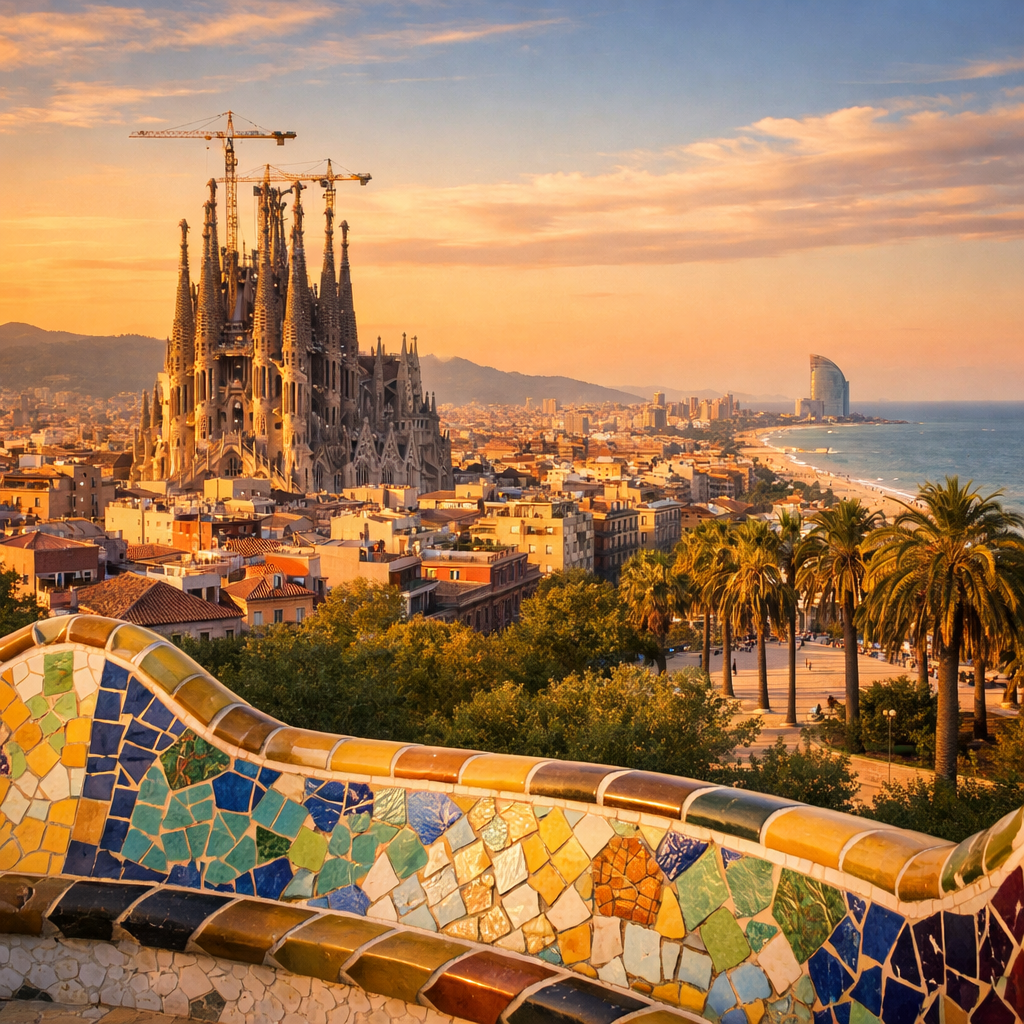
11 Best Outdoor Landmarks in Barcelona for First-Time Visitors
Barcelona shines outdoors: Gaudí’s sculptural skylines, sea-breezy promenades, and hilltop vistas pack a high-impact first trip without overstuffing your schedule. The best outdoor landmarks blend world-class architecture with free viewpoints and parks you can see on foot or by metro. Below, we curate 11 standout places—how to time them, what’s worth paying for, and how to balance 1–2 timed icons with several free, flexible stops—so you can answer the big question quickly: what are the best outdoor landmarks in Barcelona? Start with Sagrada Família or Park Güell as your booked anchor, then layer in Montjuïc, Bunkers, Ciutadella, and Barceloneta for a low-stress, high-reward day.
Travel Beyond Boundaries
Our approach is premium-leaning but practical: stack one or two timed Gaudí icons with free parks and panoramic viewpoints, route by neighborhood, and move rail-forward via metro, funiculars, and cable cars. With travelers booking later and more purchases happening in-destination, we advise prebooking at least one timed monument while leaving room for weather and energy-based choices on the ground (source: The Flybook’s 2025 industry trends). We prioritize reserved entry where it saves time, then keep the rest of the day flexible.
“Timed entry is a reservation system assigning a specific visit window to reduce queues and manage capacity. It shortens wait times, protects peak hours for those with tickets, and helps sites spread visitor flow throughout the day.”
For more route ideas, see Travel Beyond Boundaries’ mapped sightseeing overview.
Sagrada Família
Few exteriors reward lingering like the Nativity, Passion, and emerging Glory façades of Antoni Gaudí’s basilica. Morning light flatters the east-facing Nativity; late afternoon warms the Passion. If you’ll go inside, reserve a timed entry on the Sagrada Família official site—ideally a few days in advance—then add tower access if heights and views appeal. Demand spikes late morning through mid-afternoon, especially in high season, so anchor earlier or later for space and softer light.
- Pros: Peerless exterior detail; layered symbolism; strong photo angles all day.
- Cons: Crowds and fees; mid-day bottlenecks.
- TBB tip: Book the interior as your “one guaranteed ticket,” then keep the rest of your day flexible given later-booking behavior.
Park Güell
Decide first: do you want access to the signature mosaics and terrace? The park’s core—Serpentine Bench, Dragon Stairway, and terrace panoramas—sits inside the Monumental Zone and requires a timed ticket via the Park Güell official site. Free forested paths ring the zone and offer calmer strolls, but the icons are inside.
- Best time: First-entry morning slots for quiet photos or late-afternoon golden hour for city-wide views and a more restorative ambience.
- Booking: Day-of slots can vanish in peak periods; if Park Güell is a priority, purchase ahead.
- Access: Metro L3 (Lesseps or Vallcarca) plus an uphill walk, or buses 24/V19.
La Rambla and La Boqueria
Treat La Rambla as an iconic corridor you sample strategically, not an all-afternoon commitment. Walk a short stretch during early morning or late evening, then duck into La Boqueria market for a quick juice, ham cone, or counter snack—the market’s official page lists vendors and hours. Pair with nearby Gothic Quarter to minimize detours.
Use it well:
- Stick to the center promenade and cross carefully.
- Snack inside La Boqueria, then move on before the midday crush.
- Balance free rambles with one paid Gaudí site to manage costs and energy; accessible, casual outings mirror broader outdoor participation gains.
Gothic Quarter
Barri Gòtic is a free, atmospheric “outdoor museum” of lanes, arches, and plazas. Target Carrer del Bisbe for the photogenic neo-Gothic bridge, Plaça del Rei for medieval textures, and Plaça Reial for palm-framed arcades, linking easily with the Cathedral square (Pla de la Seu) and La Rambla. Go early for quiet streets and soft light; wear supportive shoes for cobbles and uneven stones. Slow-paced urban strolling aligns with the current wellness-forward travel mindset.
For orientation tips and highlights, see the city’s Gothic Quarter overview.
Barceloneta Beach and Promenade
The beachfront is your low-cost reset between monuments. Walk the flat promenade from the W Barcelona toward Port Vell, or linger on Barceloneta’s wide sands. It’s free public space with showers and cafes; seafood restaurants line Passeig de Joan de Borbó.
- Best time: Sunrise jogs for calm and cooler temps; sunset strolls for colors and people-watching.
- Family tip: Stroller-friendly paths; pack water and sun protection.
- Trend note: Casual, approachable outdoor activities are rising, making beach time an easy add for all ages.
Check amenities and access via the city’s Barceloneta Beach page.
Montjuïc and MNAC Area
Montjuïc layers gardens, terraces, and fortress views with easy transit. Sit on the grand MNAC steps for sweeping city vistas, loop through landscaped parks, then continue up to Montjuïc Castle.
- Getting there: Ride the Montjuïc funicular from Paral·lel, then continue by cable car (budget roughly €10–€25 total depending on route and bundles; see the Telefèric de Montjuïc official page). Walking saves money but costs energy and time.
- When to go: Aim for a 2–3 hour visit around golden hour for views and photos.
- Compare:
- Walking: Free, flexible, more effort.
- Cable car: Fast, scenic, weather-dependent cost.
The MNAC terrace is free to enjoy; the museum interior is ticketed—choose based on your interests and schedule.
Tibidabo and Temple of the Sacred Heart
High above the city, Tibidabo mixes free and paid experiences: enter the hilltop church (Sagrat Cor) for stained glass and terraces, then selectively add amusement park rides if traveling with kids. The skyline views are among the broadest in town.
- Access: Take the Tibidabo funicular (Cuca de Llum) after connecting by metro/tram and bus; the Tibidabo official site lists current links and hours.
- Best time: Sunset for long-shadow panoramas; clear evenings are photogenic.
- Budget: Enjoy viewpoints and church access free; pay only for chosen rides.
- Wellness angle: The hilltop’s green space offers a restorative breather between urban stops.
Bunkers del Carmel
At Turó de la Rovira, the former Civil War anti-aircraft site delivers a free, 360° city panorama. Terrain is uneven with exposed rock; wear grippy shoes and bring a layer if it’s breezy.
- Getting there: Metro L4 to Alfons X plus a 20-minute uphill walk, or a short taxi rideshare for sunrise/sunset. Several bus routes (e.g., V17/22) serve the area with a final uphill segment.
- Timing: Sunset draws crowds; sunrise is quieter with excellent light.
- Why it matters: Free viewpoints like Bunkers balance costs alongside paid icons and match the surge in casual, view-seeking outings across demographics.
Parc de la Ciutadella
Ciutadella is the city’s central, family-friendly green lung—perfect for picnics, a rowboat on the lake, and time by the Cascada Monumental fountain. Combine with the Arc de Triomf and a wander through El Born.
- Best time: Late morning or late afternoon for shade and downtime between monuments.
- Family/access: Flat, stroller-friendly paths; plenty of benches and lawns.
- Trend note: Inclusive, gateway outdoor activities are up, making urban parks a smart reset.
See the city’s Parc de la Ciutadella page for facilities and boating hours.
Casa Milà Rooftop
From the street, La Pedrera’s undulating stone is striking—but the rooftop is the payoff. A timed ticket secures your slot to roam among surreal chimneys and skyline frames while learning how Gaudí fused structure and sculpture.
- Best time: Book outside the late-morning peak; evening/blue hour is especially dramatic.
- Rooftop route definition: Rooftop route is a curated visitor path across Casa Milà’s upper levels featuring sculptural chimneys and city views. It combines open-air design with interpretive exhibits on Gaudí’s engineering, creating a photogenic, crowd-managed experience distinct from street-level architecture.
- Book via the La Pedrera official site; late-booking surges mean popular slots can sell out.
Palau Nacional Steps
The grand staircase and terrace in front of the MNAC form one of Barcelona’s best free wide-angle viewpoints. Stand near the top centerline facing Avinguda de la Reina Maria Cristina for layered shots of the city’s grid and, when operating, the Magic Fountain area’s evening buzz.
- Compare: Free terrace views now vs. ticketed museum interior when you have more time.
- Pairing: Combine with Montjuïc gardens for a longer outdoor block at minimal cost.
How to plan your route and tickets
Use a “2 paid + 3–4 free” formula to balance cost and flexibility. Prebook one anchor (e.g., Sagrada Família) to avoid sell-outs, then keep other choices flexible based on weather and energy—an approach that matches later booking and in-destination purchasing trends. Travel Beyond Boundaries uses this “2 paid + 3–4 free” framework on most first-timer days.
| Site | Area | Ticket Type | Ideal Time of Day | Transit Notes |
|---|---|---|---|---|
| Sagrada Família | Eixample | Timed (interior/tower) | Early AM or late PM | Metro L2/L5 Sagrada Família |
| Park Güell (Monumental) | Gràcia/El Carmel | Timed | First entry or golden hour | Metro L3 + uphill walk; buses 24/V19 |
| Casa Milà Rooftop | Eixample | Timed | Evening/blue hour | Metro L3/L5 Diagonal |
| Bunkers del Carmel | El Carmel | Free | Sunrise or sunset | Metro L4 Alfons X + walk; taxi for early/late |
| MNAC Steps (Palau Nacional) | Montjuïc | Free | Golden hour/evening | Metro L1/L3 Espanya; escalators/stairs to terrace |
| Parc de la Ciutadella | Born/Ciutat Vella | Free | Late morning/afternoon | Metro L1 Arc de Triomf; Tram T4 Ciutadella–Vila Olímpica |
| Barceloneta Beach | Barceloneta | Free | Sunrise/sunset | Metro L4 Barceloneta; flat promenade |
| Montjuïc Cable Car | Montjuïc | Paid transport | Late afternoon | Funicular from Paral·lel + cable car |
| Tibidabo (church/views) | Collserola | Mixed (free/paid) | Sunset | Tibidabo funicular via Av. Tibidabo + bus/shuttle |
Best times to visit and crowd avoidance
- Go early for lanes and markets (Gothic Quarter, La Rambla/Boqueria) and late for golden-hour panoramas (Bunkers, Park Güell terrace, Montjuïc).
- Expect peak windows from late morning to early afternoon at marquee sites; timed entries spread arrivals and cut queues.
- Outdoor participation surged in 2024–2025—nearly 60% of Americans 6+ (181.1 million) engaged in outdoor activities—fueling busier popular hours, especially for casual, approachable outings (Outdoor Industry Association 2025 report).
Accessibility and terrain considerations
- Flat/accessible: Barceloneta promenade, Parc de la Ciutadella, MNAC terrace (with escalators), Sagrada Família surroundings.
- Mixed: Park Güell (steep slopes and stairs; some accessible routes), Casa Milà rooftop (steps/gradients on top), Montjuïc (hills; cable car reduces climbs).
- Challenging: Bunkers del Carmel (uneven paths, steep approach), select Gothic Quarter alleys (cobbles, narrow turns).
- Essentials: Supportive shoes, water, sun protection; pace with wellness breaks in parks and terraces. Participation among seniors rose about 7.4% and young adults about 5.6%, underscoring the need for varied intensity options (OIA executive summary).
What to combine in a one-day outdoor itinerary
- Itinerary A (Gaudí + Views): Sagrada Família (timed AM), Park Güell Monumental Zone (timed early PM), siesta/coffee, Bunkers del Carmel at sunset, tapas in Gràcia.
- Itinerary B (Parks + Beach): Ciutadella + Arc de Triomf (late morning), Gothic Quarter stroll (early afternoon), MNAC steps at golden hour, Barceloneta sunset.
Step-by-step: Book 1–2 timed entries, anchor your morning, buffer midday with a park or beach interlude, and slot viewpoints for golden hour. This keeps flexibility for weather and leverages in-destination decisions without risking sell-outs on your top pick.
Frequently asked questions
Do I need tickets or timed entry for these landmarks?
Yes for major Gaudí sites and some museum interiors; Sagrada Família, Park Güell’s Monumental Zone, and Casa Milà use timed entry. Travel Beyond Boundaries recommends prebooking at least one timed slot to protect your top pick.
What are the best times of day for views and lighter crowds?
Aim for sunrise or sunset at Bunkers, Montjuïc, and Park Güell terraces. Travel Beyond Boundaries routes markets and La Rambla early for calmer walks.
How can I combine paid monuments with free outdoor spots to save money?
Book 1–2 paid icons (e.g., Sagrada Família and Park Güell) and pair them with free viewpoints (Bunkers, MNAC steps) plus Ciutadella or Barceloneta. Our itineraries balance costs while keeping standout views and flexibility.
What are the easiest transport options to hills and viewpoints?
Use the Montjuïc funicular or cable car for the hill; buses and the Tibidabo funicular reach the summit, and taxis or rideshares are efficient for Bunkers at sunrise/sunset. Travel Beyond Boundaries sequences hill segments to minimize climbs and transfers.
Are these outdoor sites suitable for families or travelers with limited mobility?
Yes—Ciutadella and Barceloneta offer flat paths, while Park Güell provides some accessible routes; Bunkers and Tibidabo involve steeper climbs. Travel Beyond Boundaries builds in transit assists and breaks for mixed-mobility groups.