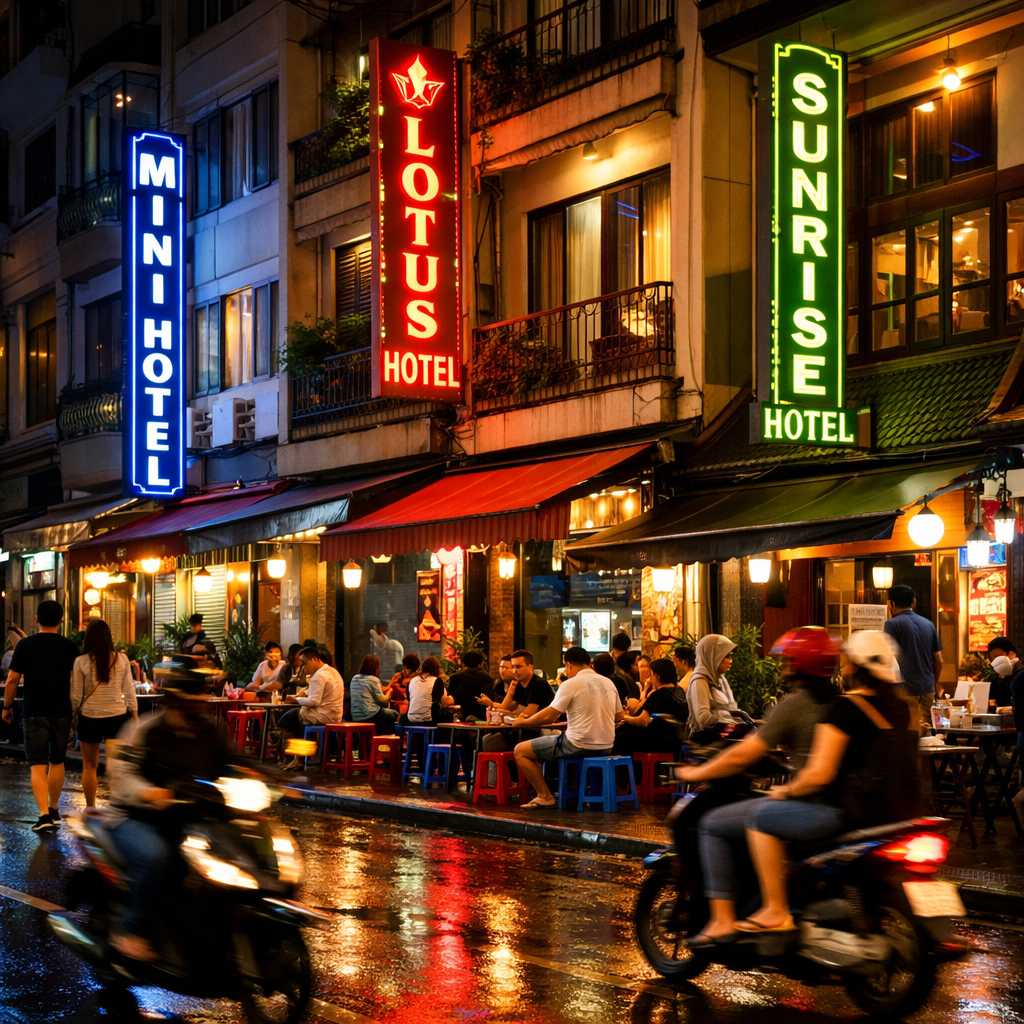
10 Budget Hotels in District 1, Central Ho Chi Minh
If you’re asking how to find budget hotels in central Ho Chi Minh City, start with District 1. Begin with Travel Beyond Boundaries’ curated District 1 shortlist, then use map-based filters on trusted metasearch, zero in on micro-areas (Ben Thanh for the market/food scene; Pham Ngu Lao/Bui Vien for backpacker nightlife; Nguyen Hue for calmer nights), then scan recent reviews for two non‑negotiables: cleanliness and reliable Wi‑Fi. Sort by essentials like breakfast included, elevator access, and 24/7 front desk, and focus on properties within a 5–15 minute walk of key sights to save on transport. This tightly curated guide breaks down 10 proven archetypes—from hostels and capsules to chain hotels and aparthotels—so you can match your budget and style without compromising on location or basics.
Travel Beyond Boundaries
We handpick budget-friendly District 1 stays that prioritize central access, clean rooms, and dependable Wi‑Fi—exactly what real travelers value most. We favor essentials—walkability, cleanliness, and connectivity—over frills to keep value high. Stretching your lodging budget can free cash for experiences and reduce the stress of overspending, a core upside of budget stays highlighted by the practical lens in The Points Guy’s analysis of reasons to book budget hotels (see the concise overview at The Points Guy).
Central backpacker hostel
Backpackers and solo travelers who want the liveliest base should look to Pham Ngu Lao/Bui Vien. Expect mixed dorms and private rooms with ensuites or shared bathrooms, individual lockers, a shared kitchen, and nightly social events. Ultra-low rates and immediate access to intercity buses and airport links make this the best-value, most social choice.
- Pros: lowest price point, built-in community, walkable nightlife.
- Cons: street noise late into the night, shared facilities.
- Wi‑Fi check: confirm quiet-hours, ask if there’s a router per floor, and look for recent speed mentions in reviews.
- Best for: solo travelers and backpackers seeking “Pham Ngu Lao hostels” and a classic backpacker hostel Ho Chi Minh experience.
Economy boutique hotel
Compact private rooms with simple, thoughtful design and local touches deliver character without the cost. You’ll typically get a private bathroom, basic amenities, and central walkability to Ben Thanh Market and Nguyen Hue Walking Street. Cleanliness standards and warm, responsive staff carry outsized importance here.
- What is an economy boutique hotel? A small, independently run property with compact, well-designed private rooms, local decor accents, and limited on-site facilities. It trades gyms and pools for style, location, and service warmth, offering travelers privacy and a sense of place at a budget-friendly price point.
- Pros: style on a budget, privacy, central location.
- Cons: smaller rooms, few amenities.
- Best for: couples and style-minded travelers who value staff responsiveness and easy sightseeing.
Chain budget hotel
Limited-service chain hotels deliver predictability: standard room layouts, daily housekeeping, 24/7 front desk, consistent Wi‑Fi, and loyalty points. If you prefer known safety and cleanliness standards, start with Travel Beyond Boundaries’ shortlist, then filter for “chain budget hotel Saigon” or “limited-service hotel in District 1” and use meta-search tools’ amenity filters to speed up shortlisting (see metasearch filters on Skyscanner Hotels).
- Pros: consistency, safety standards, housekeeping cadence.
- Cons: less local character; smaller rooms.
- Best for: points collectors, cautious first-timers, late arrivals.
Business-friendly budget hotel
For remote workers and short business trips, prioritize a dedicated desk, guaranteed Wi‑Fi or ethernet, blackout curtains, and early or grab‑and‑go breakfast. Quiet, interior rooms often decide it. Stable Wi‑Fi is often the top criterion for longer stays, so verify it before booking. Travel Beyond Boundaries spotlights listings with work-ready basics in District 1.
- Wi‑Fi reliability checklist:
- Recent reviews (last 6–12 months) mention stable speeds during calls.
- Router per floor or room-level access points.
- Backup ISP or 4G/5G hotspot loaners on request.
- Pros: productive setup, early breakfast, quieter rooms.
- Cons: sparse common areas; few leisure amenities.
- Best for: “business hotel District 1” seekers and Saigon remote work hotel needs.
Extended-stay aparthotel
Studios with kitchenettes (cooktop or microwave, kettle, mini-fridge) plus coin or card laundry can slash meal costs and simplify longer visits. Look for weekly discounts and set housekeeping schedules (e.g., twice weekly) that keep rates down while maintaining cleanliness. Where properties publish them, Travel Beyond Boundaries notes weekly rates and housekeeping cadence in summaries.
- What is an extended-stay aparthotel? A serviced lodging hybrid offering apartment-style studios with kitchenettes and hotel-like services. It targets multi-night guests who want self-catering, laundry access, and flexible housekeeping at lower nightly costs than full-service hotels, ideal for work trips, slow travel, and family stays.
- Cost context: Extended-stay and select-service formats often run lean operations, with lower cost per occupied room (CPOR)—Extended Stay around $26.29; Select Service $28.28; Full Service $57.59—supporting more affordable rates (see H1 2025 Hotel Budget Guide at HotelData).
- Pros: kitchen savings, laundry, weekly rates.
- Cons: limited on-site dining; smaller gyms or none.
- Best for: slow travelers, families on longer stays.
Capsule hotel
Capsules or pods offer the lowest price for private sleeping space. Expect individual pods with blackout curtains or doors, quiet zones, lockers/luggage storage, and shared bathrooms. They’re ideal for red-eye arrivals or early departures near District 1 transit hubs.
- What is a capsule hotel? A property featuring compact, enclosed sleeping pods instead of full rooms. Each pod typically includes a mattress, reading light, outlet, small shelf, and ventilation, with shared bathrooms and lockers. It prioritizes privacy and sleep quality at a minimal footprint and cost.
- Pros: very low private-price point, dark and quiet pods.
- Cons: minimal space, shared facilities.
- Best for: solo travelers seeking ultra-budget privacy.
Family-budget hotel
Larger rooms or connecting options, simple breakfast, elevators, and stroller-friendly entrances matter most. Check crib/extra-bed policies and look for proximity to morning markets or small parks for kid-friendly strolls before the midday heat. Travel Beyond Boundaries callouts note clear crib/extra‑bed policies when listed.
- Pros: space-to-price value, breakfast convenience.
- Cons: limited on-site amenities (no pool/kids’ club).
- Best for: “family hotels District 1” and “budget family room Saigon” searches.
Boutique hostel with co-working
This hybrid blends private rooms and design-forward dorms with a dedicated co‑working area and community events. Expect faster Wi‑Fi and central access. Some modern budget brands intentionally combine co‑working and community programming at affordable rates, a sweet spot for digital nomads (noted in The Points Guy’s budget-stay rationale). We prioritize properties that specify dedicated co‑working zones over improvised lobbies.
- Pros: networking and productivity in one place; great location.
- Cons: occasional event noise; day-pass traffic in workspace.
- Quick setup checklist: desk height near 72–75 cm, plentiful outlets, call booths or quiet rooms, unlimited water/coffee.
- Best for: digital nomads and community-seekers.
Quiet-value guesthouse
On calmer side streets, renovated guesthouses offer interior-facing rooms and firm quiet-hours policies for better sleep, while keeping you within a 10–15 minute walk of major sights.
- Pros: rest and privacy, personable hosts.
- Cons: fewer amenities, limited front-desk hours.
- Tip: request high-floor, courtyard rooms to reduce street noise.
- Best for: light sleepers, couples seeking a “guesthouse District 1” or quiet hotel Saigon option.
Mid-range on-sale pick
Small mid-range hotels frequently drop into the budget band via OTA and metasearch deals. Track fluctuating discounts with alerts and flexible dates. Aggregators highlight city starting rates and strong filters to surface bargains, and KAYAK prominently lists low starting rates by city (see city starting rates on KAYAK Hotels). Use Travel Beyond Boundaries’ baseline picks, then pounce when mid-range rates dip into your band.
- Pros: upgraded rooms at budget prices.
- Cons: deal-dependent; availability moves fast.
- Best for: travelers who can pounce on flexible, refundable rates.
How we chose these District 1 stays
We focused on what matters most in budget picks: immaculate rooms, responsive staff, stable Wi‑Fi, and walkability to District 1’s top sights and transit. Budget segments can be volatile—industry trackers show H1 2025 RevPAR averaging roughly $105 vs. a $124 budget and ADR variability through H2—so we present price bands rather than hard rates. At Travel Beyond Boundaries, we apply this process to build the shortlist you see here.
- Step-by-step:
- Shortlist by location and must-have amenities.
- Verify details and photos match claims.
- Scan recent reviews (6–12 months) for cleanliness/Wi‑Fi themes.
- Compare deal ranges across metasearch/OTAs.
- Book flexible, then re-check for drops.
Location and access
Map walking times to Ben Thanh Market, Nguyen Hue Walking Street, the War Remnants Museum, and the Saigon Opera House. Aim for 5–10 minutes to your top priority and within 15 for the rest. Proximity to bus lines and the airport bus (Pham Ngu Lao) saves cash and time, especially for backpackers.
- Micro-areas to know:
- Pham Ngu Lao/Bui Vien: lively, nightlife, cheapest dorms.
- Ben Thanh: market/food, central transport.
- Nguyen Hue: calmer at night, scenic boulevard.
Cleanliness and Wi‑Fi reliability
Recurring review themes matter more than one-off comments; scan for repeated notes on spotless rooms and stable internet in the last year (see reviews vs reality guidance). For longer stays, many travelers prioritize dependable Wi‑Fi in a central location, underscoring why it’s a core filter from the outset (context explored by The Points Guy). This is the same filter we use before recommending a stay.
- Ask for floors with stronger signal, confirm router placement or ethernet, and note peak-usage times before committing to long stays.
Recent reviews and staff responsiveness
Use the most recent 6–12 months of reviews for a current snapshot. Consistently kind, solution-oriented staff can offset minor flaws like small rooms or dated hallways. When reading or writing reviews, concrete facts—price paid, walk times, breakfast details—are far more useful than vague opinions (see crowdsourced reviews tips). Travel Beyond Boundaries write-ups emphasize these specifics.
Price bands and deal volatility
- What is a price band? A simple shorthand that groups typical nightly rates into tiers (e.g., $ or $$) instead of fixed prices. Because hotel rates fluctuate with season, occupancy, and promotions, price bands set realistic expectations while leaving room for deal swings and last-minute drops. OTAs and metasearch display starting rates and allow amenity filtering, and city-level starting prices help you gauge floors before you set alerts. Market volatility is real—recent benchmarks show a meaningful gap between budgeted and actual RevPAR and moving ADR projections—so plan with ranges, not promises.
What to expect from District 1 budget hotels
Cheaper stays often mean lower expectations—and a higher chance of pleasantly surprised outcomes when properties deliver on basics like cleanliness, Wi‑Fi, and location (a recurring theme in The Points Guy’s perspective on budget stays). Many budget properties also foster friendlier, down‑to‑earth social environments that can enrich your trip.
Pros for value-focused travelers
- Lower nightly costs in a central location mean you can extend trips and spend more on food, tours, and experiences.
- Community and co‑working options in boutique hostels support productivity and connection.
- Savings can contribute to better well-being by reducing financial stress and maximizing experiences.
Common trade-offs and how to mitigate them
- Smaller rooms, limited amenities, nightlife noise, and uneven breakfast quality are common.
- Mitigate by requesting interior/high-floor rooms, packing earplugs, and confirming amenities through recent guest photos and patterns in reviews.
- Favor properties with consistently strong staff feedback; service can offset cosmetic shortcomings.
- Light sleepers should avoid the Bui Vien corridor; choose side streets near Nguyen Hue or around Ben Thanh.
Quick-reference comparison table
| Archetype | Typical nightly price band ($/$$) | Wi‑Fi rating (self vs. reviews) | Breakfast (Y/N) | Best for | Noise level | Walk time to Ben Thanh |
|---|---|---|---|---|---|---|
| Central backpacker hostel | $ | Self: Fast; Reviews: Mixed | N (often extra) | Solo/Backpacker | High | 12–15 min |
| Economy boutique hotel | $$ | Self: Fast; Reviews: Good | Y (simple) | Couples | Medium | 8–12 min |
| Chain budget hotel | $$ | Self: Reliable; Reviews: Good | Y (continental) | Points/First-timers | Medium | 7–10 min |
| Business-friendly budget hotel | $$ | Self: Guaranteed; Reviews: Stable | Y (early/Grab‑n‑go) | Business | Low–Med | 10–12 min |
| Extended-stay aparthotel | $$ | Self: Fast; Reviews: Stable | N (kitchenette) | Long stays | Low | 10–15 min |
| Capsule hotel | $ | Self: Fast; Reviews: Mixed–Good | N (sometimes extra) | Solo | Medium | 8–10 min |
| Family-budget hotel | $$ | Self: Fast; Reviews: Good | Y (simple) | Families | Low–Med | 6–10 min |
| Boutique hostel with co-working | $–$$ | Self: Fast; Reviews: Fast (co‑work) | N/Y (varies) | Digital nomads | Medium | 12–15 min |
| Quiet-value guesthouse | $$ | Self: Reliable; Reviews: Stable | N/Y (varies) | Couples/Sleepers | Low | 10–12 min |
| Mid-range on-sale pick | $$ (deal-dependent) | Self: Fast; Reviews: Good | Y (buffet/simple) | Deal hunters | Low–Med | 8–12 min |
Note: Deal volatility is normal across segments; ADR/RevPAR fluctuate by season and market conditions (industry benchmarks confirm variability).
Smart booking tips for District 1 on a budget
- Shortlist via map view and must-have filters (Wi‑Fi, breakfast, family rooms). 2) Verify amenities and photos match claims. 3) Scan 6–12 months of reviews for cleanliness/Wi‑Fi patterns. 4) Compare OTA/metasearch rates. 5) Set alerts and book a refundable rate. 6) Re-check before arrival and rebook if prices fall. Using robust filters on metasearch streamlines this process. Starting with Travel Beyond Boundaries’ shortlist accelerates step 1.
When to book and how to track deals
Set price alerts on your preferred platforms and monitor city starting rates to gauge market floors; tools that display low starting prices by city are especially helpful. Keep dates flexible and try midweek check-ins. Reassess 2–3 times pre-trip—snag refundable rates first, then rebook if you see drops. Use our shortlist to focus your tracking.
Reading reviews the right way
Prioritize the last 6–12 months and look for recurring themes (cleanliness, Wi‑Fi, noise) over outliers. Consistent praise for helpful staff can outweigh minor flaws. Use factual details—what you paid, walk times, and whether breakfast was included—to build accurate expectations. Travel Beyond Boundaries summaries reflect these points.
Wi‑Fi, breakfast, and room type checks
Cross-check listing claims against recent guest photos to confirm room layout, lighting, and cleanliness patterns. For Wi‑Fi, look for speed mentions and router distribution; for breakfast, verify inclusion, hours, and diet options. A limited-service hotel offers core essentials—clean rooms, daily housekeeping, and a staffed front desk—without full-service extras (restaurants, bell service, expansive gyms), keeping rates lower through operational efficiencies similar to select-service and extended-stay formats.
Frequently asked questions
What is a realistic nightly budget for District 1 hotels
Expect options from basic hostels to discounted mid-range picks; prices swing by season and deals. Use Travel Beyond Boundaries’ curated picks to set your range, then track metasearch starting rates and set alerts to catch markdowns.
Is Wi-Fi reliable enough for remote work in budget properties
Often yes, if you verify recent reviews for speed and stability. Choose places with dedicated desks, co‑working, or ethernet—our District 1 shortlist highlights these features.
Which area in District 1 is best for light sleepers
Pick quieter side streets near Nguyen Hue or around Ben Thanh, not the Bui Vien/Pham Ngu Lao corridor. Our quiet-value picks cluster in these calmer blocks; request interior or high-floor rooms.
Do budget hotels include breakfast or airport transfers
Breakfast is hit-or-miss; confirm inclusion and hours before booking. Airport transfers are rarely included—our listings note breakfast details, and you can compare ride-hailing or shuttle options.
How far in advance should I book for the best rates
Be flexible and set price alerts; a few weeks out balances selection and savings. Recheck closer to arrival and rebook refundable rates if prices drop, using our shortlist to focus monitoring.